

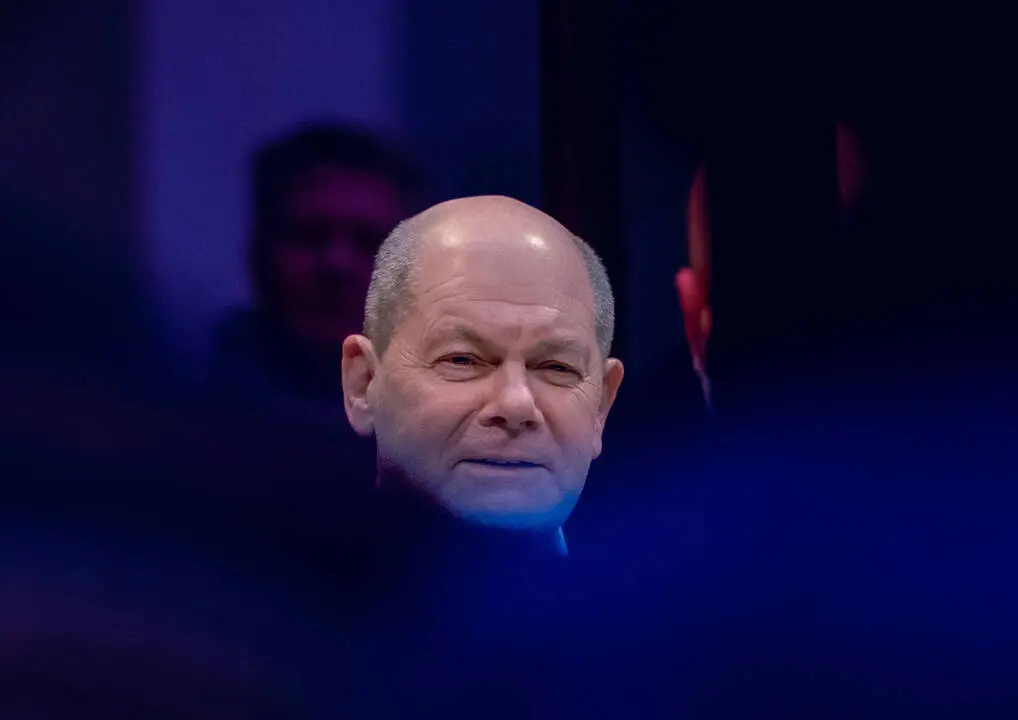
Olaf Scholz, Germany's chancellor since December 2021, is often described as a leader who arrived at the worst possible moment. On Monday, December 16, 2024, he will ask the Bundestag for a vote of confidence, fully expecting to lose it. This will set the stage for early federal elections on February 23, 2025 – a move that Scholz presents as an act of trust in the German people, but which his critics see as a final admission of failure.
The path to this moment has been turbulent. Scholz inherited an economy heavily dependent on Russian gas, a security architecture built on US and NATO alliances, and a society still divided over lockdowns and vaccine mandates. Then came the Russian invasion of Ukraine in February 2022, an event that upended every assumption in German foreign policy. Scholz's government responded with a historic shift – a Zeitenwende (turning point) – announced in a dramatic speech to the Bundestag just days after the invasion. He pledged a 100-billion-euro special fund for the Bundeswehr and promised to reduce energy dependence on Russia. Yet implementing these promises proved far more difficult than making them.
The Rise of a Pragmatic Career Politician
Olaf Scholz was born on June 14, 1958, in Osnabrück, Lower Saxony, but grew up in Hamburg. He studied law at the University of Hamburg and later worked as a lawyer specializing in labor law. His political career began in the 1970s when he joined the Social Democratic Party (SPD). He served as a member of the Bundestag from 1998 to 2001 and again from 2002 onward, gaining a reputation as a pragmatic, sometimes colorless, politician.
Scholz held several key positions before becoming chancellor: from 2007 to 2009 he was Minister of Labor and Social Affairs under Angela Merkel's grand coalition. Then, from 2011 to 2018, he served as First Mayor of Hamburg — a role akin to state premier — where he oversaw the city-state's response to the G20 summit in 2017 that saw violent protests. From 2018 to 2021, he was Deputy Chancellor and Minister of Finance under Merkel, a position that placed him at the center of Germany's response to the COVID-19 pandemic. He designed massive bailout packages and advocated for European debt mutualization, which won him respect among EU partners but skepticism from German fiscal conservatives.
The Traffic Light Coalition and Its Quick Demise
After the September 2021 federal election, the SPD emerged as the strongest party, and Scholz negotiated a three-way coalition with the Greens and the Free Democratic Party (FDP). This so-called 'traffic light' coalition – named after the party colors red, green, and yellow – was unprecedented at the federal level and was seen as an ambitious attempt to modernize Germany. The coalition agreement included massive investments in renewable energy, digitalization, and social policies, alongside a commitment to fiscal discipline demanded by the FDP.
But cracks appeared early. The FDP's Christian Lindner, as finance minister, repeatedly clashed with Green ministers over spending and climate measures. The war in Ukraine exacerbated tensions over energy policy, with the Greens pushing for an accelerated phase-out of fossil fuels while the FDP and parts of the SPD insisted on keeping nuclear and coal plants open to ensure supply. Scholz often tried to mediate, but his consensus-driven style frustrated many who wanted clearer leadership.
By the autumn of 2024, the coalition was paralyzed. Disputes over the 2025 budget, rising energy prices, and a struggling economy (Germany narrowly avoided recession in 2023 but growth remained weak) led to the final break. On November 6, 2024, Scholz dismissed Lindner, accusing him of breaking trust and blocking necessary compromises. The move triggered the collapse of the coalition, leaving the SPD and Greens as a minority government.
The Confidence Vote: A Rare Step in German History
The German constitution (Basic Law) allows the chancellor to call a vote of confidence to test parliamentary support. If the vote fails, the chancellor can ask the president to dissolve the Bundestag and call early elections. This has only happened a few times in post-war Germany: Willy Brandt in 1972 (which he lost intentionally to trigger elections), Helmut Schmidt in 1982 (also lost intentionally), and Gerhard Schröder in 2005 (which he lost, leading to early elections that he ultimately lost). Scholz now joins that list.
Monday's vote is almost certain to fail. The SPD and Greens together hold only 326 of the 733 seats, and the opposition CDU/CSU, AfD, FDP, and Linke have all indicated they will vote against Scholz. The only suspense is whether some SPD or Green backbenchers might break ranks to support the chancellor, though this is considered unlikely given the party discipline. After the vote, President Frank-Walter Steinmeier will have 21 days to decide on dissolution. He is widely expected to approve it, setting the election date for February 23, 2025.
Campaign Climate and Scholz's Standing
Scholz is not a natural campaigner. Known for his stiff, sometimes awkward public appearances, he lacks the charisma of predecessors like Gerhard Schröder or the calm authority of Angela Merkel. Yet on December 14, he appeared at a SPD meeting in Potsdam, relaxed and without a tie, shaking hands and exchanging friendly words with delegates. He said he was proud of the 'important decisions' made during his chancellorship, including the response to the Russian invasion, the energy transition, and the cost-of-living relief measures. He also defended his dismissal of Lindner as necessary to end the 'ordeal' of the coalition.
However, opinion polls paint a grim picture for the SPD. The party currently stands at around 15-17%, far behind the CDU/CSU (32-34%) and even slightly below the far-right AfD (18-19%). The Greens are polling at 13-15%. If the numbers hold, Scholz has virtually no chance of remaining chancellor. The CDU's leader, Friedrich Merz, is preparing to take over, and a black-green or black-yellow coalition (CDU with Greens or FDP) is considered the most likely outcome.
Scholz's legacy is mixed. Supporters point to his steady hand during the war, his commitment to social spending, and his willingness to break with fiscal orthodoxy when needed. Critics say he was too cautious, too slow to react, and failed to communicate a clear vision for Germany's future. The 'at the wrong moment' narrative is thus both a warning and an epitaph: he had to manage crises that would have challenged any leader, but he also made crucial mistakes that hastened his government's fall.
As Germany prepares for a winter election, Olaf Scholz is fighting not just for his job, but for the soul of the SPD. If his party suffers a historic defeat, the Social Democrats may face a long period of soul-searching. But if the campaign manages to close the gap, Scholz could yet surprise – as he did in 2021 when he overtook the CDU's Armin Laschet in the final weeks. For now, the clock is ticking, and the era of Chancellor Scholz is about to end in a vote he himself engineered.
Source: Letemps News