

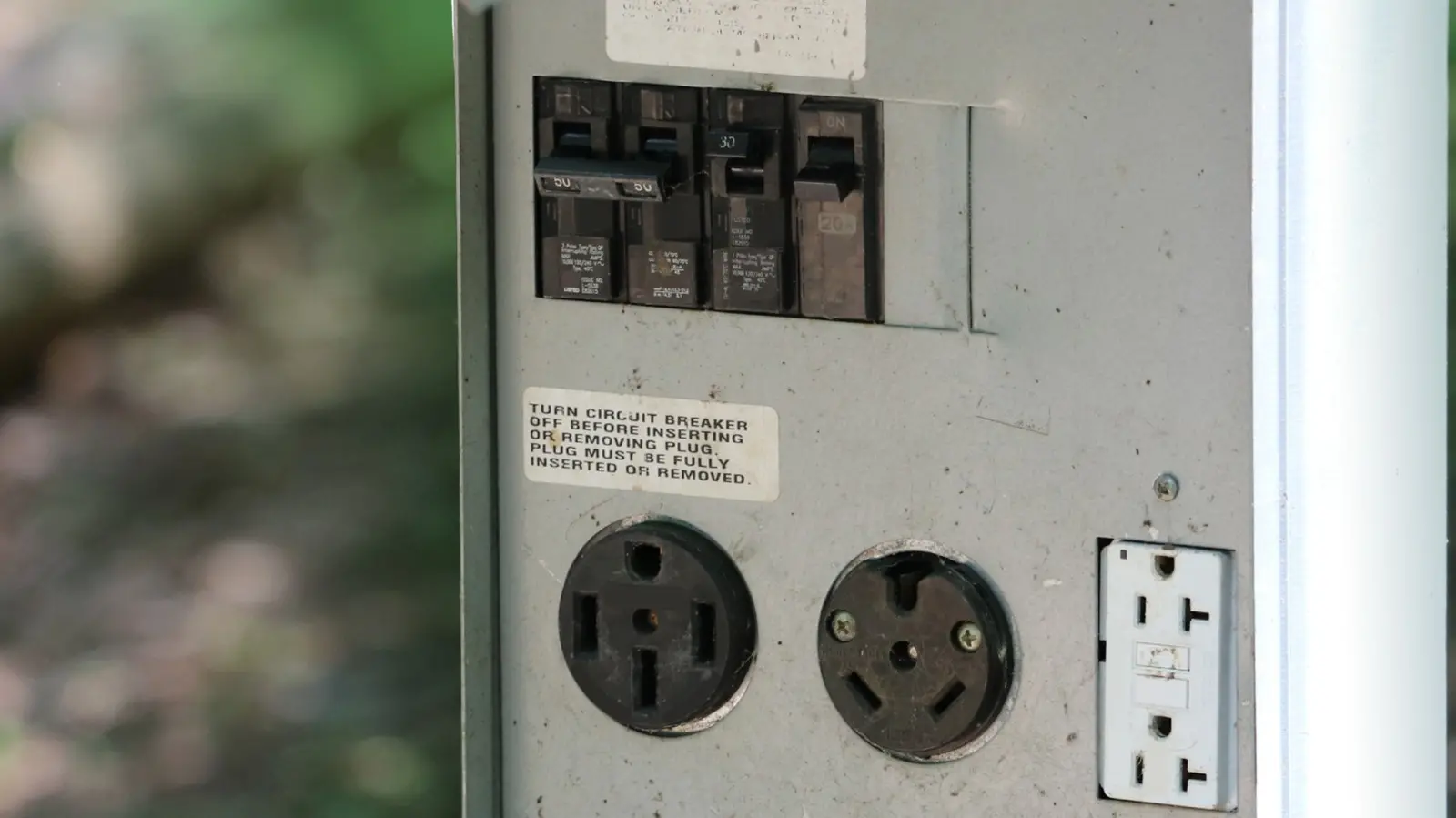
If you own or are planning to buy a recreational vehicle (RV), understanding its electrical system is essential. The most common power hookups in RVs are 30-amp and 50-amp services, each designed for different power demands. Identifying the plug type on your RV's power cord or at a campground pedestal is the first step to ensuring a safe connection. A 30-amp plug features three prongs: one round and two flat blades. In contrast, a 50-amp plug has four prongs: one round and three flat blades, with an additional blade for the second 120-volt line. The distinction in prong count directly relates to the power capacity each system can handle.
At a typical RV park electrical pedestal, you will often see three receptacles: a 50-amp outlet (usually with a black face), a 30-amp outlet (with a standard household-style connection), and a standard 20-amp outlet. Knowing which outlet your RV matches is critical because plugging an RV into an incompatible receptacle can damage appliances or create a fire hazard. However, with proper adapters, you can safely connect a 30-amp RV to a 50-amp outlet, or a 50-amp RV to a 30-amp outlet, as long as you manage your power consumption carefully.
Is It Safe to Plug a 30-Amp RV into a 50-Amp Outlet?
Yes, using an adapter, commonly called a "dog-bone," allows you to plug a 30-amp RV cord into a 50-amp receptacle. The adapter does not increase the power your RV draws; it simply changes the plug shape to fit the outlet. Your RV's built-in breaker and wiring limit the amperage to 30 amps, so you won't overload the system. However, you must ensure the campground or generator provides a 120-volt supply—most 50-amp pedestals do, but double-check the voltage before connecting.
Conversely, if you have a 50-amp RV and need to plug into a 30-amp outlet, you can use a dog-bone adapter that reduces the connection. But this drastically limits your power. A 50-amp RV is designed to run on two separate 120-volt lines (L1 and L2), each capable of up to 50 amps. When connected to a 30-amp source, you lose one line entirely and the remaining line delivers only 30 amps. This means you cannot run multiple high-wattage appliances simultaneously. For example, running the air conditioner and a microwave might trip the main breaker. Understanding this limitation is crucial for boondocking, mooch-docking, or using a generator while traveling.
Power Calculations: Watts, Volts, and Amps
The amount of power available is measured in watts, calculated as volts multiplied by amps. A standard 30-amp, 120-volt RV plug provides up to 3,600 watts (30A x 120V = 3,600W). This is enough to run a single air conditioner, a hair dryer, a microwave, and a coffee maker, but not all at the same time. You must balance your loads to avoid tripping the breaker. In contrast, a 50-amp RV operates on two 120-volt lines, each providing 50 amps. The total capacity is 12,000 watts (50A x 120V x 2 = 12,000W), but only if loads are evenly distributed across the two lines. This surplus power allows larger RVs to run two air conditioners, an electric fireplace, a refrigerator, and multiple entertainment systems simultaneously.
When you use a 50-amp RV on a 30-amp supply, the available power drops to 3,600 watts, the same as a 30-amp RV. Many 50-amp RVs have a power management system that automatically sheds non-essential loads, but you should manually prioritize essential appliances like the air conditioner and refrigerator. Carrying a power monitor or ammeter can help you avoid overloading the 30-amp circuit.
Pros and Cons of Upgrading to a 50-Amp System
Upgrading from a 30-amp to a 50-amp RV is a major decision. The primary benefit is increased power capacity, allowing you to run multiple high-demand appliances without worry. Large 50-amp RVs often include luxury features like multiple air conditioners, electric fireplaces, and high-wattage cooking appliances. However, the initial purchase price of a 50-amp RV is significantly higher. Additionally, the power cables for 50-amp systems are thicker, heavier, and stiffer, making them harder to coil and store in small compartments.
If you already own a 30-amp RV and consider upgrading its electrical system to 50 amps, be aware that it is not a simple plug change. The entire distribution panel, wiring, and often the main breaker must be replaced. This requires expertise from a certified RV electrician and can cost several thousand dollars. For most owners, it is more practical to buy a new RV that already has a 50-amp system rather than attempt a retrofit. The weight and complexity of the additional wiring also add to the vehicle's overall weight, potentially affecting fuel economy and load capacity.
Common Scenarios for Using Adapters
Adapters are essential for RVers who travel to diverse campgrounds and parks. A "dog-bone" adapter set typically includes both 30-amp female to 50-amp male and 50-amp female to 30-amp male versions. Additionally, you may encounter 30-amp or 50-amp outlets that are TT-30R or NEMA 14-50R respectively. Understanding these standards helps you select the correct adapter. Some adapters also incorporate surge protection, which can safeguard your RV's electronics from power fluctuations.
When boondocking or using a generator, adapters let you connect your RV to standard household outlets or generator outlets rated at 20 or 30 amps. However, never plug an RV directly into a standard 15-amp household outlet without a proper adapter and load management—overloading can cause a fire. Always use a heavy-duty extension cord rated for at least 30 amps if you need extra length. Finally, inspect your adapter and power cord for damage, corrosion, or loose connections before each use, as these are common failure points that can lead to arcing and electrical fires.
Electrical safety also involves proper grounding. All RV plugs and receptacles have a dedicated ground prong. Make sure your adapter maintains that ground path. Using a cheater plug (three-prong to two-prong) to connect an RV is dangerous and should never be done. If you're unsure about your setup, consult an RV technician or an electrician experienced with mobile power systems.
In summary, choosing between a 30-amp and 50-amp RV depends on your power needs, vehicle size, and budget. 30-amp systems are simpler, lighter, and adequate for smaller RVs with moderate electrical demands. 50-amp systems offer greater capacity for larger rigs with multiple high-wattage appliances. With proper adapters and awareness of power limits, you can safely use either system at most campgrounds, but always prioritize safety and load management.
Source: SlashGear News