

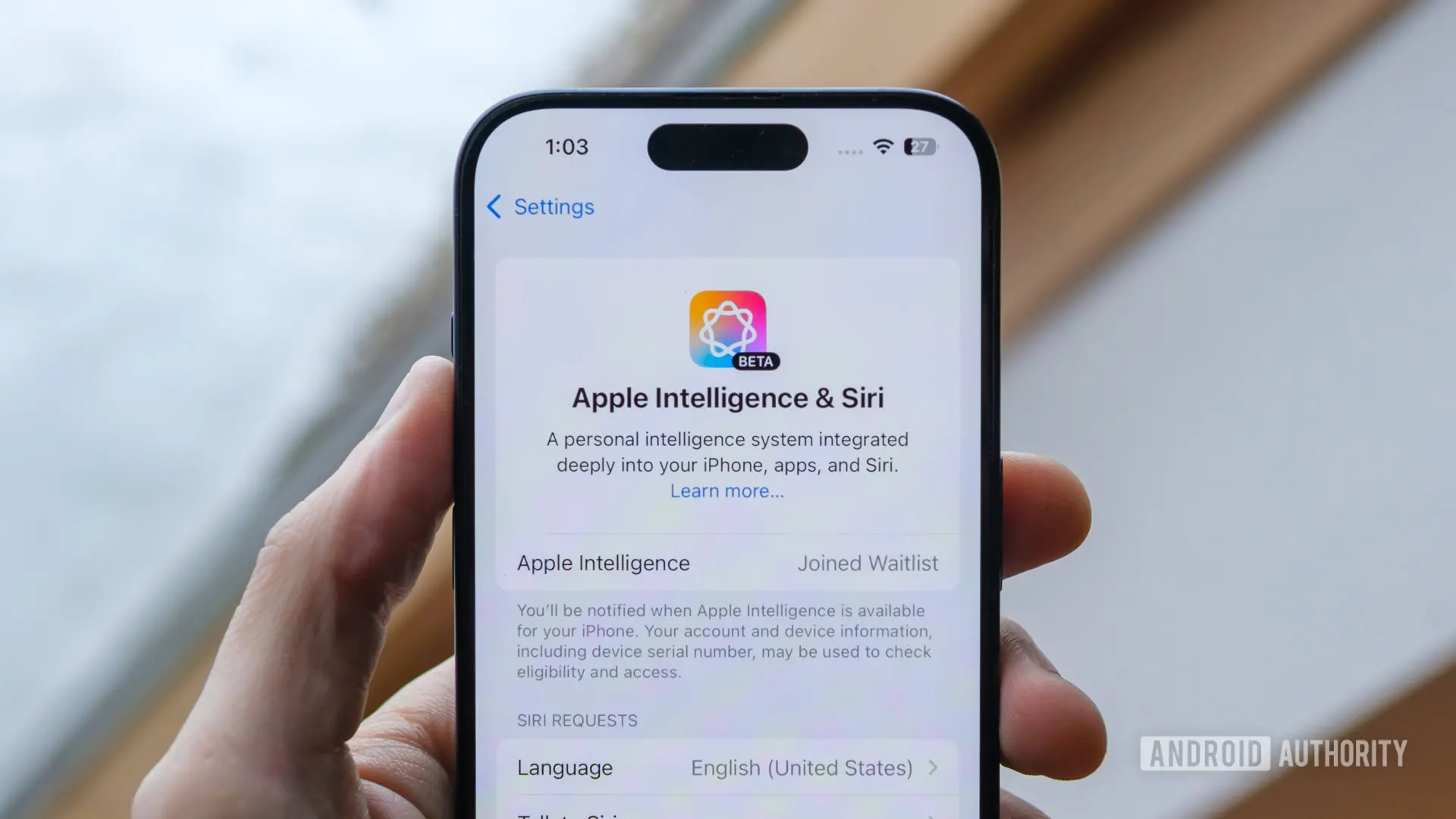
Ever since Apple first introduced Apple Intelligence, its suite of AI features has been met with mixed reactions. While the promise of on-device intelligence and privacy-focused processing was intriguing, the actual implementation often felt behind competitors like Google and Samsung. However, a new report from Bloomberg suggests that Apple is ready to bridge that gap with the upcoming iOS 27 update, bringing a host of AI enhancements that could finally make Apple’s AI offerings competitive with Android.
Writing Tools: From Basic to Brilliant
One of the most significant improvements in iOS 27 revolves around the Writing Tools feature introduced in iOS 26. While that initial version allowed for basic text summarization and proofreading, it was often buried in menus and not easily discoverable. Apple plans to overhaul this by making Writing Tools more prominent. According to the report, users will see a “Write with Siri” button at the top of the keyboard, and when Siri is activated with a text field selected, a “Help Me Write” option will appear. This contextual placement could dramatically increase usage, making AI-assisted writing a seamless part of daily tasks like composing emails, drafting messages, or taking notes.
In addition, Apple is developing a dedicated grammar-checking feature. Similar to services like Grammarly or QuillBot, it will analyze text in real-time and suggest corrections for grammar, punctuation, and style. The suggestions will appear in a translucent menu that slides up from the bottom of the screen, allowing users to accept, ignore, or reject each suggestion individually. This granular control could appeal to power users who want precision without auto-correct overreach. The grammar checker is expected to work across the system, from Notes and Mail to Safari and third-party apps, giving Apple a strong foothold in productivity tools.
AI-Powered Shortcuts: Natural Language Automation
Another area where Apple is lagging behind Android is in automation. While the Shortcuts app is incredibly powerful, its learning curve often intimidates average users. iOS 27 is said to introduce AI-powered shortcut creation that leverages natural language processing. Instead of manually dragging and dropping actions, users will be able to describe what they want in plain English—for example, “Create a shortcut that sends a message to my wife when I leave work” or “Turn on low power mode when the battery drops to 20%.” The AI will then generate the shortcut automatically. This could finally unlock the full potential of Shortcuts for millions of iPhone users who have been intimidated by its complexity.
Given Apple’s track record with Siri and on-device processing, the success of this feature will hinge on accuracy and speed. If the AI can reliably interpret ambiguous commands and produce correct shortcuts, it could revolutionize how users interact with their devices. However, early versions of Apple Intelligence have been inconsistent, so caution is warranted. The Bloomberg report suggests that Apple is aware of these shortcomings and is investing heavily in training data and model improvements.
Wallpaper Generation and Image Playground
Beyond productivity, Apple is also focusing on creativity. iOS 27 is expected to allow users to generate custom wallpapers directly from the Wallpaper picker using the Image Playground app. Image Playground itself is also receiving a major update, likely with improved generative AI models that can create unique artwork based on text prompts. This would bring Apple in line with features like Samsung’s AI-generated wallpapers or Google’s Pixel AI wallpapers, which have been well-received. The integration within the system settings means users won’t need to leave the interface to access the feature, making it more convenient.
The ability to generate wallpapers also ties into Apple’s broader push for personalization. With iOS 27, the lock screen and home screen customization options are expected to expand, and AI-generated images could become a key differentiator. However, Apple must balance creativity with its strict privacy policies—likely keeping all processing on-device to avoid sending user data to the cloud.
Context: The AI Arms Race
Apple’s renewed focus on AI comes amid an industry-wide arms race. Google has integrated Gemini into Android, offering features like Circle to Search, Smart Reply, and AI photo editing. Samsung’s Galaxy AI provides real-time translation, generative wallpapers, and advanced photo manipulation. Even smaller players like OnePlus have introduced AI features. Apple’s delay has been notable, partly because of its insistence on on-device processing and privacy preservation. While these values resonate with many users, they have also stymied the speed and scope of AI features. iOS 27 appears to be Apple’s attempt to have it both ways—delivering powerful AI while maintaining privacy.
The timing also aligns with Apple’s push to differentiate its ecosystem. As smartphone hardware matures, software intelligence becomes the primary battleground. By enhancing Siri with these new capabilities, Apple hopes to retain users who might otherwise switch to Android for better AI tools. Moreover, these improvements could lay the groundwork for future innovations like AI-powered Siri conversations, proactive assistance, and deeper integration with third-party apps.
What This Means for Users
For average iPhone users, iOS 27 promises to make daily tasks faster and more intuitive. Writing emails will be less error-prone, creating automations will be accessible to everyone, and personalizing the home screen will become a creative outlet. However, the success of these features will depend on execution. Apple has a history of releasing half-baked AI features—remember the early days of Siri?—and the company must ensure reliability to win back user trust. The fact that these features are being reported by Bloomberg suggests they are far along in development, but internal testing will be critical.
Competitors are not standing still. Google’s Gemini is expanding to more Pixel devices and might soon integrate with other OEMs. Samsung is expected to iterate on Galaxy AI with the upcoming One UI 7. Apple’s advantage lies in its closed ecosystem: when AI features work across all apps and services seamlessly, they become more valuable. iOS 27’s Writing Tools and Shortcuts features, if executed well, could become essential tools that keep users locked into the Apple ecosystem.
Looking Ahead to WWDC
All these details are expected to be officially unveiled at the Worldwide Developers Conference (WWDC) keynote on June 8. In addition to iOS 27, Apple will announce updates to iPadOS, macOS, watchOS, and tvOS. The company often uses WWDC to showcase its vision for the future of computing, and AI is likely to be a central theme. With iOS 27, Apple seems to be signaling that it is not only catching up to Android but also defining its own path forward—one that emphasizes seamless integration, privacy, and thoughtful design.
As the June event approaches, developers and users alike will be watching closely. If Apple can deliver on these promises, the AI gap with Android may finally close. But it will take more than feature parity; Apple must prove that its AI is not just a copy of what others have done, but a genuinely better experience that leverages its unique strengths. The next few months will be telling.
Source: Android Authority News