

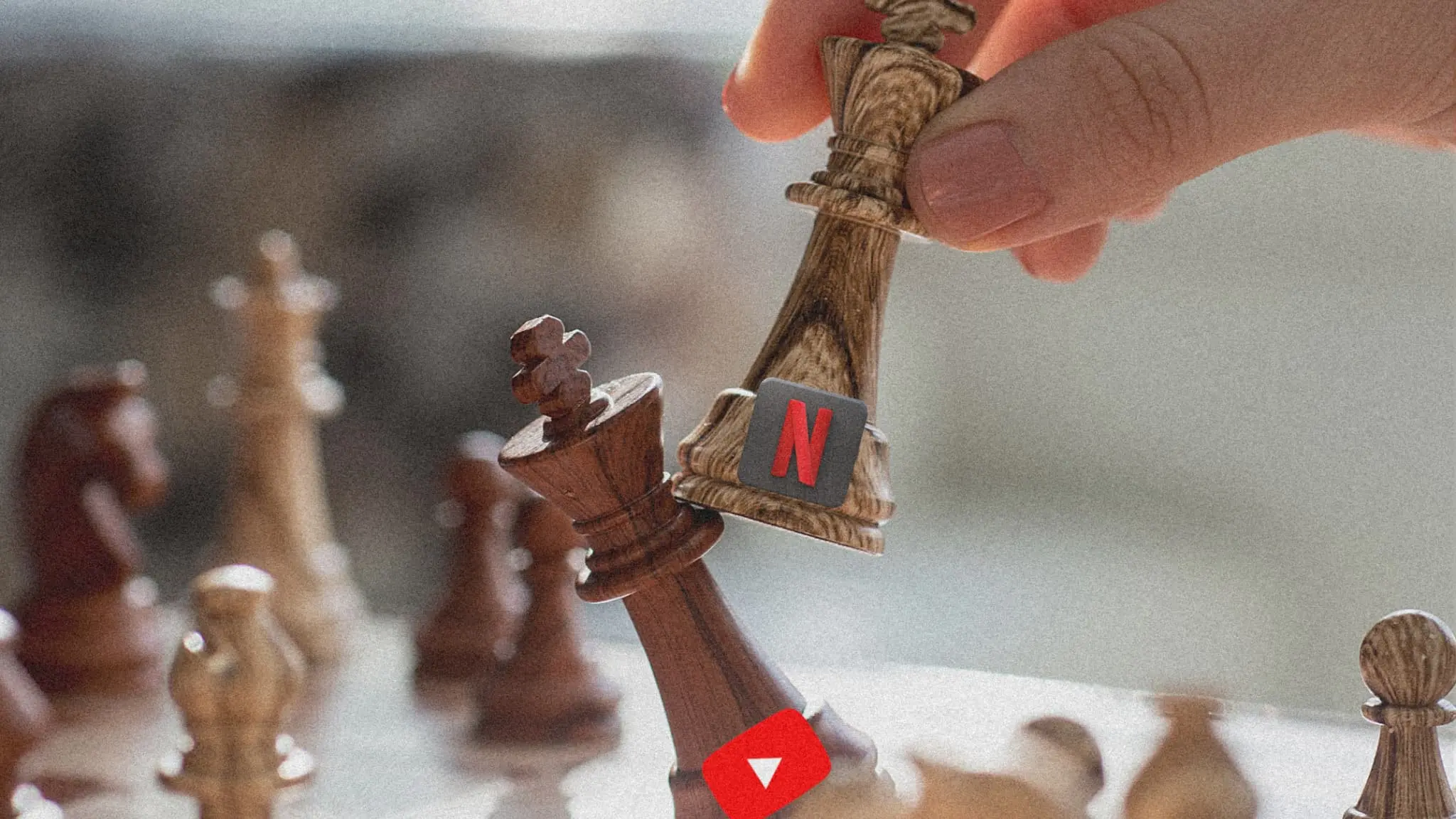
For more than a decade, the phrase "Hey guys, welcome to a new video" has launched countless careers, transforming ordinary individuals into global celebrities. Now, Netflix is extending the microphone to these new faces of television—not from Hollywood studios, but from bedrooms, garages, and makeshift studios where the biggest YouTube channels were born.
In just a few days, the streaming giant has signed multiple deals with major YouTube figures: Alan Chikin Chow, Nick DiGiovanni, and Mythical Entertainment, according to Bloomberg. These join earlier partnerships with Ms. Rachel, Mark Rober, Salish & Jordan Matter, Danny Go!, and the Stokes Twins. Combined, these creators boast hundreds of millions of subscribers on YouTube.
A Co-Exclusive Approach, Not a Raid
Unlike the talent wars that pitted streaming platforms against Hollywood studios, Netflix is not trying to permanently poach creators from YouTube. That would be too costly—and probably counterproductive. Instead, Netflix is signing co-exclusivity agreements. For a few million dollars a year, creators continue to upload to YouTube while offering certain content exclusively on Netflix.
This win-win strategy has multiple forms. Some creators, like Ms. Rachel, known for her educational videos for toddlers, simply adapt their existing catalog for Netflix. Others, such as engineer Mark Rober, famous for spectacular science experiments, use the opportunity to produce original formats. The early results justify Netflix's bet. In the first half of the year, Ms. Rachel ranked among the ten most-watched programs on the platform, ahead of heavily promoted original series. Danny Go! and Salish & Jordan Matter also landed among the top 30 most popular titles—a remarkable performance for content whose production cost is often a fraction of a traditional series.
Netflix is far from alone. Disney, Paramount, and Comcast are all seeking deals with YouTube channels not yet partnered with the streaming leader. Meanwhile, Amazon Prime partnered with MrBeast to produce Beast Games. The first season of the reality show attracted over 50 million viewers in less than a month, becoming Amazon’s second most-watched program of 2024, behind Fallout.
YouTube’s Dilemma: Losing Its Biggest Stars to Rivals
Since its inception, YouTube has functioned as a massive talent incubator. It has spawned generations of creators, from MrBeast to hundreds of others who became global brands. But this success now poses an uncomfortable question: What if its greatest achievements end up benefiting its competitors? YouTube’s CEO Neal Mohan insists that the platform remains the creators’ home, even when they develop projects elsewhere. “When I talk to our creators—and I talk to them several times a week—what they always tell me is that no matter what else they plan to do, YouTube is their home,” Mohan told the New York Times earlier this year.
He also notes that creators publishing on Netflix has not harmed YouTube’s business. Google’s platform is large enough to withstand the loss of any single creator, just as Netflix could survive the departure of its biggest producer or star. Yet the topic is a growing concern among YouTube executives. Every deal Netflix signs reinforces a dangerous idea: to reach the next level, the most prominent creators should eventually walk through the doors of Hollywood or streaming services.
The irony is sharp. YouTube generates more revenue than Netflix, but its economic model does not easily fund productions worth tens or hundreds of millions of dollars. The platform remains, above all, a massive advertising marketplace, not a film studio.
Lessons from TikTok and Twitch
This battle is familiar to YouTube. When TikTok began threatening its position as the web’s primary talent factory, YouTube launched Shorts, its short-video format. When Twitch attracted the most popular gaming creators, YouTube engaged in a financial war to convince them to stay. Now the adversary is different. Netflix does not compete on the same turf—it does not seek to replace the thousands of videos published daily, but to capture content that can become family-friendly, mainstream programming.
Until now, YouTube has refused to pay creators directly to prevent them from signing with Netflix. Its system relies on advertising revenue sharing: 55% of revenue from long-form videos goes to creators, plus brand deals. That logic has made many video makers wealthy but may show its limits when Netflix arrives with checks that can fund new projects. However, the game is shifting. In an attempt to retain talent, YouTube has finally begun financing some programs. At its New York advertiser presentation in May, the company unveiled a handful of “series.” It has also invested heavily in exclusive content like the NFL Sunday Ticket and the Oscars ceremony. Executives have hinted at offering Sundance films and more series on the platform.
Redefining Television
For Netflix, these deals are not a rupture but a natural step in its evolution. After international series, original films, and stand-up specials, the platform now considers digital creators part of the audiovisual landscape. “Over the past 15 years, the definition of television has expanded, and our own definition has evolved accordingly,” said Ted Sarandos, Netflix co-CEO. “These evolutions are gradual, not revolutionary.”
Still, Netflix can never become YouTube. Google’s platform gathers a volume of videos each day that Netflix could not produce in a year. It is free, accessible worldwide, and relies on a daily relationship with users. Netflix, by contrast, remains a premium, paid service with a more limited but curated selection. The two companies are not playing the same game.
The Winners: Creators
This apparent rivalry may ultimately benefit those who triggered it: the creators. For years, they depended on a single platform to build their audience. Now the most popular can negotiate with multiple players. While YouTube remains their base, Netflix becomes an additional showcase. Some worry that this new competition could upset the economic balance of platforms. Creators fear that YouTube might reduce their visibility when they sign with a competitor, or that Netflix might not treat them as well as early adopters. But for now, the balance of power is in their favor: more money, more visibility, and the chance to reach audiences who may not frequent YouTube.
This reshaping does not mean the end of YouTube or the assured victory of Netflix. Instead, it reveals a lasting transformation of the audiovisual landscape: platforms are no longer just distributors—they have become talent hunters. In this new industry, those who hold the most negotiating power are not the platforms or the studios. They are the ones who press the publish button.
Source: BFM News