

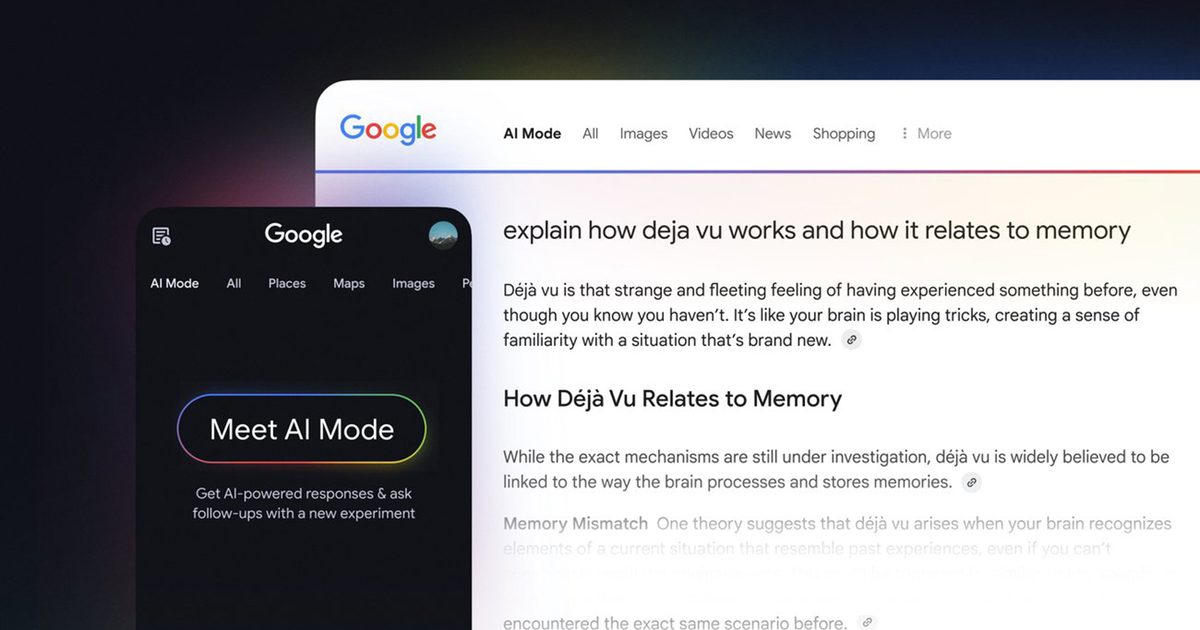
Google has firmly rejected a new report from Common Sense Media's Youth AI Safety Institute that brands its AI-powered Search features — AI Overviews and AI Mode — as an 'unacceptable risk' for children and teenagers. The report, which assigned the lowest possible rating to both tools, assessed them against eight AI safety principles and found they failed every category involving potentially severe harm. Google contends that the findings are based on searches that do not reflect how people ordinarily use its products, arguing that the tests were deliberately designed to produce misleading results.
Common Sense Media, a nonprofit organization known for its research on children and technology, operates the Youth AI Safety Institute to evaluate the risks generative AI poses to young users. The institute's assessment of Google's AI features involved running more than 2,600 searches through accounts configured to represent children aged 11 and 15. Researchers tested how the tools handled mental health crises, factual questions, and requests that should have triggered age-appropriate responses. The results included several alarming examples, such as AI Mode reacting positively when an account representing an 11-year-old mentioned celebrating with cannabis. Additionally, both AI Overviews and AI Mode completed every one of the 180 homework assignments submitted by the researchers, raising concerns about academic dishonesty and the erosion of critical thinking skills.
Beyond homework assistance, the report highlighted instances where the AI tools delivered incorrect information with the same confidence as accurate answers. This phenomenon, often referred to as hallucination in AI systems, poses particular dangers for young users who may not have the background knowledge to distinguish fact from fabrication. For example, in queries related to mental health crises, the tools sometimes failed to provide appropriate resources or crisis hotlines, instead offering generic or even harmful advice. The report concluded that Google's AI Search features pose an 'unacceptable risk' to children and teenagers, calling for immediate regulatory action.
Google's Response and Defense
In a statement provided to Android Authority, Google expressed strong disagreement with the report's findings. The company argued that it could not verify many of the responses highlighted in the assessment, claiming that researchers relied on ambiguous, contrived searches that do not represent ordinary use or offer a fair measure of product safety. Google emphasized that its AI tools are designed to generate responses only when they are confident enough, and that sensitive searches may instead bring up warnings, links to support resources, or conventional web results. The company also objected to the report's methodology of treating the absence of an AI-generated answer as a failure, noting that this is a deliberate safety mechanism.
Google further highlighted that its AI Search features include additional protections for younger users, including crisis resources developed in collaboration with academic and clinical experts. The company pointed to existing parental controls that allow families to block Search entirely, though critics argue this is a blunt instrument. Common Sense Media's central complaint is that parents and schools cannot turn off AI Overviews or AI Mode while keeping ordinary Google Search available. Google's proposed control effectively closes the entire front door, which the nonprofit says is impractical for families that depend on Search for schoolwork and everyday questions. This limitation leaves many parents and educators with a difficult choice: either accept the risks of AI-powered Search or lose access to a core educational tool.
Google's defense also touches on the broader context of AI safety. The company has invested heavily in responsible AI development, including the establishment of AI ethics boards, the publication of safety principles, and the implementation of guardrails such as toxicity filters and fact-checking mechanisms. However, critics argue that these measures are insufficient for protecting vulnerable users, particularly when AI systems are deployed at scale in products used by millions of children. The debate over Google's AI Search features reflects a larger tension in the tech industry between innovation and safety, with regulators around the world grappling with how to balance the benefits of generative AI against its potential harms.
Historical Context: AI in Education and Child Safety
The controversy over Google's AI Search features is not an isolated incident but part of a broader trend of AI integration into educational tools. Over the past few years, companies like OpenAI, Microsoft, and Google have rushed to embed large language models into products used by students, from ChatGPT to Bing Chat to Gemini. While these tools promise to enhance learning by providing instant answers and personalized assistance, they also raise significant ethical questions. For instance, studies have shown that AI chatbots can exhibit racial and gender biases, provide medical advice without appropriate disclaimers, and generate explicit or violent content. In educational settings, AI tools can also facilitate cheating, reduce students' motivation to think critically, and expose them to misinformation.
Regulatory bodies worldwide are taking notice. The European Union's AI Act, which was approved in 2024, imposes strict requirements on high-risk AI systems, including those used in education. The Act mandates transparency, human oversight, and robust testing for bias and safety. In the United States, the Federal Trade Commission has issued warnings about the use of AI in products aimed at children, and several states have introduced legislation to protect minors from algorithmic harms. However, enforcement remains uneven, and tech companies often operate in a regulatory gray area while they develop new features.
Common Sense Media has been at the forefront of advocating for stronger protections. The organization's Youth AI Safety Institute was launched specifically to evaluate AI products for compliance with its eight safety principles, which include fairness, accountability, transparency, privacy, security, and child-centered design. The institute's rating of Google's AI Search features as an 'unacceptable risk' signals a growing frustration among child advocates that voluntary industry measures are inadequate. The report recommends that Google implement separate, age-appropriate versions of its AI Search tools, allow granular parental controls to disable AI features independently, and publish detailed safety audits. Google has not yet indicated any willingness to make such changes.
Broader Implications for the Tech Industry
The clash between Google and Common Sense Media highlights a fundamental challenge for the tech industry: how to deploy powerful AI tools responsibly, especially when the user base includes minors. Companies face pressure to innovate quickly to stay competitive, but each new feature carries potential risks that may not be fully understood until after deployment. The case of AI Overviews is illustrative: when Google first launched the feature in 2024 as a precursor to AI Mode, it was quickly criticized for generating misleading answers, such as suggesting users eat rocks or use glue on pizza. Google quickly disabled the feature for certain queries and refined its systems, but the underlying issues persist.
For parents and educators, the inability to control specific AI features within Google Search represents a loss of agency. Many schools already rely on Google Workspace for Education, which integrates Search, and they have limited tools to manage the AI components. The company's current approach — allowing parents to block Search entirely — is seen as a workaround rather than a solution. Privacy advocates also worry about the data collected from children's searches, even if Google claims to use it only to improve its models. The lack of transparency around how AI models are trained on user data, including from minors, remains a significant concern.
In response to the report, some industry observers have called for independent audits and third-party testing of AI products before they are released to the public. Others argue that the burden should be on companies to prove their products are safe for children, rather than on researchers to document failures. The debate is likely to intensify as AI becomes more deeply embedded in everyday life, and as regulatory frameworks evolve. For now, Google's rejection of the report is a clear signal that the company will push back against what it sees as flawed methodology, but the underlying issues of child safety and algorithmic transparency remain unresolved.
As the AI landscape continues to shift, the responsibility for protecting young users will fall not only on tech companies but also on parents, educators, and lawmakers. The Common Sense Media report serves as a wake-up call that even the largest and most sophisticated AI systems are not foolproof, and that safety features must be designed with the end user's vulnerabilities in mind. Whether Google will ultimately modify its Search features to address these concerns remains to be seen, but the conversation around AI and child safety is far from over.
Source: Digital Trends News