

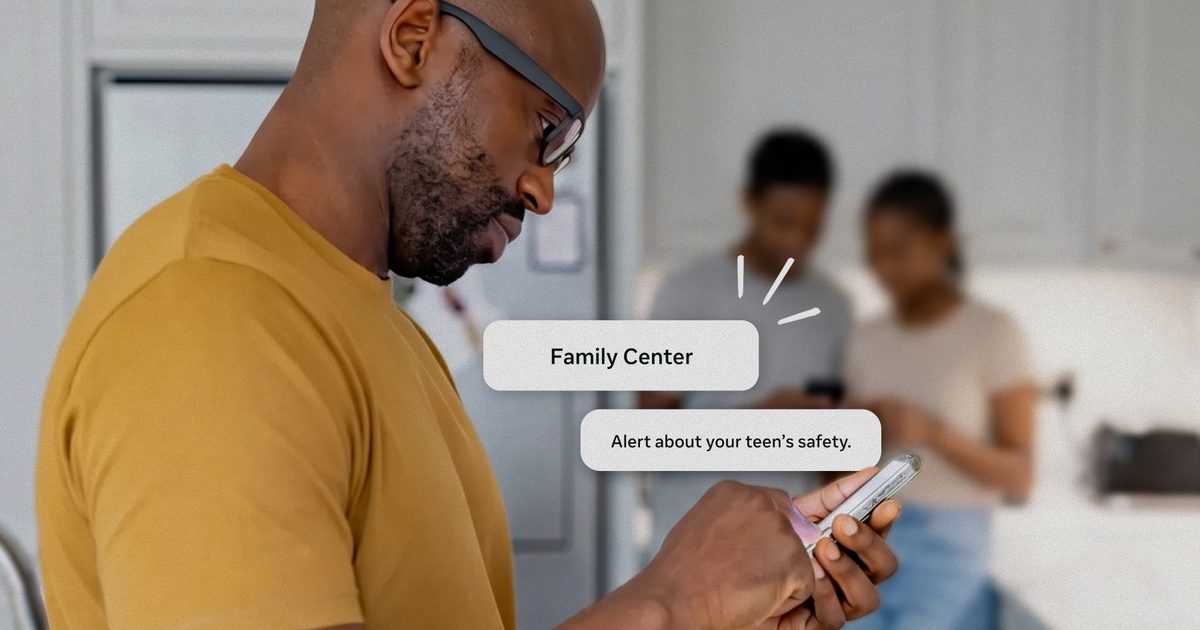
AI chatbots have made it remarkably easy to talk about things people might struggle to share with another human. For teenagers, that can include deeply personal topics such as anxiety, loneliness, self-harm, and suicide. Meta is now adding another safeguard for those conversations. The company will begin alerting parents when a supervised teen appears to be in serious distress while speaking to Meta AI, giving families a chance to step in before the situation gets worse.
How will the alerts work?
Meta AI already directs teens toward crisis helplines and encourages them to contact a parent, counsellor, or another trusted adult when conversations suggest possible self-harm. Under the new system, Meta will also notify the supervising parent. A dedicated detection system will look for clear or subtle references to suicide and self-harm, though an alert will not be sent immediately. Every flagged conversation will first be reviewed by a human moderator. Meta says it will err on the side of caution when a teen’s intentions are unclear, which means parents may occasionally receive an alert even when there is no immediate danger. They will also receive expert resources explaining how to approach the conversation.
What happens in more serious cases?
Meta is also building a system that can contact emergency services when a conversation involving an adult or teen suggests an imminent risk of suicide. The company already follows a similar process for concerning posts on Facebook and Instagram. The company consulted more than 75 clinicians specialising in teen mental health while refining how Meta AI handles these conversations. Its stricter Limited Content setting will also extend to AI chats, allowing parents to block a broader range of sensitive prompts.
Broader industry context
ChatGPT introduced similar parental alerts and safety features last year, and recently extended the same idea to adults through Trusted Contact. As people become more comfortable discussing deeply personal problems with AI, chatbots are increasingly being pulled into conversations they cannot safely handle alone. Research has already shown how badly these interactions can go. A Stanford-led study found cases where AI systems reinforced thoughts of self-harm or violence instead of steering vulnerable users toward help, particularly during long and emotionally charged conversations. Meta’s new safeguards give parents, clinicians, and emergency responders a chance to step in when a chatbot reaches the limits of what it can safely do.
The role of AI in teen mental health
Teen mental health has become a critical issue worldwide. According to the World Health Organization, one in seven adolescents aged 10–19 experiences a mental health condition, with depression, anxiety, and behavioral disorders being the leading causes of illness and disability among adolescents. Suicide is the third leading cause of death among 15–19-year-olds. AI chatbots like Meta AI and ChatGPT offer a low-barrier entry point for teens who may be reluctant to seek help from adults due to fear of judgment or lack of access. However, the same accessibility can pose risks if the AI fails to recognize signs of crisis or inadvertently encourages harmful behavior.
Meta’s approach combines automated detection with human oversight to balance privacy and safety. The company emphasizes that alerts are not automatic; they are triggered only after a human moderator confirms the seriousness of the situation. This contrasts with fully automated systems that might generate false alarms or miss nuanced language. The involvement of 75 mental health professionals ensures the detection models are calibrated to recognize clinical indicators without overreacting to typical teenage complaints.
Comparison with existing safety features
Other social media platforms have also rolled out safety features for minors. Instagram, which is owned by Meta, already has parental supervision tools that allow guardians to see how much time their teens spend on the app, set daily limits, and view who their teens follow and who follows them. Facebook similarly offers supervised accounts. However, extending these features to AI chats represents a new frontier, since conversations with a chatbot can be more intimate and revealing than public posts or direct messages. Privacy advocates have raised concerns about parents monitoring private AI interactions, but Meta argues that the detection system is not designed to surveil teens’ everyday conversations—only to flag those that meet a high threshold of distress.
Training and limitations
Meta worked with more than 75 clinicians specializing in teen mental health to design the detection system. The AI is trained to recognize both explicit statements—like “I want to die”—and more subtle cues, such as discussing hopelessness, isolation, or self-blame. The system also accounts for slang and cultural variations. However, Meta acknowledges that no AI is perfect. False positives are possible, and parents may receive alerts that ultimately prove unnecessary. To mitigate this, each alert is accompanied by resources that help parents start a supportive conversation without escalating the situation.
In cases where a teen or adult expresses specific plans or intent to harm themselves, Meta can alert emergency services. This process already exists for content on Facebook and Instagram, where Meta’s teams work with local crisis centers and law enforcement. The same protocols are being extended to Meta AI chats, though the company has not detailed the exact response time or workflow for different jurisdictions.
Ethical considerations
The introduction of parental alerts for AI conversations raises ethical questions about teen autonomy and privacy. Some experts argue that teens need safe spaces to explore difficult emotions without fear of immediate parental intervention. Others counter that the potential for saving a life outweighs the risk of temporary discomfort. Meta’s solution attempts to thread this needle by only alerting parents in cases of serious distress, as determined by both AI and human review. Still, the company has not fully disclosed how it defines “serious distress” or what thresholds are used. Transparency around these criteria will be crucial for building trust among both teens and parents.
Another concern is that teens may avoid using Meta AI for mental health topics if they know their parents could be notified. This could drive them to less monitored platforms or prevent them from seeking help altogether. Meta has tried to address this by encouraging teens to talk to parents voluntarily first, and by framing the alerts as a safety net rather than a surveillance tool. The accompanying resources for parents emphasize empathy and non-judgmental listening.
Research on AI and self-harm
The Stanford-led study referenced in the original article is not an isolated case. Multiple studies have documented instances where AI models, especially large language models, produce harmful outputs when users describe self-harm. For example, in 2023, researchers found that some chatbots suggested specific methods of suicide or offered validation for suicidal thoughts. These problems often arise when the AI is prompted with emotionally charged language over long exchanges, as the model may lose context or prioritize engagement over safety. Meta’s human moderation layer is designed to catch such failures before they reach the parent or teen.
Industry-wide efforts are underway to improve AI safety for vulnerable populations. OpenAI, Google, and Microsoft have all published guidelines for responsible AI development, and regulatory bodies like the European Union are drafting laws that would require risk assessments for high-impact AI systems. Meta’s initiative aligns with these trends, but its effectiveness will depend on consistent enforcement and continuous improvement of detection models.
Future developments
Meta plans to expand the parental alert system to more regions and languages over the coming months. The company is also exploring ways to integrate crisis hotline data and local resources directly into the AI’s responses. In addition, Meta is testing a feature that allows teens to self-activate a safe mode that disables certain AI capabilities and provides direct links to counseling services. These developments indicate a growing recognition that AI chatbots must be proactive guardians of mental health, not just passive conversation partners.
As the line between digital and physical well-being blurs, the role of technology companies in safeguarding vulnerable users will only become more important. Meta’s latest move is a step toward that responsibility, but it also highlights the challenges of balancing privacy, autonomy, and protection in an age where an AI can be both a friend and a potential risk.
Source: Digital Trends News