

Introduction
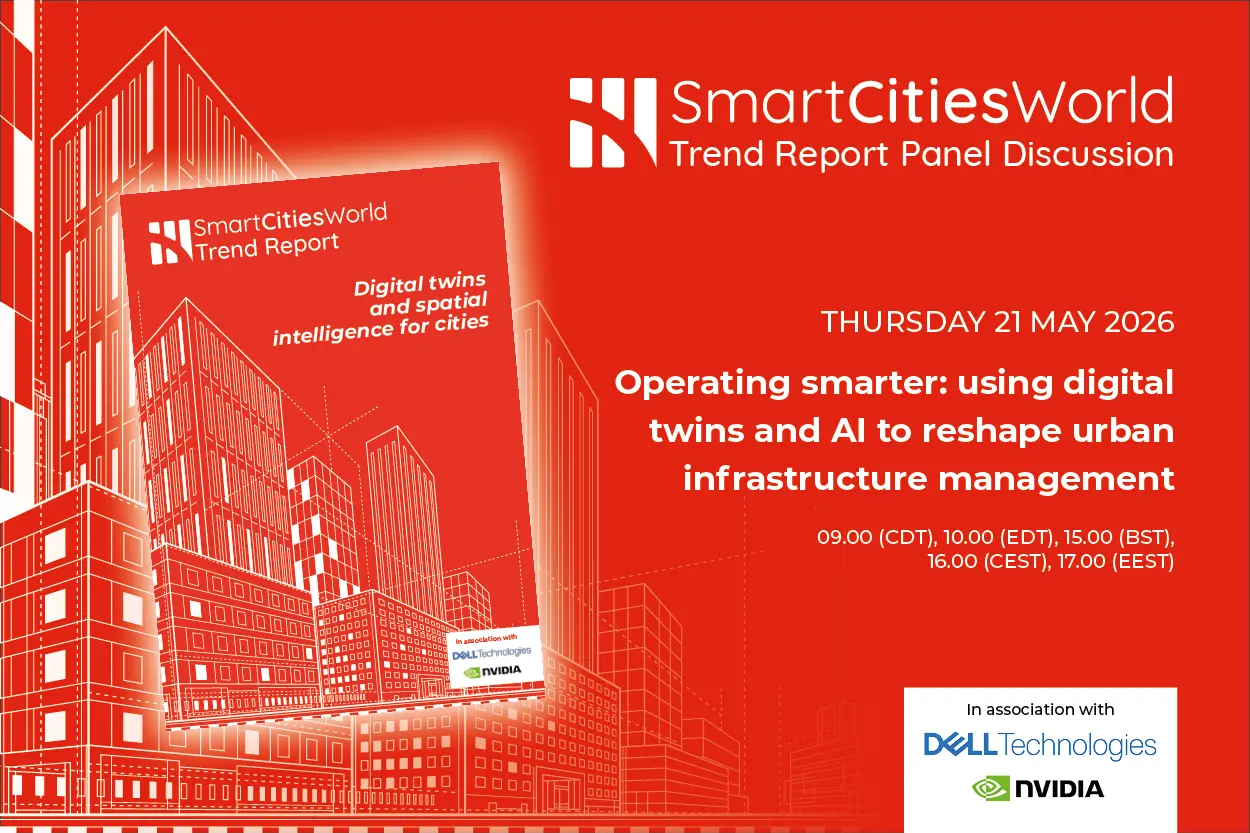
The rapid urbanization of the 21st century has placed unprecedented pressure on city infrastructure. From aging water systems to congested transport networks, municipalities worldwide are seeking smarter, more efficient ways to manage assets and deliver services. A recent panel discussion at the SmartCitiesWorld Summit 2026 explored how digital twins and artificial intelligence (AI) are enabling a strategic, risk‑based approach to infrastructure resilience. The conversation brought together experts from technology, finance, and local government to share practical insights and real‑world examples.
The Promise of Digital Twins
Digital twins—virtual replicas of physical assets, systems, or processes—are rapidly becoming essential tools for urban planners and operators. By integrating real‑time sensor data, historical records, and predictive algorithms, these models allow city officials to simulate scenarios, test interventions, and optimize performance without disrupting everyday operations. For instance, a digital twin of a water distribution network can predict pipe failures before they occur, saving millions in emergency repairs and minimizing service interruptions. The panel highlighted that the true power of digital twins lies in their ability to connect disparate systems—water, energy, transport, buildings—into a single, coherent view of the urban environment.
Artificial Intelligence in Urban Systems
AI amplifies the capabilities of digital twins by enabling pattern recognition, anomaly detection, and autonomous decision‑making. Machine learning models can analyze vast streams of data from IoT sensors, traffic cameras, and energy meters to identify inefficiencies and recommend adjustments. Katherine Flesh of Microsoft noted during the summit that transport agencies are turning to AI to improve services, but the greatest opportunities depend on strong data foundations, workforce readiness, and responsible governance. She emphasized that AI should be deployed not as a replacement for human judgment, but as a tool to augment it—helping city staff focus on strategic priorities rather than routine monitoring.
Case Study: Sunderland’s Smart City Vision
Sunderland, a city in northeast England, exemplifies how digital infrastructure and low‑carbon innovation can drive regeneration. The city is repositioning itself as a leading smart city by investing in fibre‑optic networks, sensor‑enabled streetlights, and a public‑private partnership that fosters experimentation. Its digital twin platform integrates data from transport, energy, and waste management systems, allowing officials to track carbon emissions in real time and adjust policies accordingly. The panel showcased Sunderland’s journey as a reproducible model for post‑industrial cities seeking to build a resilient, future‑focused economy. Key to its success has been the early involvement of residents and local businesses in co‑designing digital services.
Case Study: Dublin’s Digital Twin Projects
Dublin is innovating to improve experiences and services for its communities through several digital twin initiatives. The city has deployed a comprehensive model of its central district to simulate traffic flow, pedestrian movement, and air quality. This tool has helped reduce congestion by 12% while also informing pedestrian‑friendly redesigns. Dublin’s approach integrates open data from multiple agencies, ensuring transparency and enabling third‑party developers to build applications that benefit citizens. The panel noted that Dublin’s digital twin is not a one‑time project but an evolving platform that incorporates feedback from public consultations and continuous sensor updates. The city also uses AI to optimize building energy use, further contributing to its climate neutrality goals.
Strategic Procurement as a Resilience Tool
Sam Markey, Founder of Recurve, argued during the summit that strategic procurement is one of cities’ most underused tools for building resilience. Rather than simply buying the cheapest product, municipalities can structure contracts to require innovation, local hiring, and long‑term performance guarantees. For example, a city procuring streetlights can mandate that they be interoperable with future IoT networks, or that the vendor provides ongoing data analytics services. Markey’s perspective resonated with many attendees, as it shifts the focus from short‑term cost savings to long‑term value creation. The panel agreed that procurement reform is essential if cities are to scale digital twin and AI solutions across their entire asset base.
Energy Systems and Flexibility
Another session at the summit delved into how local authorities can shape energy systems through renewables, flexibility, storage, and smarter networks. The panel underscored that digital twins are particularly valuable for managing distributed energy resources such as rooftop solar, community batteries, and electric vehicle chargers. By simulating demand patterns and grid constraints, operators can schedule charging during off‑peak hours or discharge storage when prices are high—reducing costs and carbon emissions. The integration of AI further allows utilities to forecast renewable generation with greater accuracy, minimizing curtailment and ensuring grid stability. Cities like Amsterdam and Barcelona are already using such systems, and the panel encouraged others to follow suit.
Data Foundations and Governance
Underpinning all these applications is the need for robust data governance. The panel repeatedly stressed that digital twins and AI are only as good as the data they consume. Inconsistent formats, outdated records, and siloed systems hamper progress. Cities must invest in data standards, interoperability frameworks, and secure sharing protocols. Microsoft’s Katherine Flesh highlighted that responsible AI governance—including bias detection, explainability, and privacy safeguards—is non‑negotiable for public trust. Some municipalities have created chief data officer roles or opened data innovation offices to coordinate these efforts. The summit also featured a discussion on the SmartCitiesWorld City Profiles, where Sunderland and Dublin shared their data‑driven transformation stories as inspiration for others.
Lighting as a Platform for Innovation
Two episodes of the “Cities Thriving on Lighting” series were referenced during the event. The first explored how global cities are approaching smart lighting and the related cybersecurity risks. The second delved into the technology and considerations for turning existing streetlight networks into secure, interoperable, and future‑proof infrastructure. Streetlights are increasingly seen as a backbone for smart city sensors—they provide power, connectivity, and mounting points for cameras, environmental monitors, and public Wi‑Fi. The panel noted that digital twins of lighting networks can automatically adjust brightness based on pedestrian presence, saving energy while enhancing safety. Cybersecurity, however, remains a critical concern, and cities must embed security measures from the design phase rather than retrofitting them later.
Climate Finance and Integrated Planning
Climate finance was another major theme during the summit. The panel argued that to unlock investment for resilience projects, cities must present coherent, place‑based strategies that connect people, data, infrastructure, and capital. Digital twins can help by providing evidence‑based projections of climate risks—such as flood zones, heat islands, and sea‑level rise—which in turn attract green bonds and impact investors. The summit also highlighted the role of platforms like Ecomondo, which offers a valuable venue for sharing practical solutions and building new connections. The overarching message was that cities cannot afford to tackle infrastructure challenges in isolation; systemic thinking and cross‑sector collaboration are essential.
Workforce Readiness and Cultural Change
Finally, the panel acknowledged that technology alone is insufficient. Workforce readiness and cultural change are critical. Many cities struggle to recruit and retain data scientists, AI engineers, and digital twin specialists. Others face resistance from employees who fear job displacement. The summit panel urged city leaders to invest in training programs, partnerships with universities, and change management initiatives. Pilot projects, such as the one in Sunderland that gave local students hands‑on experience with sensor networks, help build a pipeline of talent. The goal is not only to implement new tools but to embed a culture of data‑driven decision‑making across all departments.
The insights from the SmartCitiesWorld Summit 2026 make clear that the future of urban infrastructure management lies in the convergence of digital twins and AI. By simulating, predicting, and optimizing every facet of city operations—from energy grids to transport corridors—these technologies enable a proactive, risk‑based approach to resilience. Cities like Sunderland and Dublin demonstrate that with the right data foundations, governance, procurement strategies, and workforce investments, any municipality can move toward smarter, more sustainable operations. The path forward requires not just technological adoption but a fundamental shift in how cities think about infrastructure: as an interconnected system that must be continuously adapted to meet the needs of both people and the planet.
Source: Smart Cities World News