

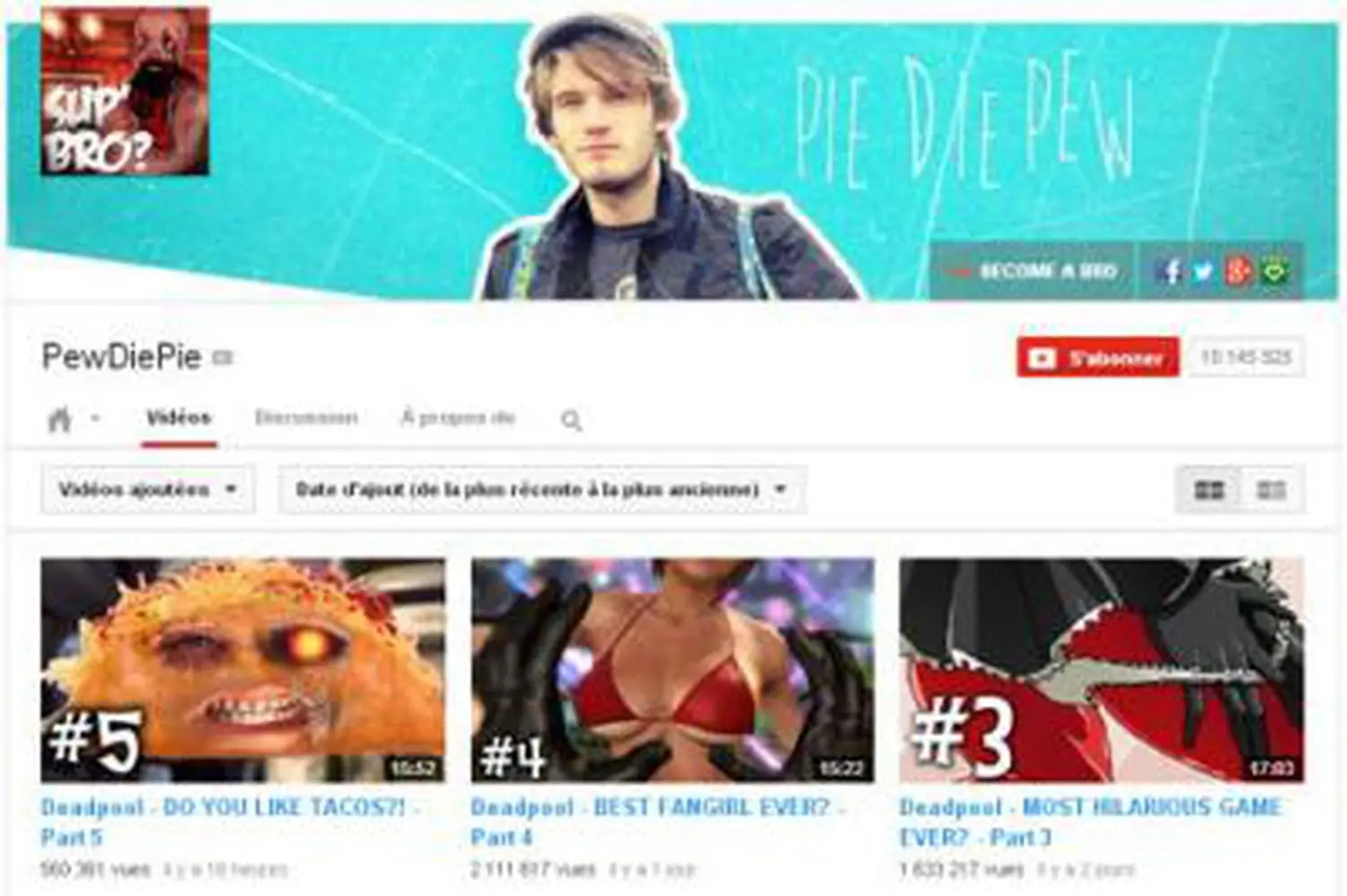
In the ever-evolving landscape of online video, a new monarch has ascended the throne. Felix Kjellberg, a 23-year-old Swedish gamer better known by his online alias PewDiePie, has officially become the most viewed creator on YouTube, amassing a staggering 1.96 billion views across his channel. This milestone dethrones the previous record holder, South Korean pop star Psy, whose viral hit "Gangnam Style" had held the top spot with over 1.7 billion views. PewDiePie's explosive growth, including a record-breaking week where 349,000 new subscribers joined his community, underscores a seismic shift in how audiences consume entertainment worldwide.
The Rise of a Gaming Icon
Felix Kjellberg was born on October 24, 1989, in Gothenburg, Sweden. He initially pursued a degree in industrial economics and technology management at Chalmers University of Technology, but he dropped out in 2010 to focus on his burgeoning YouTube channel. What started as a hobby quickly transformed into a career as his irreverent, high-energy Let's Play videos resonated with a global audience. PewDiePie specialized in horror and action games, often screaming, joking, and reacting with over-the-top enthusiasm. His catchphrases and bro-like camaraderie with viewers—whom he called "bros"—created a fiercely loyal community. By 2012, his channel was growing exponentially, and by late 2013 he became the most subscribed channel on YouTube, a title he would hold for several years.
Comparing Records: PewDiePie vs. Psy
Psy's "Gangnam Style" was a cultural phenomenon that broke YouTube's view counter in 2012, peaking at over 1.7 billion views. It symbolized the power of a single viral video. However, PewDiePie's achievement is fundamentally different: it is cumulative, based on the total aggregate views of hundreds of videos. This distinction highlights the shift from one-hit wonders to sustained content empires. While Psy's video was a passive viewing experience, PewDiePie built an interactive ecosystem where fans felt personally connected. His weekly view count of 50 million dwarfed the average of even the most popular music videos. The younger, digitally native Generation C—where C stands for "connected"—gravitated toward this model, watching YouTube twice as much as traditional television, according to Google's Think Insights.
Content Style and Community Building
PewDiePie's formula centered on authenticity and chaos. He filmed himself playing games like Amnesia: The Dark Descent, Five Nights at Freddy's, and Minecraft, often with little editing. His commentary was spontaneous, ranging from hilarious outbursts to heartfelt reflections. This raw approach made viewers feel like they were hanging out with a friend. He also pioneered the use of "shout-outs" and interactive elements, such as encouraging fans to create fan art or memes. The term "bro" became a badge of identity, fostering a sense of belonging that many traditional media outlets struggled to replicate. This community-driven model would later influence hundreds of other gaming channels and set the standard for influencer-fan relationships.
Monetization and Industry Impact
PewDiePie's success translated into significant financial rewards. At his peak, he was earning an estimated $15 million annually from ad revenue, merchandise, and sponsorship deals. He signed an exclusive partnership with YouTube for livestreaming in 2019 and later moved to YouTube competitor DLive in a lucrative deal. His influence also affected the gaming industry: indie titles featured on his channel often saw massive sales spikes, a phenomenon dubbed the "PewDiePie effect." Developers sought his coverage to boost visibility. Moreover, his success validated Let's Play as a legitimate content genre, prompting platforms like Twitch and YouTube Gaming to invest heavily in live streaming.
Challenges and Controversies
Despite his astronomical rise, PewDiePie's career was not without controversy. In 2017, The Wall Street Journal published an article accusing him of anti-Semitic and Nazi imagery in several videos, which led to the cancellation of his YouTube Premium series and loss of partnerships with Disney and Maker Studios. PewDiePie defended himself, claiming he was only trying to push the boundaries of absurdist humor, but the incident sparked a broader debate about hate speech and platform responsibility. He later adjusted his content to be less offensive, focusing more on commentary and meme reviews. Other scandals, including a feud with fellow YouTuber Marzia (his future wife) and a brief flirtation with far-right ideology in 2018, tested his fan base's loyalty. Yet his subscriber count continued to grow, demonstrating both resilience and the complexity of online fame.
The Bro Army and Subscriber Milestones
PewDiePie's subscriber count became a cultural benchmark. In 2016, he became the first individual channel to reach 50 million subscribers. By 2019, he was locked in a fierce battle with Indian music label T-Series for the title of most subscribed channel. This rivalry, dubbed "Subscribe to PewDiePie," turned into a global internet campaign, with fans hacking printers, billboards, and even the New York Stock Exchange to promote his channel. PewDiePie eventually prevailed for a time, though T-Series later overtook him permanently. Nevertheless, the campaign highlighted the immense passion of his audience. Even in 2023, PewDiePie remains one of the top 10 most subscribed channels on YouTube, with over 111 million subscribers, though he has shifted toward a more relaxed vlogging and commentary style.
Broader Trends in Online Video
The PewDiePie phenomenon reflects larger shifts in media consumption. Traditional TV viewership continues to decline among younger demographics, while platforms like YouTube dominate screen time. Creators like PewDiePie have built direct relationships with audiences, bypassing traditional gatekeepers. This has empowered a new generation of independent entertainers, from gamers to beauty gurus, who rely on data-driven algorithms to grow. PewDiePie's early success also paved the way for subscription-based models like YouTube Memberships and Super Chat, as well as the rise of alternative platforms such as Twitch. His journey from a bedroom streamer to a global influencer embodies the democratization of fame enabled by the internet.
Life Beyond YouTube
In recent years, PewDiePie has diversified his career. He launched a gaming app, produced a documentary series on his own life, and authored a book titled "This Book Loves You," which became a bestseller. He also married Italian YouTuber Marzia Bisognin in 2019 and the couple moved to Japan, where they adopted a minimalist lifestyle. His content evolved from gaming to include travel vlogs, commentary on internet culture, and reaction videos. While his viewership has declined from its peak, his influence endures. He remains a respected elder in the YouTube community, often mentoring younger creators and reflecting on the changes in the platform over the past decade.
The Legacy of PewDiePie
Felix Kjellberg's impact on YouTube and digital culture is indelible. He demonstrated that a single individual with a camera and a passion for gaming could build an empire that rivals traditional media conglomerates. His record of 1.96 billion views was not just a personal achievement but a signpost for the future of entertainment. As more creators follow in his footsteps, the lines between amateur and professional, personal and public, continue to blur. PewDiePie's story is a case study in the power of authenticity, community, and relentless creativity. It also serves as a cautionary tale about the pressures of constant visibility and the perils of algorithm-driven content. Nonetheless, for a generation of fans, his videos were a source of laughter, comfort, and connection—a legacy that will persist long after the view counts reset.
Source: Linternaute News