

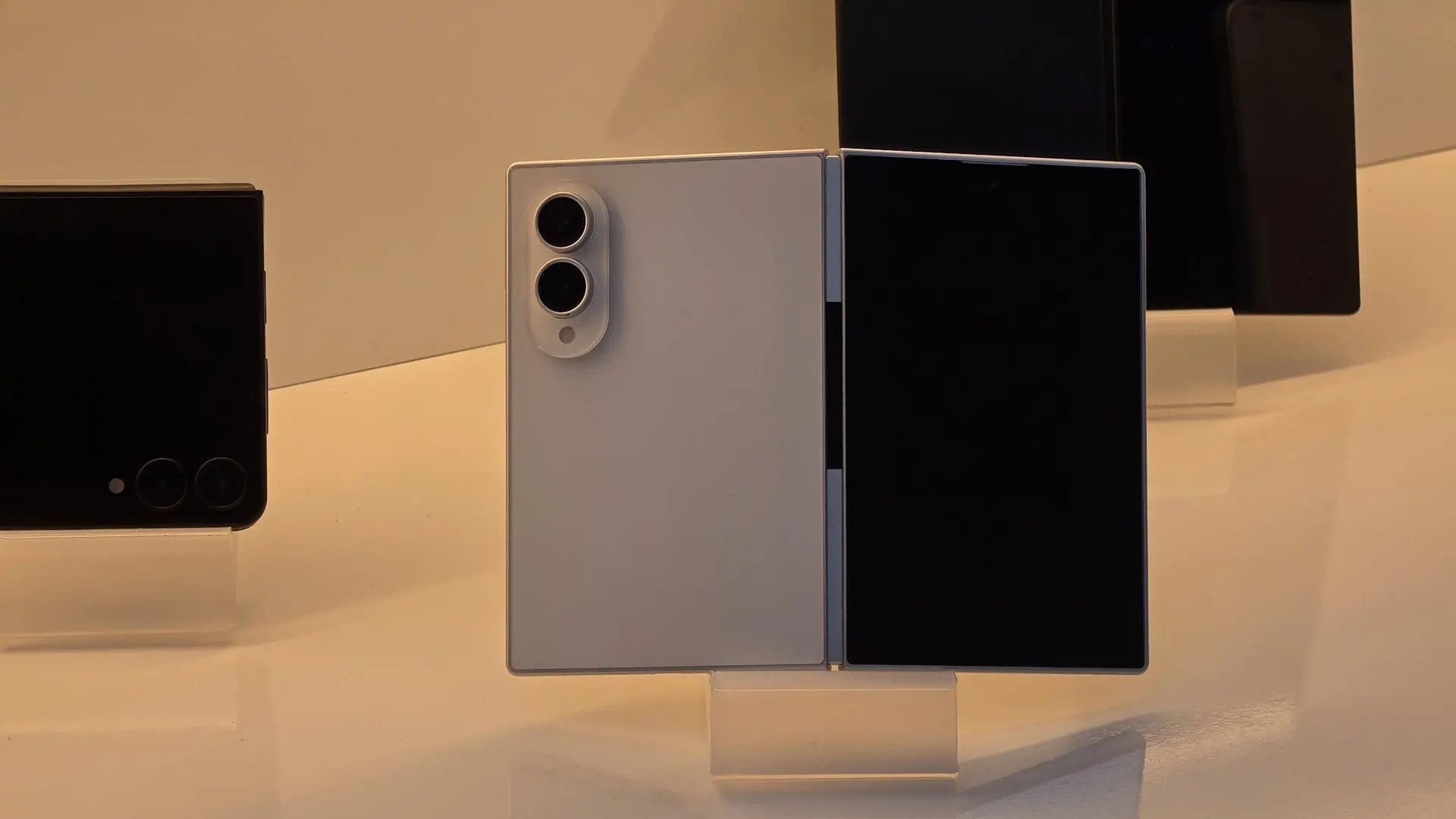
As Samsung gears up for its next Galaxy Unpacked event on July 22, new production estimates show the company is making a significant bet on the Galaxy Z Fold 8 – the so-called 'Wide Fold' model. According to a report from industry insiders cited by ET News, Samsung has set production volume for the Galaxy Z Fold 8 at 2.8 million units, while the higher-end Galaxy Z Fold 8 Ultra will be produced at 2 million units. The Galaxy Z Flip 8, meanwhile, is slated for 1.5 million units.
The figures mark a notable shift from Samsung's earlier planning, which had initially aimed for similar volumes between the Z Fold 8 and the Z Fold 8 Ultra. The revised numbers indicate strong internal confidence that the wider 4:3 aspect ratio of the Z Fold 8 will resonate more strongly with consumers than the Ultra's more traditional foldable dimensions. This strategic pivot comes as Apple is widely expected to launch its own foldable iPhone later this year – also with a 4:3 aspect ratio – which industry insiders now describe as 'effectively being accepted as the market standard'.
Understanding the Wide Fold difference
The Galaxy Z Fold 8's 4:3 aspect ratio provides a nearly square screen when unfolded, offering a more balanced canvas for multitasking, reading, and productivity applications. Unlike the tall, narrow cover screens of earlier foldables, the Wide Fold's approach mimics the proportions of a tablet, making apps feel less cramped. This design philosophy is gaining traction across the industry, with several Chinese manufacturers also experimenting with similar ratios.
In contrast, the Galaxy Z Fold 8 Ultra is expected to retain a more elongated aspect ratio (similar to the Z Fold 5 or 6), prioritizing screen real estate for video consumption and one-handed use. However, the production numbers suggest Samsung believes the broader market is ready to move beyond the 'phablet' era to something closer to a true pocketable tablet.
Behind the production numbers
The reported production volumes represent total units Samsung plans to manufacture over the lifecycle of these devices. A 2.8 million target for the Z Fold 8 is ambitious for a premium foldable, especially given that global foldable shipments remain a fraction of traditional smartphone sales. To put it in perspective, Samsung's entire foldable lineup shipped roughly 12 million units in 2025 – so the Z Fold 8 alone accounting for nearly a quarter of that would signal a major push.
The decision to allocate more resources to the Wide Fold also reflects broader market research. Analysts at Counterpoint Research and IDC have noted that foldable buyers increasingly prioritize productivity features over raw specs. Samsung's own internal surveys reportedly showed that users of the previous Z Fold models wished for a more comfortable reading and app-splitting experience – exactly what the 4:3 ratio delivers.
The Apple factor and the 4:3 standard
Apple's rumored entry into the foldable market has been a long-anticipated catalyst. If the 4:3 aspect ratio becomes standard for the foldable iPhone, it could reshape the entire category. Historically, Apple's design choices have often influenced industry norms – from the notch to the removal of the headphone jack. In this case, Samsung is positioning the Z Fold 8 to be compatible with the expected ecosystem shift. The report from ET News quotes an industry source saying, 'The foldable iPhone’s 4:3 aspect ratio is effectively being accepted as the market standard.'
This alignment may also simplify app development. Many Android apps already support tablet interfaces, but the 4:3 ratio bridges the gap between phone and tablet layouts more gracefully than the tall 21:9 or 22:9 ratios found on some foldables. Developers could potentially target a single aspect ratio for both Android and iOS foldables, streamlining optimization efforts.
What about the Galaxy Z Flip 8?
The lower production target for the Z Flip 8 (1.5 million units) is also telling. While flip-style foldables have enjoyed popularity due to their compact size and nostalgic design, the segment appears to be stabilizing. Samsung may be focusing its resources on the book-style form factor, which offers more differentiation from traditional smartphones. The Z Flip 8 is expected to feature a Snapdragon processor in some regions and an Exynos 2600 in others – a dual-chip strategy that Samsung has employed before to manage supply chain costs.
Nevertheless, the Z Flip remains a key part of Samsung's foldable portfolio, especially for younger demographics and fashion-conscious users. Its lower production volume does not necessarily indicate a lack of confidence, but rather a more cautious approach in a segment that has yet to see a breakout hit.
The impact of the RAM crisis
All three upcoming foldables are expected to come with higher price tags than their predecessors, partly due to the ongoing global RAM shortage. Volatile pricing for memory chips has forced manufacturers to increase device costs. However, Samsung's decision to produce more Z Fold 8 units despite these higher costs suggests the company believes consumers will pay a premium for the improved form factor. The Z Fold 8 and Z Fold 8 Ultra will both feature the Snapdragon 8 Elite Gen 5 for Galaxy processor, while the Z Flip 8 may use a mix of Snapdragon and Exynos chips.
Production volumes are not set in stone; they can be adjusted based on pre-order numbers and early sales data. But the initial allocation of 2.8 million units for the Z Fold 8 sends a clear message: Samsung is all-in on the Wide Fold.
Historical context: from narrow to wide
Samsung's foldable journey began with the Galaxy Fold in 2019, which featured a 4.6-inch cover display and a 7.3-inch inner screen with a 4.2:3 aspect ratio. Subsequent models like the Z Fold 2, 3, and 4 gradually widened the cover screen, but the inner display remained relatively tall. The Z Fold 5 brought a slight refinement, and the Z Fold 6 introduced a 6.3-inch cover display. However, the Z Fold 8 marks the first time Samsung has explicitly marketed a 'Wide' version of its flagship foldable.
This evolution mirrors the broader trend in mobile displays: from the early 3:2 and 4:3 ratios of feature phones to the 16:9 and 18:9 of modern slabs. Now, with foldables forcing a new paradigm, the industry is circling back to a square-like ratio that maximizes usable area for both reading and productivity. The 4:3 ratio, once the standard for CRT monitors and early tablets, is experiencing a renaissance in the foldable era.
What to expect at Galaxy Unpacked
At the July 22 event, Samsung will officially announce the Galaxy Z Fold 8 Ultra, Z Fold 8, and Z Flip 8. Rumors suggest the Z Fold 8 Ultra may feature a titanium frame and an upgraded camera system, while the Z Fold 8 will emphasize the wider inner screen. Both will run One UI 7 based on Android 16. The Z Flip 8 is expected to retain the 6.7-inch inner display but could see improvements in battery life and hinge durability.
Pre-orders are likely to open shortly after the event, with shipping scheduled for early August. Given the production numbers, Samsung is preparing for strong demand – especially for the Wide Fold.
Source: Android Authority News