

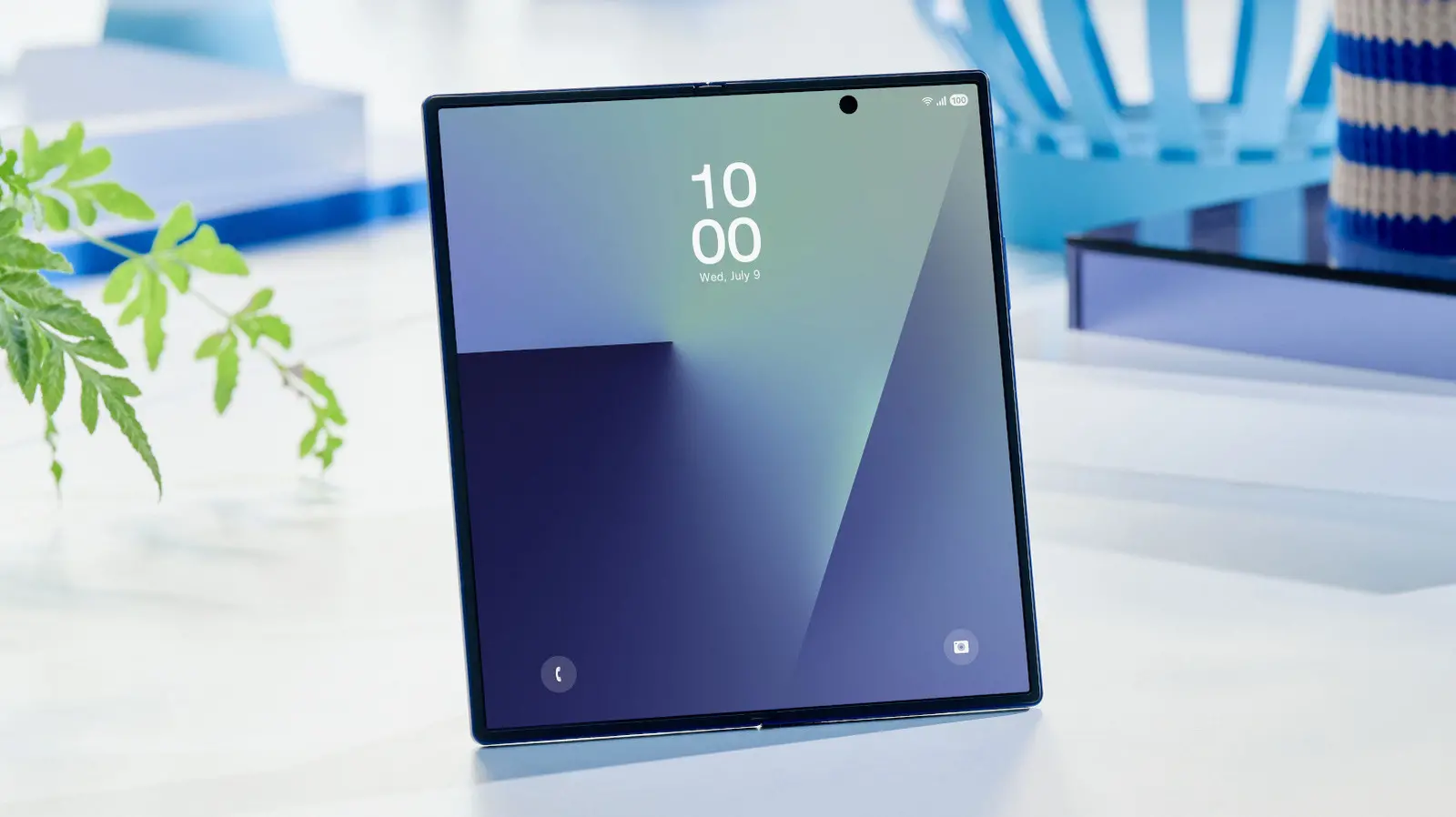
Samsung has introduced its new Flex Titanium display technology, which will debut with the next generation of Galaxy foldable devices. This advancement represents a significant leap forward in foldable screen durability and aesthetics, addressing two of the most persistent criticisms of current foldable phones: the visibility of the crease and the fragility of the display. The technology features a new structural design that leverages material innovations to offer a more robust display with a less noticeable crease.
The company says it was built on "seven generations of foldable innovation and engineering expertise," suggesting it will launch with the Galaxy Z Fold 8 and Flip 8. Samsung is expected to unveil the new foldables at its upcoming Unpacked event on July 22. The timing aligns with Samsung's tradition of launching its flagship foldable devices in the summer, typically following its Galaxy Unpacked events that showcase the latest innovations in the foldable form factor.
The Technology Behind Flex Titanium
The foundation of Flex Titanium lies in two key components developed by Samsung Display. The first is a titanium alloy film that sits directly beneath the OLED panel. Titanium alloys are known for their exceptional strength-to-weight ratio, high corrosion resistance, and biocompatibility, making them a popular choice in aerospace, medical implants, and high-end consumer electronics. In the context of a foldable phone, this titanium alloy film provides the display with 20 times greater mechanical stiffness compared to previous generations. This means the screen is significantly less prone to deformation under pressure, reducing the risk of permanent damage from accidental presses or drops.
Underneath that titanium alloy film is a titanium plate, which provides stable structural support when the device is unfolded while maintaining the flexibility needed to withstand repeated folding. The plate is engineered not just for strength but also for precision. The new titanium plate eliminates "air gaps between the module and [its] adhesive through advanced hole processing technology." Kyung-Jin Yoo, Executive Vice President for Samsung Display, explained that the "micro-patterned holes" in the folding section of the titanium plate provide "flexibility with robust durability." This is a critical innovation because traditional foldable displays often suffer from air gaps that can cause screen distortion, bubbling, or premature failure at the hinge point. By eliminating those air gaps, Samsung ensures a more uniform surface and reduces the risk of delamination over time.
The micro-patterned holes are essentially tiny perforations that allow the titanium plate to flex along the folding axis without compromising its structural integrity. This is analogous to how a piece of paper can be folded more easily along a crease, but with advanced materials engineering that prevents the metal from fatiguing after thousands of folds. The holes are arranged in a precise pattern that distributes stress evenly across the folding area, preventing concentrated points of failure.
Historical Context of Foldable Displays
Samsung has been pioneering foldable smartphone technology since the launch of the original Galaxy Fold in 2019. The first generation faced numerous challenges, including a fragile screen that could be easily damaged by debris, a prominent crease, and a hinge that allowed particles to enter the device. Over the subsequent years, Samsung refined the design with each iteration. The Galaxy Z Fold 2 introduced a more robust hinge with a sweeping motion, the Fold 3 added water resistance and an under-display camera, the Fold 4 reduced weight and improved the screen protector, and the Fold 5 focused on thinner bezels and a more seamless folding experience. The Fold 6 and Fold 7 continued to enhance durability and reduce the crease through improved materials and hinge mechanisms.
Throughout this evolution, the crease has remained a visual and tactile annoyance for many users. While it rarely affects functionality, it is a constant reminder that the display is not a traditional solid screen. Samsung has experimented with U-shaped and drop-shaped hinge designs to reduce the crease, but the underlying layer of plastic or polymer that houses the folding mechanism inevitably bends, leaving a visible line. Flex Titanium appears to be the most radical solution yet, using metal to provide a counter-acting force that smooths out the crease.
Other smartphone manufacturers have also entered the foldable market. Huawei, Oppo, Vivo, Xiaomi, and Motorola have all released foldable devices, each with their own approaches to the hinge and display. Some have focused on outward-folding screens (like the Huawei Mate X series), while others have elected to use ultra-thin glass (UTG) like Samsung. However, no competitor has yet introduced a titanium alloy reinforcement layer directly within the display stack, giving Samsung a potential edge in durability and crease reduction.
Implications for the Galaxy Z Fold 8 and Flip 8
The Flex Titanium display is expected to appear in both the Galaxy Z Fold 8 and the Galaxy Z Flip 8. The Fold series is Samsung's flagship productivity-focused foldable, with a large inner screen that unfolds to roughly tablet size, while the Flip series is a more compact clamshell design that folds into a small square. Both benefit from a stronger, less creased display. For the Fold, a less visible crease enhances the immersive experience when watching videos or editing documents. For the Flip, durability is paramount because the screen is exposed when closed and often handled with one hand.
Beyond the display, the Galaxy Z Fold 8 is rumored to include other improvements such as a lighter frame, improved camera sensors, faster charging, and possibly a built-in S Pen slot. The Flip 8 may see improvements to the cover screen size and overall thickness. However, the Flex Titanium display is likely the headline feature that will drive upgrades from users who have been waiting for a foldable that feels as sturdy as a traditional slab phone.
The commercial impact of this technology could be significant. Samsung has consistently been the leader in foldable smartphone sales, commanding over 60% of the global market according to recent reports. If Flex Titanium successfully reduces failure rates and improves customer satisfaction, it could accelerate mainstream adoption of foldable phones. Analysts have long predicted that foldables will eventually replace traditional candy-bar smartphones as the default form factor, but slow improvements in durability have kept many consumers on the sidelines. A major leap in screen strength could be the catalyst that finally pushes foldables into the mass market.
Early Impressions and Expectations
We only have a few days left before we can see for ourselves whether the next generation of Samsung devices truly have less visible folds. At CES earlier this year, however, Samsung showed a "seamless" foldable display exhibit that featured a device with an invisible crease at the center. That demo unit was compared side by side with an older Samsung phone, and the older phone looked messy by comparison due to a very visible crease. The result was striking: the new display appeared as flat and uniform as a conventional non-foldable screen when unfolded.
Additionally, a leaked video of what is purported to be the Galaxy Z Fold 8 Ultra has surfaced online. The video shows a device with a very smooth screen that has no visible crease. While the authenticity of such leaks is always uncertain, they align with the improvements Samsung has described in its official press release. The combination of titanium alloy film and micro-patterned holes appears to be a genuine solution to the crease problem, not just a marketing claim.
Real-world performance will depend on long-term reliability. Titanium is famously resistant to fatigue, but the hinge mechanism itself must also withstand hundreds of thousands of folds. Samsung has tested the Flex Titanium display to 200,000 folds, which is the standard for its foldable devices. That means the phone should last for about five years of daily use if folded 100 times per day. The inclusion of titanium also adds a premium feel that many users associate with high-end watches and luxury phones, such as the Apple Watch Ultra or the iPhone 15 Pro, which also use titanium frames.
The price of the Galaxy Z Fold 8 and Flip 8 is expected to remain similar to previous generations, though the addition of titanium could increase manufacturing costs. Samsung may choose to absorb those costs to remain competitive, especially as Chinese rivals continue to offer foldables at lower prices. The Unpacked event on July 22 will provide all the details, including pricing, release date, and color options.
Overall, the Flex Titanium technology represents a meaningful step forward in the evolution of foldable devices. By tackling both crease visibility and structural durability with advanced materials, Samsung addresses the two main reasons why some consumers still hesitate to buy a foldable phone. If the real-world experience matches the promise of the lab demonstrations, the next generation of Galaxy Z Fold and Flip devices could set a new standard for the entire smartphone industry.
Samsung's investment in foldable display R&D has been enormous, and the company holds thousands of patents related to hinge mechanisms, display protection, and flexible substrates. This latest innovation reinforces its commitment to maintaining leadership in the foldable segment, even as competitors catch up in other areas such as cameras and charging speed. The upcoming Unpacked event will be a critical moment for Samsung to demonstrate that its foldables are not just novelties but viable primary devices for everyday users.
Source: Engadget News