

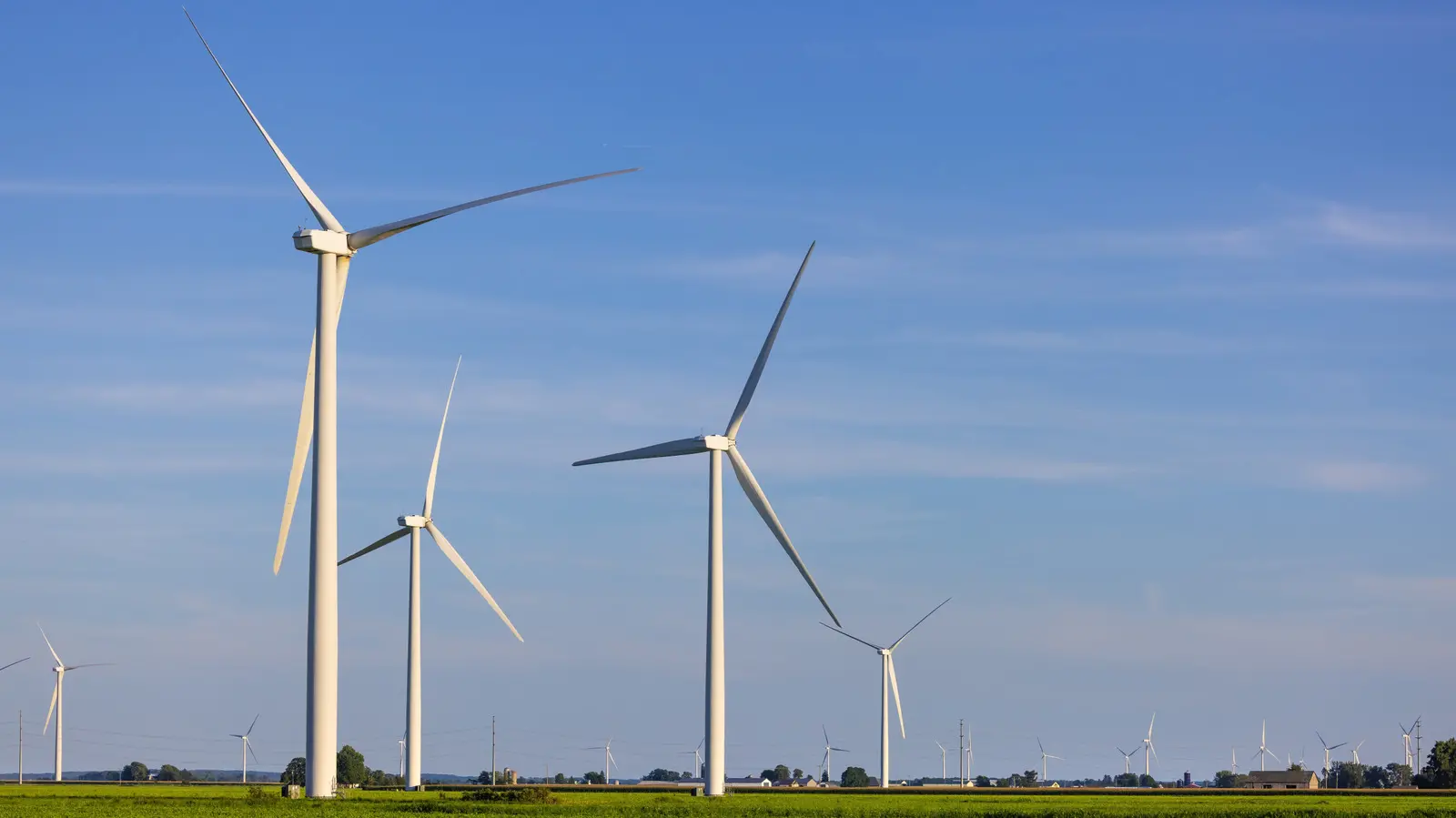
For years, the U.S. Department of Energy (DOE) has faced a major bottleneck in expanding wind energy: the labor-intensive, costly process of manufacturing turbine blades. Traditional methods require building a full-scale plug—a physical model of the blade—then using it to create a mold for the final composite structure. This approach demands significant time and resources, especially when blade sizes vary widely for different turbine models and locations. Now, the DOE is turning to large-format 3D printing to rethink the entire manufacturing paradigm.
The Challenge of Traditional Blade Manufacturing
Wind turbine blades are among the largest composite structures ever built. Modern offshore blades can exceed 100 meters in length, and even onshore blades often span 50 to 70 meters. Producing a single blade involves multiple stages: designing the aerodynamic profile, creating a precise plug (often made of wood, foam, or clay), laying up layers of fiberglass and resin in a mold, curing the composite, and finishing the surface. The plug itself can take months to craft and requires expert craftsmanship. Moreover, each blade variant—for different turbine capacities, wind conditions, or installation environments—needs its own plug and mold, dramatically increasing upfront costs.
The current industry standard relies heavily on manual labor and custom tooling. While the three-bladed horizontal-axis rotor remains the most efficient design, it is not the only possibility. Experimental designs like two-bladed turbines, vertical-axis rotors, or flexible blades have been explored but rarely commercialized due to the expense of prototyping and scaling molds. This limits innovation and keeps the wind industry tied to established configurations.
How 3D Printing Is Transforming the Process
Researchers at national laboratories, including Oak Ridge National Laboratory, are pioneering the use of big-area additive manufacturing (BAAM) to print molds directly from digital blueprints. Instead of constructing a plug, engineers design the mold in computer-aided design (CAD) software and then print it layer by layer using a carbon fiber-reinforced thermoplastic. The BAAM machine can produce polymer components over ten times larger than conventional 3D printers and operates hundreds of times faster, making it suitable for the massive molds needed for wind blades.
Once the mold is printed, workers apply fiberglass layers, machine the surface to the required finish, and integrate heating ducts for curing. This eliminates the plug entirely, reducing production lead time from months to weeks and cutting material waste. The approach also enables rapid iteration—engineers can tweak a digital design and print a new mold without starting from scratch. This flexibility could encourage the adoption of novel blade geometries, potentially leading to more efficient or lighter designs that enhance turbine performance.
The DOE's Wind Energy Technologies Office and Advanced Manufacturing Office are collaborating with private partners to scale this technology. Several pilot projects have already demonstrated successful blade production using printed molds, and the next step is to move toward high-volume manufacturing. The cost savings are substantial: a conventional mold for a 50-meter blade can cost over $1 million; 3D printing could cut that by half or more, depending on complexity.
Broader Implications for Wind Energy
Wind energy already supplies more than 10% of U.S. electricity, powering tens of millions of homes. As the nation aims to decarbonize the grid by 2035, the DOE projects that wind capacity will need to triple. Faster, cheaper blade manufacturing is critical to meeting those targets. Moreover, the United States is home to major turbine manufacturers like GE Renewable Energy, Vestas (which has U.S. factories), and Siemens Gamesa. Domestic blade production can reduce supply chain vulnerabilities and create jobs.
The technology also has environmental benefits. Traditional plug-and-mold processes generate substantial waste from discarded plugs, trimming scrap, and off-spec molds. Additive manufacturing reduces waste and allows the use of recyclable thermoplastics, aligning with the industry's push for circular economy principles. Some researchers are exploring how to print blades directly—without molds—using robotic arms and fiber placement, but that technology is less mature.
Export potential is another consideration. Many countries are expanding wind power, and U.S.-made turbines could compete globally. The DOE's 3D printing initiative positions American manufacturers at the forefront of innovation, potentially setting new standards for blade production worldwide.
Other Initiatives Exploring 3D Printing for Wind
Beyond mold printing, the DOE is funding projects to print entire blade sections, integrate sensors during manufacturing, and develop new composite materials. For instance, the Advanced Manufacturing Office has partnered with universities to explore in-situ monitoring that detects defects during 3D printing, improving quality control. Private companies like Molded Fiber Glass Companies and TPI Composites are also experimenting with additive techniques.
Internationally, the European Union's H2020 program has funded projects like “SUSPEND” that combine 3D printing with automated fiber placement. However, the U.S. effort is notable for its scale and focus on direct mold printing, which offers the most immediate cost savings. The DOE expects that within five years, 3D-printed molds will be standard for most new blade lines.
Design Flexibility and Future Blade Concepts
One of the most exciting prospects is the potential to move beyond the three-bladed horizontal-axis rotor. While this design is dominant due to years of optimization, future blades could be segmented, curved, or even have active control surfaces. 3D-printed molds make it economically feasible to produce small batches of experimental blades for field testing. For example, a twisted blade that changes pitch along its length could be more efficient in varying wind speeds, but its complex geometry is difficult to mold using conventional techniques. With additive manufacturing, such designs become practical.
The DOE is also investigating how 3D printing can reduce the weight of blades without sacrificing strength. Lighter blades lower the load on the turbine tower and foundation, reducing overall system cost. Printed molds allow for more intricate internal structures, such as hollow cavities or lattice reinforcements, that are impossible with traditional molding.
Overcoming Barriers
Despite the promise, challenges remain. Large-format 3D printers are expensive to install and maintain. The materials used must withstand the high temperatures and pressures of the composite layup process. Additionally, the surface finish of a printed mold requires post-processing to match the smoothness needed for aerodynamic blades. Researchers are addressing these issues through improved print parameters and hybrid systems that combine additive and subtractive manufacturing.
Standards and certification are also critical. Turbine blades must survive decades of harsh weather, including lightning strikes, ice, and fatigue. Any new manufacturing process must be validated by testing labs like UL and DNV GL. The DOE is working with these certifiers to develop guidelines for 3D-printed molds and the blades produced from them. Early results from fatigue tests on blades made with printed molds show comparable performance to conventionally made blades.
Workforce training is another aspect. The shift to digital manufacturing requires technicians skilled in CAD, 3D printing, and automation. Community colleges and trade schools are incorporating additive manufacturing into their wind energy curricula, supported by DOE grants.
In conclusion, the DOE's rethinking of wind turbine blade manufacturing through 3D printing represents a paradigm shift. By replacing the plug-and-mold workflow with direct digital production, the agency is unlocking faster timelines, lower costs, and greater design freedom. As the technology matures, it could accelerate the deployment of wind energy and help the United States meet its clean energy goals. The future of wind power may well be printed.
Source: SlashGear News