

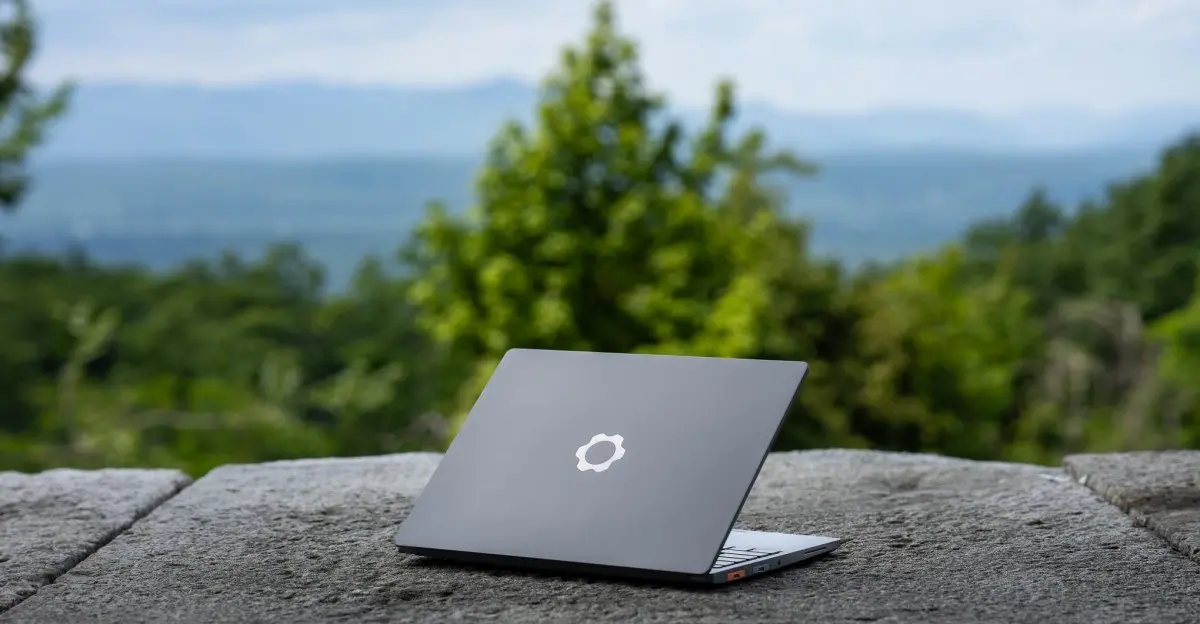
The Framework Laptop 13 Pro is a remarkable machine that combines modularity, repairability, and top-tier performance. However, its launch has been overshadowed by a staggering $800 price increase caused by the global RAM shortage, dubbed "RAMageddon." Originally priced at $2,299 for a prebuilt configuration, the same unit now costs $3,099 – a gut-wrenching hike that has forced even die-hard Framework fans to reconsider their orders.
Design and Build Quality
The Laptop 13 Pro marks a significant leap forward in Framework's design language. It features an all-black chassis with a matte finish that truly looks black, not a dark gray. The build is rigid and robust, far removed from the somewhat flimsy feel of its predecessor, the Laptop 16, and a clear improvement over the standard Laptop 13. The new one-piece aluminum frame for the keyboard deck eliminates flex, providing a solid typing experience. Disassembly remains a breeze – just five simple screws grant access to all internal components, including the modular ports, battery, storage, and the new LPCAMM2 memory modules. This is the essence of Framework's philosophy: ownership and upgradability.
Keyboard and Trackpad
The keyboard retains the 1.5mm key travel of previous models, but the new aluminum frame gives it a slightly more refined feel – each keystroke is crisp and satisfying. The 1080p webcam is adequate, sharp enough for video calls, though it can appear slightly grainy in low light. The real star is the haptic trackpad, which is the best non-Apple implementation I have ever used. It provides consistent, responsive clicks across the entire surface, with a satisfying tactile feedback. This is a huge upgrade over the mechanical trackpad of the regular Laptop 13.
Display and Audio
The 13.5-inch IPS touchscreen is a delight. It offers a 2880 x 1920 resolution with a 120Hz refresh rate, a 3:2 aspect ratio, and a peak brightness of 700 nits. The matte finish reduces glare, and the touch responsiveness is excellent. However, the speakers remain a weak point. They are side-firing and lack bass, sounding thin and treble-heavy. While third-party software like FxSound (Windows-only) can improve the audio, it is a notable compromise in an otherwise premium package.
Performance and Battery Life
The review unit is powered by the Intel Core Ultra X7 358H, a 16-core Panther Lake processor with a 12-core Arc B390 integrated GPU. Paired with 32GB of LPCAMM2 RAM and a 1TB SSD, this laptop delivers strong performance for creative tasks and even some gaming. In Geekbench 6, it scored 2,845 single-core and 14,430 multi-core – competitive with AMD's latest offerings, though still behind Apple's M5 chips in raw multi-threaded workloads. The integrated GPU is surprisingly capable: in Cyberpunk 2077 at 1080p with low settings and XeSS upscaling, it averages 50-60 fps. Even at the native 2880x1920 resolution, frame generation can maintain 60 fps for a smooth experience in less demanding titles. Battery life is outstanding – around 10.5 hours of mixed use at high brightness, and Framework claims up to 17 hours of web browsing at lower brightness. This is a massive improvement over the AMD-based Laptop 13, thanks to the efficiency of the Panther Lake architecture and LPCAMM2 memory.
Thermal Management
Under sustained loads, the chassis can get uncomfortably hot. I measured temperatures near the hinge reaching 57°C (135°F) during a CPU-intensive benchmark. The keyboard remains cooler in the key areas, but the heat dissipation is a concern for users who push the laptop hard for extended periods. This is a trade-off for such a thin and light design.
The RAMageddon Impact
The $800 price hike is the most controversial aspect of the Laptop 13 Pro. Framework has raised prices across its entire lineup, and the 13 Pro is particularly affected because of its reliance on LPCAMM2 memory – a newer, more expensive technology that is currently in short supply. The global RAM shortage, driven by rising demand for AI servers and geopolitical tensions, has led to what industry analysts call a "perfect storm" of price inflation. Framework's decision to bump some preorders from 32GB to 16GB and raise prices has frustrated its core community. The subreddit is filled with cancellations and complaints, as even loyal fans question whether the value proposition still holds.
Framework's modular approach does offer some solace: existing Laptop 13 owners can upgrade to the new mainboard, screen, or trackpad individually, avoiding the full cost of a new laptop. But the price of those components has also risen. The situation highlights a broader crisis in the tech industry: companies are struggling to maintain affordable products as memory costs skyrocket. Some have canceled devices entirely; others, like Framework, are forced to pass the cost to consumers.
In the context of the overall market, the Laptop 13 Pro remains a unique and compelling product. Its upgradeability and repairability are unmatched, and its performance and build quality are top-notch. But the price – now $3,099 for the reviewed configuration – is difficult to justify when a MacBook Pro 14 with an M5 chip costs $1,949 and offers better performance, though at the cost of upgradability. Framework has always required a compromise of paying more for the freedom to repair and upgrade, but the gap has become a chasm.
As RAMageddon continues, the future of niche products like the Framework 13 Pro remains uncertain. The laptop itself is a triumph of engineering and user-centric design. But its price may confine it to a small audience of enthusiasts willing to pay a premium for modularity. For everyone else, the sting of that $800 increase – before a single unit shipped – is a bitter pill that may be too hard to swallow.
Source: The Verge News