

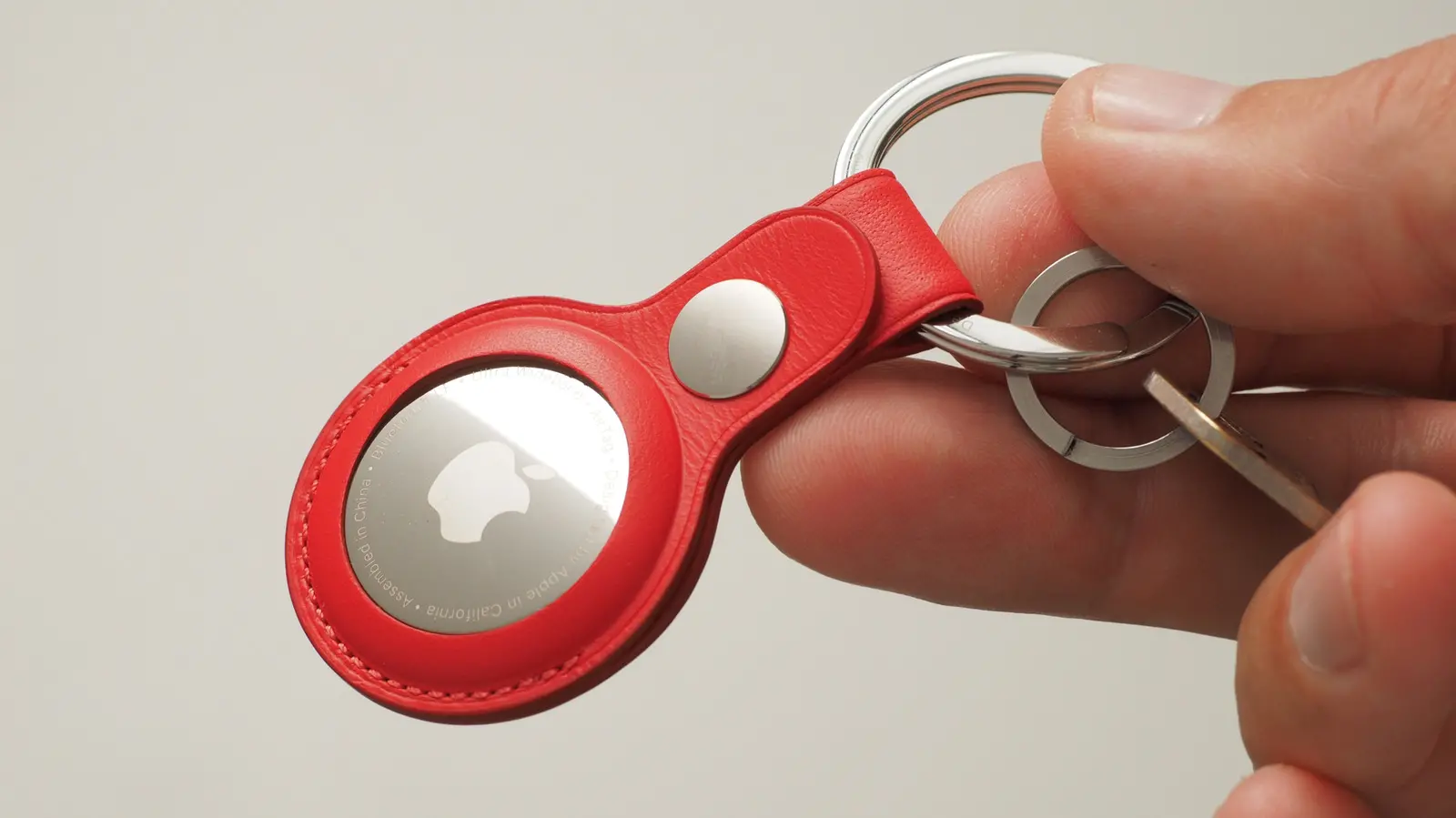
Bluetooth trackers have become essential tools for keeping tabs on everyday items like keys, wallets, backpacks, and even pets. Two of the most popular brands in this space are Apple's AirTag and Life360's Tile lineup. While both serve the same basic purpose—helping you locate misplaced belongings via your smartphone—they differ significantly in battery life, battery type, and overall maintenance. Understanding these differences is crucial for choosing the right tracker for your lifestyle and budget.
Whether it's an airline misplacing your checked luggage or you forgetting exactly where you left your backpack at home, it's nice to be able to look at your phone to locate the missing bag. That's why people have gravitated toward products like Apple AirTags and Life360's Tile trackers. These trackers aren't terribly punishing on the wallet, either. A single AirTag costs $29, and your basic Tile Mate is just $24.99. One thing you would hope to do with one of these trackers is attach it to an item and forget about it. After all, their usefulness only becomes apparent when something goes missing, which hopefully isn't very often. Unfortunately, these are battery-powered devices. So while they may be out of sight and out of mind most of the time, you do need to know when their batteries (or the trackers themselves) need to be replaced.
Battery Life Overview
For an Apple AirTag, you can expect the battery to last more than a year. Apple only produces one kind of AirTag, which recently received a serious upgrade, making it easy to remember the estimated life of its battery. Life360, on the other hand, has multiple Tile tracker options. The Tile Pro's battery lasts for around one year, but the basic Tile Mate, Tile Slim, and Tile Sticker all have batteries that can last up to three years. That may make the Pro version seem like a worse deal, but in reality, you won't be replacing that device nearly as often as you'd have to with the sealed-battery Tile models.
The battery life numbers are based on typical usage: the tracker is in standby most of the time and only activated when you ping it via the app. Factors like temperature, frequency of use, and signal strength can affect actual longevity. For instance, if you use the tracker's 'find' feature multiple times a day or if the tracker is in extreme heat or cold, the battery may drain faster. Additionally, AirTag uses a combination of Bluetooth and ultra-wideband (UWB) technology for precise finding, which can consume more power during active location sessions compared to Tile's standard Bluetooth-only approach (except the newer Tile Pro with UWB).
Replaceable, Sealed, and Rechargeable Batteries
The Tile Mate, Tile Slim, and Tile Sticker can last up to three years, but once their permanent batteries die, you'll have to buy new trackers to replace them. Meanwhile, the Tile Pro has a replaceable battery. Even though the battery only lasts one year, all you need to do is get a CR2032 coin battery and replace it when it dies. Rather than spending $24.99 for a Tile Mate every three years, you're spending $34.99 upfront for a Tile Pro and can replace its battery as needed. A pack of four Duracell CR2032 batteries currently sells for $3.99 on Amazon; at that price, you're essentially spending $1 per year to replace the Pro's battery.
The Apple AirTag has a surprisingly similar setup. Despite Apple products rarely allowing for user-replaceable parts and batteries, you can replace an AirTag's battery once it's dead with the very same CR2032 battery the Tile Pro uses, so you don't have to purchase a $29 replacement AirTag every year. Your iPhone will simply alert you when the tracker's battery is low, and you can change it. This is a major advantage over previous generations of Bluetooth trackers that required complete replacement. However, note that the AirTag uses a CR2032 with a bitterant coating to prevent ingestion by children, while standard CR2032s may work but can cause issues with the battery contact. Apple recommends using specific branded batteries like Duracell or Energizer that conform to AirTag specifications.
There's one big caveat to all of this, and that's Life360's pretty new GPS Pet Tracker. This is the only tracker of the bunch with a rechargeable battery, which lasts for about 14 days. It does have a six-month reserve mode, but with a pet being in constant motion, the battery can drain quite fast. The other trackers available are passive products, but this active one requires more regular upkeep. The GPS Pet Tracker uses cellular and GPS technology to provide real-time location, which is far more power-intensive than Bluetooth. It's designed for pets that might roam far from home, where Bluetooth range (typically 100-400 feet) is insufficient. The rechargeable battery is a compromise: you must charge it every two weeks, but you gain the ability to track your pet across the entire country via cellular networks.
Cost Analysis Over Time
When evaluating total cost of ownership, the battery type plays a pivotal role. For a Tile Mate at $24.99 with a 3-year battery, the cost per year of use is about $8.33. After three years, you need to buy a new tracker, so over six years you'd spend $49.98. For the Tile Pro at $34.99 with a 1-year replaceable battery, the initial cost is higher, but replacement batteries are cheap. Over six years, you'd buy one Pro and replace the battery five times (assuming you get the included battery as year 1), totaling about $34.99 + 5$1 = $39.99. So the Pro is slightly cheaper over six years, and you get additional features like longer range (400 ft vs 200 ft) and a built-in speaker.
For the AirTag at $29 with a replaceable battery lasting over a year (closer to 1.5 years typical), over six years you'd need about four battery replacements (assuming 1.5 years each) costing about $4 total, plus one AirTag purchase: $33. That makes AirTag comparable to Tile Pro in long-term cost. However, AirTag requires an iPhone or iPad for full functionality (with the Find My network), while Tile works with both iOS and Android. If you are an Android user, AirTag is not an option, so Tile becomes the default choice.
Another factor is the potential for lost trackers. If you misplace the tracker itself, the investment is lost regardless of battery cost. Some users attach trackers to high-value items like laptops or bikes, where the cost of the tracker is negligible compared to the item's value. In such cases, the replaceable battery is a convenience, not a significant cost driver.
Which Tracker for You?
Choosing between Tile and AirTag depends on your ecosystem and specific needs. For iPhone users, AirTag integrates seamlessly with the Find My app and leverages the vast network of hundreds of millions of Apple devices to help locate items even when out of Bluetooth range. Tile also has a community find network but is smaller. AirTag also offers Precision Finding with UWB on newer iPhones, which gives directional guidance. However, AirTag lacks a hole for key rings; you need a separate accessory, adding to cost.
For Android users, Tile is the primary option. Tile offers multiple form factors: the Tile Mate (general purpose), Tile Slim (for wallets), Tile Sticker (for small items like remote controls), and Tile Pro (for key chains with maximum range). The Tile Pro also now includes UWB in its latest version (2024), bringing it closer to AirTag's precision. But UWB on Tile Pro only works with Android phones that support it (like Samsung Galaxy S21+ and newer) and requires the Tile app.
Battery considerations also affect where you place the tracker. A Tile Sticker attached to a TV remote may be left untouched for years, making its 3-year sealed battery ideal. A Tile Pro on a frequently used keychain will experience more pings and may drain slightly faster, but the replaceable battery mitigates that. For a pet that roams, the GPS Pet Tracker is necessary, but be prepared for weekly charging.
Technical Details and Historical Context
The CR2032 battery is a 3-volt lithium coin cell widely used in small electronics like watches, calculators, and car key fobs. Both AirTag and Tile Pro use this battery, which is readily available and inexpensive. The capacity of a standard CR2032 is about 225 mAh, which provides enough power for a year or more of passive Bluetooth broadcasting and intermittent active connections. The sealed batteries in Tile Mate, Slim, and Sticker are typically lithium polymer or custom coin cells that are soldered or glued in, preventing user replacement for cost and size reasons. Life360 (which acquired Tile in 2021) has not published exact battery capacities, but the three-year claim is based on typical use.
The evolution of Bluetooth trackers began with the original Tile launched in 2013 via Kickstarter. Early versions had non-replaceable batteries and a one-year life. As the market grew, competitors like Samsung Galaxy SmartTag and Apple AirTag emerged. AirTag launched in 2021 and immediately set a new standard with its integration into Apple's ecosystem and replaceable battery. Tile responded by upgrading the Pro model to include a replaceable battery and eventually adding UWB. The GPS Pet Tracker is a new category that combines cellular and Bluetooth, targeting a niche that requires wide-area tracking.
Battery life remains a top consideration for consumers. A survey by a consumer research firm found that 72% of tracker owners consider battery life the most important feature, ahead of range and accuracy. Manufacturers are constantly improving power management. For example, AirTag uses a custom Apple-designed chip that optimizes Bluetooth and UWB power draw. Tile's latest firmware updates include smarter sleep modes that extend battery life when the tracker is stationary.
Another technical detail: all these trackers emit a Bluetooth signal that can be detected by nearby smartphones. The community find networks (Find My for Apple, Tile Network for Tile) rely on these signals. When an item is lost and out of the owner's Bluetooth range, any passing phone with the respective app can detect the tracker and anonymously relay its location to the owner. This passive network functionality has minimal impact on the tracker's battery because the tracker only broadcasts a low-power advertisement packet at intervals (typically every few seconds). The battery drain is primarily from active scanning and communication when the owner is actively trying to locate the item.
In summary, the battery landscape for Bluetooth trackers offers a choice between convenience and longevity. Sealed-battery trackers like Tile Mate provide a set-it-and-forget-it experience for up to three years, after which you replace the entire unit. Replaceable-battery trackers like AirTag and Tile Pro give you continuous use with low annual battery costs. The GPS Pet Tracker with rechargeable battery offers a different trade-off for active tracking. Understanding these differences helps you select the tracker that best matches your habits and the items you want to protect.
Source: SlashGear News