

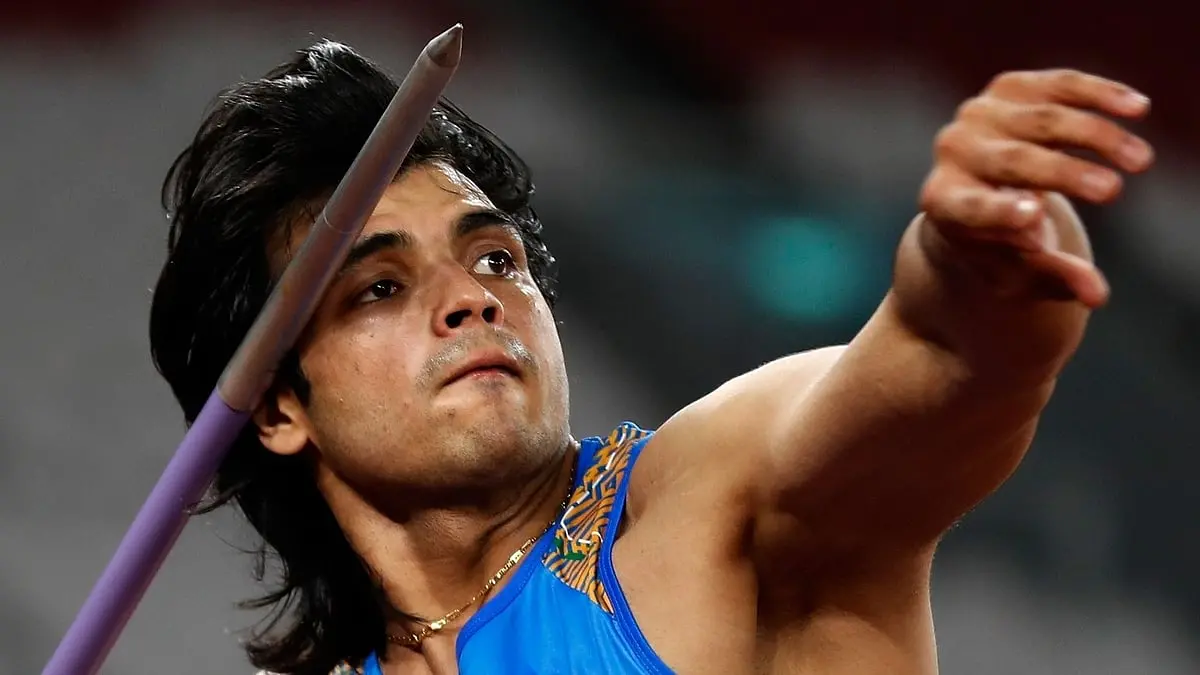
Haryana announces Rs 6 crore and government job for Neeraj Chopra
Haryana Chief Minister Manohar Lal Khattar on Saturday announced a cash reward of Rs 6 crore and a government job for Neeraj Chopra after the young javelin thrower won India's first Olympic gold medal in athletics. The announcement came within hours of Chopra's victory in Tokyo, where he produced a throw of 87.58 metres to top the final and secure a place in the country's sporting history.
Chopra, who belongs to Panipat district in Haryana, became only the second Indian after Abhinav Bindra to win an individual gold medal at the Olympics. Bindra had won the 10m air rifle event at the Beijing Olympics in 2008. Before Chopra's triumph in Tokyo, no Indian athlete had won an Olympic gold in track and field, making the 23-year-old's performance a landmark moment for Indian sport.
Khattar congratulated Chopra and said the athlete had not only won a medal but also captured the hearts of the entire country. 'The country was waiting for this moment for a long time, and the whole country is proud of him,' the chief minister said. He also spoke to Chopra's father, Satish Chopra, on the phone and conveyed his congratulations to the family.
The Haryana government's reward package reflects the state's practice of recognising high-achieving athletes with cash incentives and employment support. A government job is often seen as a significant form of security for sportspersons, particularly those from modest backgrounds, and the offer to Chopra was announced alongside the Rs 6 crore cash reward. The decision was made public as celebrations spread across Haryana and other parts of the country.
A career built on power, precision and persistence
Chopra's gold was the high point of a career that had been building steadily for several years. Born in Khandra village in Panipat district, he rose through the ranks of Indian athletics with a combination of raw power and technical discipline. His javelin throw depends on speed, rhythm, a strong block and an explosive release, and his progress has been marked by a series of important results at junior and senior levels.
In 2016, Chopra won the javelin title at the World Under-20 Championships, announcing himself as one of the most promising young throwers in the world. Two years later, he became the first Indian athlete to win gold in javelin throw at both the Commonwealth Games and the Asian Games. At the 2018 Commonwealth Games in Gold Coast, he won with a throw of 86.47 metres. Later that year, at the Asian Games in Jakarta, he improved to 88.06 metres and took gold. Those performances established him as India's leading track-and-field star and raised expectations ahead of the Tokyo Olympics.
Chopra's career has also been shaped by his connection with the Indian Army. He serves as a Subedar with 4 Rajputana Rifles, and his military background has been frequently mentioned in tributes to his discipline and composure. The Army has supported several athletes over the years, and Chopra's success was seen as a proud moment for the force as well as for the country.
His preparation for Tokyo was not without challenges. The Covid-19 pandemic disrupted training and competition schedules around the world, forcing athletes to adapt to restricted conditions. Chopra trained in India and abroad where possible, and he entered the Olympics with a national record of 88.07 metres, set in Patiala in March 2021. At Tokyo, he showed that he could produce his best when it mattered most, opening with a solid throw and then improving to 87.58 metres in the second round.
Why the Tokyo final mattered
The men's javelin final in Tokyo was a test of nerve as much as strength. Chopra's second-round effort of 87.58 metres put him in the lead, and he maintained his position through the remaining attempts. He held off two athletes from the Czech Republic, with Jakub Vadlejch taking silver and former world champion Vitezslav Vesely winning bronze. The result was not just a personal triumph but a breakthrough for Indian athletics on the biggest stage.
India has a long Olympic history, but its successes have often come in hockey, shooting, wrestling, badminton and boxing. The country's hockey golds in the pre-independence and early post-independence eras were team achievements. In individual events, Bindra's shooting gold in 2008 had been the only top prize. Track-and-field athletes had come close on several occasions, but none had reached the podium's highest step. Chopra's victory ended that wait and gave Indian athletics its first Olympic gold.
The significance was amplified by the fact that Chopra was competing in a technical event that requires precision under pressure. Javelin throwers have six attempts in the final, and a single foul or a drop in rhythm can change the outcome. Chopra's ability to deliver an early leading throw allowed him to compete with freedom while his rivals chased the mark. His performance was mature beyond his years, and it underlined the importance of consistent technique in a sport where centimetres decide medals.
His victory also came at a time when Indian sport was expanding beyond its traditional strongholds. The Tokyo Olympics saw Indian athletes compete with greater confidence across disciplines, and Chopra's gold became the most visible symbol of that progress. For a country that had long measured Olympic success in narrow terms, the sight of an Indian athlete standing at the top of a track-and-field podium was a powerful image.
Political and military tributes pour in
Defence Minister Rajnath Singh also congratulated Chopra for winning India's first Olympic gold medal in athletics. 'Gold medal in javelin throw event at the Olympics is unprecedented. Proud of him for creating history,' Singh said. He added that Chopra's golden victory had brought laurels for the Indian Army and that the athlete had performed like a true soldier at the Olympics.
'It is indeed a historic and proud moment for the entire country, including the Indian armed forces. Many congratulations to him,' the defence minister said. Indian Army Chief General Manoj Mukund Naravane and all ranks of the force also congratulated Chopra for his historic achievement. The tributes from the military establishment highlighted the close relationship between the armed forces and Indian sports, with several athletes receiving support and employment through the Army.
Punjab Chief Minister Amarinder Singh joined the wave of congratulations, describing Chopra's performance as a historic feat. 'Gold! Neeraj Chopra... you have created history and made the whole country proud,' he said. 'Your 87.58 m winning throw today will be part of the legends of the Track and Field arena. India owes you! Jai Hind,' he added. The messages from political leaders across states reflected the national character of the celebration, even as Haryana moved quickly to announce its own reward.
The announcements and tributes came on a day when Chopra's family home in Haryana became a focal point for celebrations. Neighbours, supporters and local officials gathered to mark the victory, while the athlete's father received calls from leaders and well-wishers. The Rs 6 crore reward and the government job offer were the most concrete official responses, but the emotional response from the public was equally visible.
A state and a nation celebrate
Haryana has a strong sporting reputation, particularly in wrestling, boxing, shooting and athletics. The state has produced a number of international medallists, and its athletes have often benefited from government schemes, cash awards and job opportunities. Chopra's success added a new chapter to that record, and the state government's prompt announcement was seen as an effort to recognise the scale of his achievement.
The cash reward and job offer also raised questions about how best to support athletes after major victories. While financial rewards can provide immediate security and encouragement, sustained investment in training facilities, coaching, sports science and competition exposure is equally important. Chopra's career illustrates the value of long-term support: his junior success was followed by senior medals, and his Olympic gold was the result of years of preparation rather than a single breakthrough.
For Chopra, the Tokyo Olympics brought a dramatic change in profile. He became a national hero, and his achievement was celebrated across generations. Children who had never watched a javelin competition tuned in to see his final. The image of an Indian athlete winning a track-and-field gold at the Olympics was both a source of pride and a reminder of what can be achieved with talent, hard work and institutional support.
The 87.58-metre throw that won the gold will be remembered as one of the defining moments of Indian sport. It gave the country its first Olympic gold in athletics, made Chopra only the second Indian individual gold medallist, and prompted Haryana to announce a Rs 6 crore reward and a government job. The tributes from the defence minister, the Army chief and the Punjab chief minister showed that the victory resonated far beyond the stadium. The final throw, the reward announcement and the flood of congratulations together marked a moment when Indian athletics moved into a new era.
Source: TheQuint News