

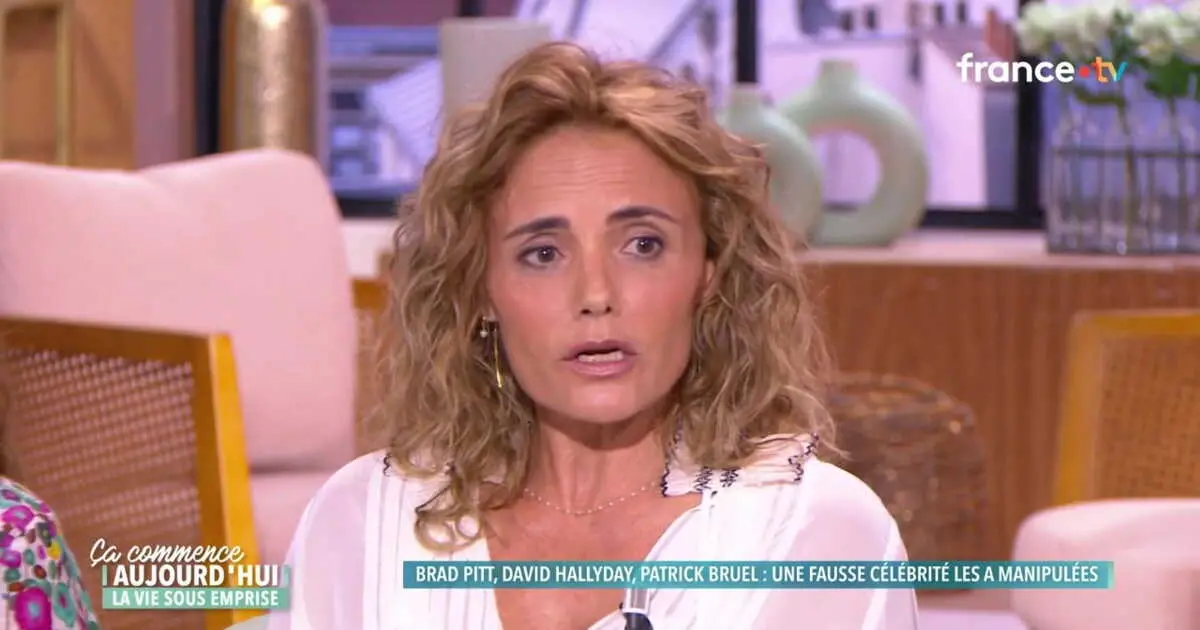
Anne Deneuchatel, a French interior decorator in her fifties, has decided to take legal action against two banks she says failed in their duty of vigilance after she was defrauded of €830,000 by scammers impersonating Brad Pitt. More than a year after her story became public, she has filed a complaint arguing that the banks should have blocked or at least questioned a series of high-value transfers whose labels were so bizarre that they should have triggered alarm. The banks have not been publicly identified.
Key facts at a glance
- Victim: Anne Deneuchatel, a French interior decorator in her fifties.
- Scam: She was targeted by criminals using artificial intelligence and fake online identities to pose as Brad Pitt and members of his supposed entourage.
- Loss: €830,000 over a period of about 18 months.
- Method: The scammers allegedly used AI-generated content, emotional manipulation and isolation to keep her engaged and persuade her to send money.
- Legal action: She has filed a complaint against two unnamed banks for what she says was a failure to meet their obligation to monitor suspicious transactions.
- Disputed transfers: Her lawyers point to 18 transfers with labels they describe as often nonsensical.
- Examples cited: “Opération Mr William Bradley Pitt” for €35,000; “Transplantation rein William Bradley Pitt Clinic Mayo Dr Hatem” for €59,000; and “Solde opération transplantation rein gauche Mr William Bradley Pitt Clinic Mayo États-Unis” for €59,000.
- Amount in question: Her side says at least €400,000 to €500,000 of the total transactions should never have passed the banks’ minimum controls.
- Claim: She is seeking compensation proportional to the harm she says the banks partly caused.
- Wider impact: Her testimony helped another victim of a fake Brad Pitt scam recognise that she was being manipulated.
The complaint turns on a question that has become increasingly important in fraud cases: when should a bank treat a customer’s transfer instruction as a red flag? Anne Deneuchatel is not arguing that the banks invented the scam or that they were the only cause of her losses. Her case, as described by her lawyers, is that the transfers carried labels so obviously strange and inconsistent that a routine review should have prompted questions, delays or a report to compliance teams. Instead, according to her account, the payments went through.
The story first came to public attention in January 2025, when a French television news programme reported how a fifty-something interior decorator had been drawn into an elaborate online relationship with someone she believed was the American actor Brad Pitt. Over time, the relationship became a financial trap. The scammers allegedly used artificial intelligence to produce images and other material that made the impersonation more convincing. They also reportedly approached her through a supposed family member, claiming that Brad Pitt’s mother had made contact. That detail helped lower her defences because it made the encounter feel less like a random message from a stranger and more like a personal connection with a famous family.
Anne Deneuchatel has said she was in a vulnerable period when the scam began. She has rejected the idea that victims are simply naive or greedy. “I never posted a message or a photo showing fragility or anything like that. Anyone can fall into this trap. This story happened to me because I was in extreme fragility,” she said in an earlier interview. Her account stresses the psychological mechanics of the fraud: the scammers did not simply ask for money immediately. They built a relationship, created a sense of intimacy, isolated her from people who might have raised doubts, and then introduced emergencies and financial demands that seemed urgent and personal.
How the alleged scam unfolded
According to her account, the scammers presented themselves as Brad Pitt and as people close to him. They used AI-generated content to sustain the illusion and to make their messages feel authentic. The relationship lasted long enough for doubts to be repeatedly pushed aside. Anne Deneuchatel has described how the manipulation worked: once she had become emotionally invested, it became extremely difficult to step back. “Despite my repeated doubts, my blocks, once you have set foot in this enthusiasm, it is very difficult to get out of it. It is a real profession that these crooks, these ‘brouteurs’ as they are called, practise to manipulate you, to turn your brain around,” she said.
She also described a technique of isolation from the outside world. The scammers allegedly worked to find their victim’s vulnerabilities and then used them to obtain money. This pattern is common in romance fraud and celebrity impersonation scams. The fraudster creates a private world in which the victim feels special, needed or responsible for helping someone they care about. Friends and family may sense that something is wrong, but the victim may hide the relationship, minimise concerns or defend the person they believe they know. By the time large payments are requested, the emotional investment can be stronger than the warnings.
The sums involved were enormous. Over about 18 months, Anne Deneuchatel was allegedly defrauded of €830,000. The money was not taken in a single transaction. Instead, it was moved through a series of payments, which is one reason her lawyers are focusing on the banks’ monitoring systems. A single unusual transfer might be explained away. A pattern of high-value payments, combined with labels referring to Brad Pitt, kidney transplants, foreign clinics and named doctors, is a different matter.
The transfers at the centre of the complaint
The complaint reportedly identifies 18 transfers whose labels are central to the case. Among them are payments marked “Opération Mr William Bradley Pitt” for €35,000, “Transplantation rein William Bradley Pitt Clinic Mayo Dr Hatem” for €59,000 and “Solde opération transplantation rein gauche Mr William Bradley Pitt Clinic Mayo États-Unis” for €59,000. The wording mixes French and English, refers to a celebrity by his full name, mentions a medical procedure and names a clinic and a doctor. On their face, these are not ordinary household payments or routine business transfers.
Anne Deneuchatel’s lawyers argue that such labels should have been enough to trigger basic checks. They say at least €400,000 to €500,000 of the total transactions should never have passed the banks’ minimum control thresholds. The complaint does not merely criticise the scammers; it targets the financial institutions that processed the payments. Her argument is that banks have legal and regulatory duties to know their customers, monitor transactions and report suspicious activity. Those duties are not supposed to be decorative. They are meant to catch money laundering, fraud and other financial crime, especially when large sums move quickly and the stated purpose of a payment looks implausible.
The two banks have not been publicly named, and the complaint does not by itself establish liability. A bank is not expected to investigate every private payment or to act as a relationship counsellor. Customers can be deceived, pressured or instructed by fraudsters to provide explanations that sound reasonable in the moment. But the case raises a narrower question: whether the labels on these particular transfers were so unusual that a minimum level of scrutiny should have been applied. If the answer is yes, the banks may have to explain why the payments were allowed to proceed.
Why the labels matter
Transfer labels are not always read closely by customers, but they are part of the data that banks use to monitor payments. Compliance systems flag transactions based on amount, frequency, geography, counterparty and wording. A label mentioning a celebrity, a medical transplant and a foreign clinic in the same phrase is the kind of anomaly that fraud teams are trained to notice. It combines several red flags: a high-value payment, an unusual narrative, a sense of urgency, a named public figure and a medical emergency that might discourage questions.
The wording also suggests a story designed to justify repeated payments. Medical treatment is a common theme in romance scams because it creates sympathy and urgency. A fake Brad Pitt needing money for a kidney transplant, or for treatment at a clinic in the United States, gives the victim a reason to send large sums and a reason not to delay. The scammers may have calculated that banks would see the payments as personal transfers rather than obvious fraud. The complaint argues that the labels were too grotesque to be believable and should have had the opposite effect.
Fraud experts often describe authorised push payment scams as a challenge for banks because the customer technically authorises the transaction. The payment is not made with a stolen card or a hacked account; the victim is persuaded to send the money. That makes prevention difficult. Banks must balance fraud controls with the need not to block legitimate payments. But the growing sophistication of AI-generated impersonation has increased pressure on financial institutions to look for behavioural and contextual warning signs, not just technical ones. A customer who suddenly sends large sums abroad after months of smaller payments may be in the middle of a scam even if every transfer is technically authorised.
The legal and regulatory question
Anne Deneuchatel’s complaint is focused on the banks’ obligation of vigilance. In practical terms, that can include monitoring unusual transactions, applying enhanced checks to high-risk payments, and filing suspicious activity reports where appropriate. Her lawyers argue that the banks failed to act on information they already had. The labels were not hidden; they were written on the transfers. If the wording was as strange as the complaint suggests, the failure to question it becomes the centre of the case.
The claim seeks compensation proportional to the harm she suffered, which she says was partly caused by the banks. That does not mean she is asking the banks to repay every euro without regard to her own role. It means she wants a court or other authority to assess how much of the loss can be attributed to the banks’ alleged failures. The case could therefore become a test of how far banks must go when a customer’s payment instructions contain obvious warning signs. It could also add to a wider debate about who should bear the cost of sophisticated fraud: the victim, the bank, the payment processor, the platform where contact began, or the criminals themselves.
The banks have not been publicly identified. That anonymity is common in the early stages of a legal complaint, but it limits public scrutiny of the specific controls that were or were not applied. What is clear is that the case does not rely on hidden evidence of a bank employee personally knowing about the scam. It relies on the visible content of the transfers and on the argument that a reasonable monitoring system should have reacted.
Wider impact and public reaction
Anne Deneuchatel’s story has travelled far beyond her own finances. She has faced mockery online, which she has publicly rejected. The ridicule reflects a common misunderstanding of fraud: the belief that victims must be foolish, desperate or unusually credulous. In reality, romance scams and celebrity impersonation frauds are built on emotional manipulation, timing and isolation. The scammers adapt to the victim’s needs and vulnerabilities. They can keep a person engaged for months by mixing affection, promises, guilt and urgency. Intelligence and professional success do not make someone immune.
Her testimony has also had a protective effect. Another victim of a fake Brad Pitt scam reportedly recognised what was happening after hearing Anne Deneuchatel’s account. That detail matters because fraud is often hidden by shame. Victims may feel humiliated and may avoid telling family, friends or authorities. Public testimony can break that silence and give others the language to describe what is happening to them. It can also push banks, regulators and platforms to improve detection and prevention.
The case also highlights the speed with which AI tools have changed impersonation fraud. Fake images, synthetic voices and convincing text can make a fictitious relationship feel real. Scammers no longer need to rely on clumsy grammar or obviously stolen photographs. They can create a coherent online persona and maintain it across messages and platforms. That makes bank monitoring more important, but it also makes customer education more urgent. A payment instruction may look ordinary to a bank while being the final step in a long manipulation.
For Anne Deneuchatel, the complaint is an attempt to force accountability after a period in which she says she was isolated, manipulated and left to deal with the consequences. The two banks are accused of validating transfers whose labels were, in her lawyers’ words, often “a complete nonsense”. Her claim is that those labels should have prompted a pause, a question or a report. The complaint remains pending, and the banks have not been publicly identified.
Source: Femmeactuelle.fr News