

Why does the Googlebook exist?
When Google announced its new Googlebook laptop platform, many observers were left scratching their heads. The company, known for its pioneering Chromebook line, seems to be reinventing the wheel—or perhaps just slapping a new name on an old concept. The core question remains: what problem does the Googlebook solve that Chromebooks, MacBooks, or Windows laptops do not already address?
The Legacy of Chromebooks
Fifteen years ago, Chromebooks filled a genuine gap in the computing market. They offered a lightweight, web-focused operating system that ran on inexpensive hardware, making them ideal for education and budget-conscious consumers. Their simplified interface and built-in security features—automatic updates, sandboxed browsing, and verified boot—reduced malware risks. Chromebooks quickly became staples in classrooms across the United States, providing every student with a personal device. Google’s ChromeOS evolved over time, adding support for Android apps, Linux containers, and even some offline capabilities. But as the market matured, the platform became stagnant, ceding ground to more powerful and versatile rivals.
Aluminium OS and the New Vision
For years, rumors swirled about a merger between Android and ChromeOS into a unified operating system known as Aluminium OS. The idea was tantalizing: a single OS that could power phones, tablets, and laptops, with seamless app sharing and a consistent user experience. Many enthusiasts hoped this would fix the fragmented Android tablet ecosystem while giving Chromebooks access to a richer app library. Instead, Google unveiled the Googlebook, a line of laptops running a new OS built on the Android stack but visually resembling ChromeOS. The announcement was light on technical specifications, hardware partners, or pricing. The only standout feature was heavy integration with Google’s Gemini AI—so much so that the AI even inhabits the cursor.
A Familiar Experience with a New Name
The early demos of the Googlebook showed a desktop interface that could run Android apps, cast content from a paired phone, and generate AI images. None of these capabilities are particularly new; ChromeOS has supported Android apps for nearly a decade, and Google’s Quick Insert key on Chromebooks already invoked Gemini since 2024. The Googlebook appears to refine the underlying integration, but the user experience does not scream “revolutionary.” Critics have already dubbed it the “Google Slopbook,” a nod to its focus on generative AI rather than solving tangible user needs.
The Competitive Landscape
While Google was developing the Googlebook, the rest of the laptop industry was advancing rapidly. Apple transformed its Mac lineup with the M-series chips, delivering phenomenal performance and battery life. The MacBook Neo, priced around $600, directly threatens the budget laptop segment that Chromebooks once dominated. Microsoft’s Windows on Arm platform has matured, offering efficient processors from Qualcomm and others, while x86 Windows machines from Intel and AMD continue to improve. For $600, a MacBook Neo now offers a far more polished experience than many Chromebooks. For over $1,000, MacBook Air and premium Windows ultrabooks provide near-flawless productivity and creative work capabilities. Even the software experiences are evolving: Apple is refining its Liquid Glass design language, and Microsoft is attempting to dial back its aggressive Copilot integrations after user backlash.
What Does the Googlebook Offer?
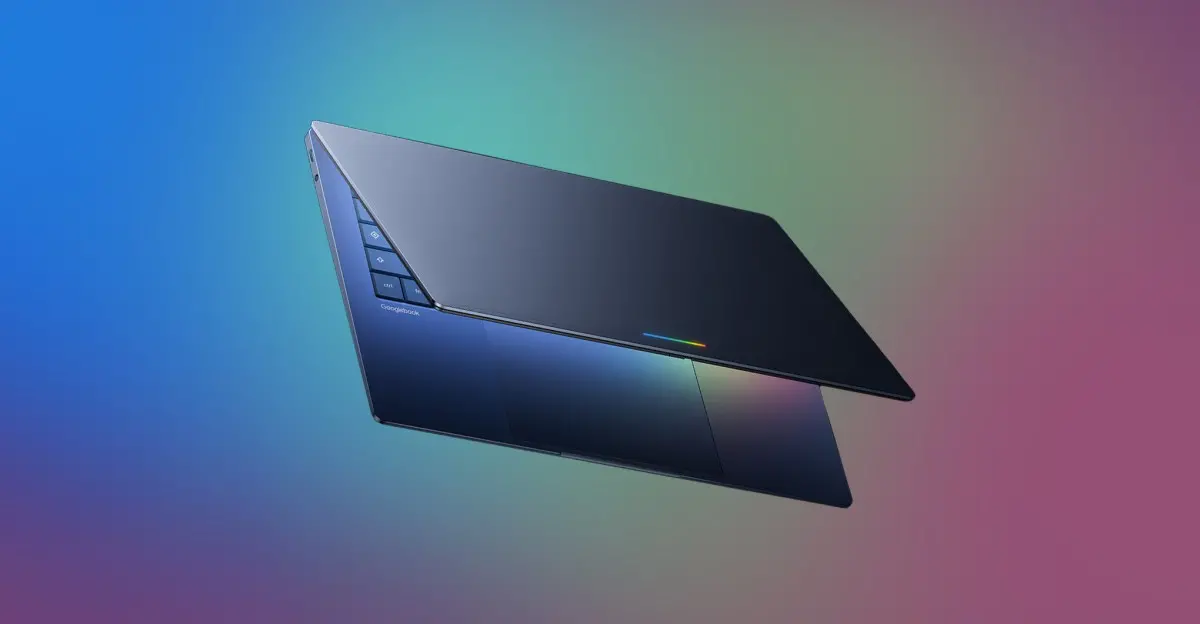
Beyond the glowing light bar and a promise of “Gemini Intelligence,” Google has not clearly articulated the Googlebook’s value proposition. Is it a better Android tablet experience in laptop form? A vehicle for AI features that no one asked for? Or simply a branding exercise to distance the company from the stigma of “cheap Chromebooks”? Without concrete information about minimum specs, battery life, app compatibility, or pricing, the Googlebook remains a mystery. It is telling that Google did not announce hardware partners or availability dates, only a vague commitment from Intel.
The Role of AI
Generative AI is undeniably a major trend in technology, but its application in personal computing requires thoughtful integration. Google’s Gemini AI can create widgets, generate images from other pictures, and provide contextual assistance. However, many of these features could have been delivered as software updates to ChromeOS rather than requiring an entirely new OS and hardware line. The risk for Google is that customers view the Googlebook as a solution in search of a problem—a device that forces AI down their throats without delivering meaningful improvements in performance, usability, or ecosystem coherence.
User Expectations and Ecosystem Lock-In
One possible advantage of the Googlebook is deeper integration with Android phones, similar to how Apple integrates iPhones and Macs. The ability to seamlessly cast apps, drag files between devices, and continue tasks across screens could be compelling. But Microsoft and Apple already offer comparable experiences through Phone Link and Continuity, respectively. To stand out, Google would need to deliver a level of seamlessness that surpasses existing solutions, paired with a genuinely intuitive user interface. So far, the demos have not demonstrated that level of polish.
Looking Ahead
Google has traditionally enjoyed patience from the tech community due to its history of innovation, but the Googlebook comes at a time when that patience is wearing thin. The company’s track record with hardware—Nexus, Pixel, Chromebooks—is mixed, and its software platforms often suffer from fragmentation and abrupt changes. The Googlebook may yet prove to be a forward-thinking platform that reshapes mobile-desktop convergence, but the evidence provided so far is insufficient. Without clear answers about hardware performance, software stability, and third-party support, the Googlebook risks becoming an expensive experiment rather than a computing revolution. Only time and more concrete details will tell whether this new direction is misguided or a sign of things to come.
Source: The Verge News