

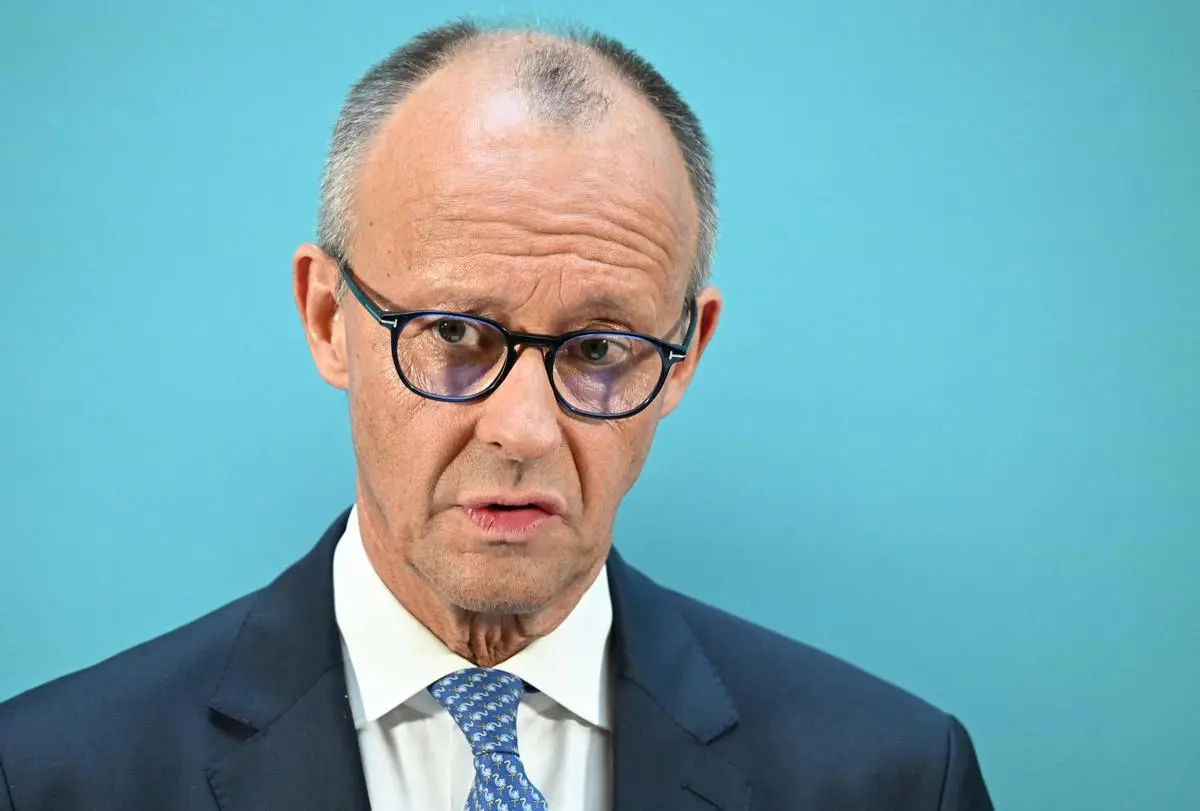
German security services have attributed a fake video claiming Chancellor Friedrich Merz was about to resign to a group believed to be linked to Russian intelligence. The video, which surfaced on social media this week, used the logos of respected news organizations to make its false claim look credible. A German security source told journalists on Friday that the likely author is Storm-1516, a group suspected of being directly controlled by the GRU, the main intelligence directorate of the Russian armed forces. The source added that the same group has been linked to other disinformation operations across Europe.
What the fake video claimed
The fabricated video announced that Chancellor Friedrich Merz would soon step down from office. It borrowed the branding of Deutsche Welle, Germany's international public broadcaster, and referenced a nonexistent article in Handelsblatt, a leading German business daily. The video claimed that Merz would make a resignation announcement on August 10 because of poor polling numbers and that Hendrik Wüst, the head of the state government of North Rhine-Westphalia, could succeed him.
The story spread quickly on social networks, causing confusion among users who did not immediately recognize it as a hoax. The use of established media logos and journalistic formats appeared designed to make the claim more believable. Security officials noted that this is a common tactic in modern disinformation campaigns: borrowing the authority of trusted outlets to inject false narratives into public debate.
Storm-1516 and suspected Russian intelligence links
The German security source specifically identified Storm-1516 as the likely originator of the video. According to the source, the group is directly piloted by the GRU, Russia's military intelligence agency. Storm-1516 has been previously identified by researchers and security services as an actor involved in creating and spreading fake content, including manipulated videos, fake news articles, and coordinated social media campaigns.
The group has also been suspected of involvement in disinformation targeting candidates in France's upcoming presidential election. French authorities have increasingly warned about foreign interference attempts designed to undermine trust in the electoral process. Storm-1516's alleged activities in France include spreading false or misleading information about declared and potential candidates, with the apparent aim of influencing voter perceptions.
The German government previously accused the same group of running a disinformation campaign before Germany's federal elections in February 2025. In December of the previous year, officials publicly pointed to Storm-1516 as a key threat to the integrity of the electoral process. That campaign reportedly involved attempts to amplify divisive narratives and undermine confidence in democratic institutions.
A pattern of media impersonation
The fake video about Merz fits a broader pattern of Russian-linked disinformation that relies on impersonating media organizations. By using the logos and visual styles of established outlets, these campaigns attempt to exploit the trust audiences place in legitimate journalism. The German domestic intelligence service, the Federal Office for the Protection of the Constitution (BfV), said it was aware of the video and described it as part of a campaign that uses “logos of major recognized media outlets in order to give the conveyed narrative more credibility.”
The BfV assessed that the false information was aimed primarily at damaging Friedrich Merz's political reputation as chancellor. It also noted that the campaign should be understood in the context of the regional and municipal elections taking place in Germany in September. Several eastern German states are scheduled to hold elections, and opinion polls have shown a significant rise in support for the far-right Alternative for Germany (AfD). The timing of the fake video, just weeks before those votes, has raised concerns that foreign actors are attempting to destabilize the political environment.
Regional elections in the background
Three regional elections are scheduled to take place in September. Saxony-Anhalt will hold its state election on September 6, followed by Mecklenburg-Western Pomerania and Berlin on September 20. These elections are being closely watched as indicators of the national political mood. The AfD has performed well in eastern Germany in recent polls, and the CDU, led by Merz, is competing to maintain its position in these states.
Disinformation campaigns targeting these elections could have real consequences, according to analysts. By spreading false stories about the chancellor or other leading politicians, foreign actors may try to alter public opinion and weaken trust in democratic institutions. German officials have repeatedly stressed the need for vigilance, especially during election periods, and have urged citizens to verify information before sharing it online.
Media responses and fact-checking
Both organizations whose branding was misused in the video responded quickly. Handelsblatt denied having published any article about Merz's imminent resignation, saying clearly: “This video is a fake.” Deutsche Welle also published a detailed fact-check on its website under the title: “No, Friedrich Merz does not plan to resign.” The fact-check article pointed to the video as part of a Russian disinformation campaign and explained how the fake content was produced and spread.
Fact-checkers and researchers have documented similar techniques used in other countries, including the creation of fake videos, manipulated audio recordings, and fabricated quotes attributed to politicians. The rapid spread of such content on social platforms often makes it difficult for corrections to reach the same audience that saw the original misinformation. Media literacy experts say that the best defense is for readers to rely on official sources and established news outlets rather than unverified clips circulating online.
Political reactions in Germany
The fake video has drawn strong reactions from German politicians and public figures. Several prominent members of the CDU and other parties have publicly dismissed the claim and expressed confidence in Merz's leadership. Government officials have also warned that foreign interference will not be tolerated and that all necessary measures will be taken to protect the integrity of the electoral process.
Friedrich Merz himself has not yet publicly commented on the video at the time of reporting. However, members of his party have emphasized that he remains fully committed to his role as chancellor and that the country’s political direction will not be influenced by lies and manipulation.
The incident has renewed debate about the need for stronger digital defenses against foreign disinformation. Germany has been working on legislation and technical measures to combat fake content, including requirements for social media platforms to remove clearly illegal content and to label state-controlled media. But the challenge is huge, as disinformation tactics continue to evolve.
European Union institutions have also been involved in efforts to counter Russian disinformation. The EU has set up mechanisms to coordinate responses to foreign interference, and several member states have created dedicated agencies to monitor and debunk false narratives. Yet the rapid development of artificial intelligence and deepfake technologies has made the task harder, because manipulated content can look increasingly authentic.
The case of the fake Merz resignation video is a reminder that disinformation is not just a theoretical threat but a real and ongoing challenge. Security services in Germany and elsewhere are now likely to step up their monitoring of social media in the run-up to the September elections. They will also be watching for further attempts by Storm-1516 and similar groups to spread false stories.
For the German public, the key lesson is to remain skeptical when encountering sensational claims, especially those that appear shortly before important political events. The fact that a story uses a recognizable news logo does not guarantee its authenticity. In an era of sophisticated manipulation, verifying information through trusted, independent media and official sources is more important than ever.
Source: SudOuest.fr News