

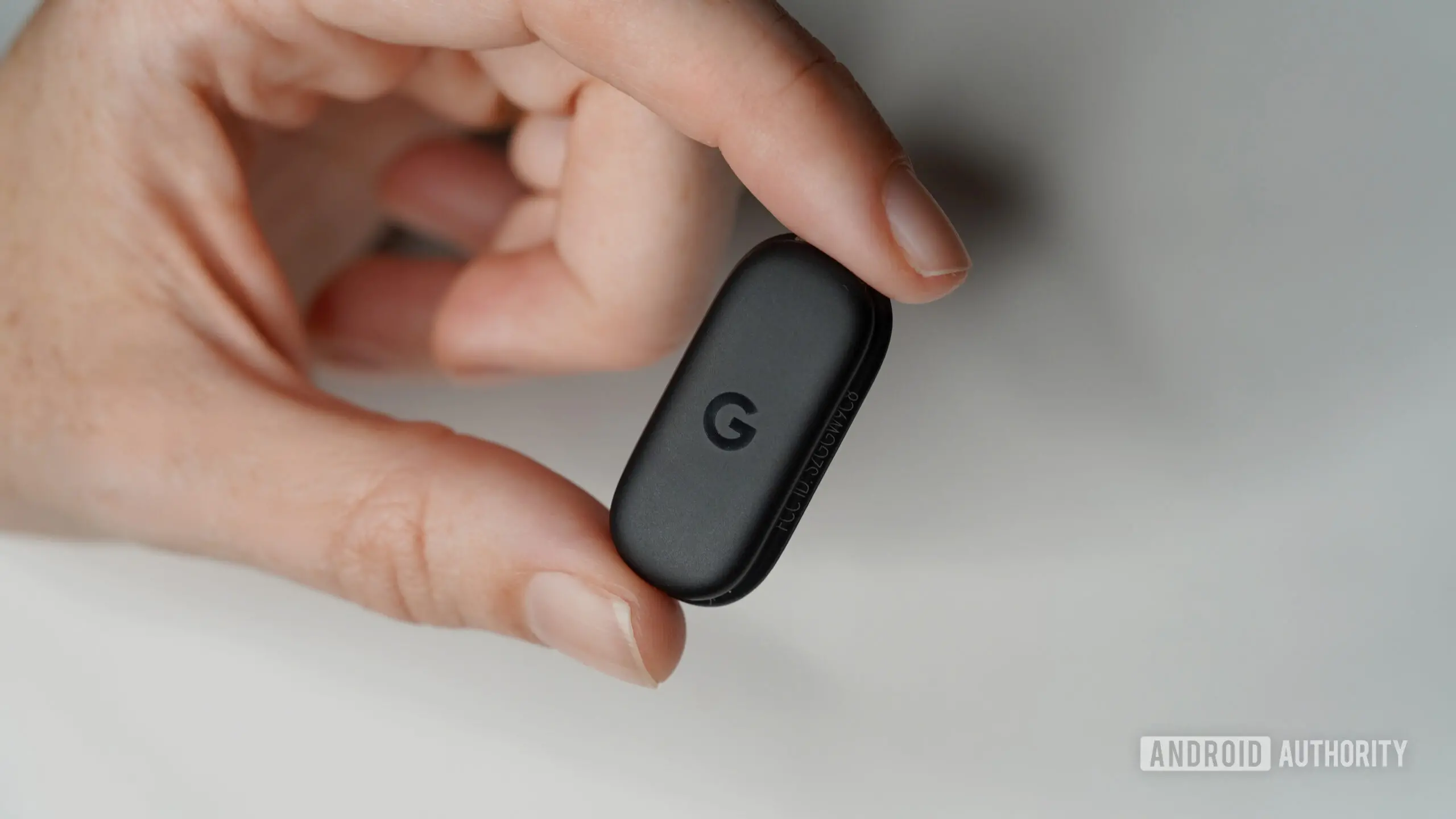
The Fitbit Air has quickly carved out a niche as a minimal, screenless fitness tracker that focuses on passive activity monitoring. But some users are now taking minimalism to a new level by removing the band altogether and attaching the tracker directly to their skin. Reports from user communities show that this unconventional approach not only works but may open the door to more flexible ways of wearing wearable technology.
A new trend: bandless Fitbit Air
According to recent discussions, a growing number of Fitbit Air owners have started popping the tracker body out of its silicone band and taping it directly to their bicep. The technique, which appears to have been independently discovered by multiple users, uses athletic tape or similar skin-safe adhesive to hold the device in place. One user even reported wearing the Fitbit Air inside a sock on their ankle, claiming that the tracker still reads everything as normal.
This trend goes beyond the screenless design that made the Fitbit Air popular. It represents a broader desire for wearables to be truly unobtrusive. A banded device on the wrist is still visible and can clash with watches, bracelets, or professional attire. By removing the band, users can hide the tracker almost entirely.
What is the Fitbit Air?
The Fitbit Air is a budget-friendly wearable designed to provide core fitness tracking features in a lightweight, low-profile package. It has no display, which reduces its physical size and battery consumption. The device tracks steps, distance, calories burned, active minutes, and sleep patterns through its sensors and companion app. It is positioned as a passive tracking device, meaning users do not interact with a screen; they simply wear it and check data later.
This approach is not entirely new. Screenless wearables have existed for years, but they have gained renewed attention as consumers look for ways to reduce screen time and digital distractions. The Fitbit Air is one of the most prominent modern examples, offering a simple form factor at a competitive price point.
Why go bandless?
The motivations for going bandless are varied. Some users want to wear an analog watch on the same wrist as their fitness tracker. The Fitbit Air's discreet size already makes this possible, but the band can still add bulk. Removing the band entirely creates a nearly invisible setup that allows users to wear any accessory without worrying about awkward stacking.
Others find the standard silicone band irritating after prolonged wear. Skin irritation, sweat buildup, and discomfort during sleep are common complaints among fitness tracker users. By using tape, these users can position the device on a different part of the body, such as the bicep, forearm, or ankle, where it stays out of the way.
There is also a stealth factor. Taping the tracker to the skin makes it invisible under most clothing. This can be useful for people who work in environments where visible electronics are not allowed, or for those who simply prefer not to advertise that they are wearing a device.
Does it affect tracking accuracy?
The most surprising aspect of this bandless trend is that users report no significant loss of tracking accuracy. According to user accounts, step counting and activity detection continue to function normally even when the device is placed on the upper arm or inside a sock. This is notable because most fitness trackers are calibrated for wrist movement. The algorithms that translate motion into step counts are typically trained on wrist-based motion patterns. However, the accelerometer inside the Fitbit Air appears to be flexible enough to handle alternate placements.
That said, official documentation almost certainly recommends wrist placement. Users who try alternative methods should expect some level of deviation in metrics like calorie burn and sleep stage estimation. The device's optical sensors, if present, are not used for heart rate in the Fitbit Air, which is a purely motion-based tracker. This makes placement less critical than for devices with optical heart rate monitors. Still, the fact that users see normal readings is encouraging for those who want a more personalized wearing experience.
How to safely try bandless wearing
If you want to try this trend, it is important to use the right materials. The adhesive must be designed for skin contact. Athletic tape, kinesiology tape, and medical-grade hypoallergenic tape are appropriate options. Standard duct tape, masking tape, or household adhesives are not safe and can cause skin damage, allergic reactions, or residue that is difficult to remove.
Here are a few tips for a safe and effective bandless experience:
- Clean and dry the area thoroughly before applying the tape.
- Try the tape on a small patch of skin first to test for allergic reactions.
- Position the tracker against the skin with the sensor window facing outward, if applicable.
- Do not wrap tape too tightly around the limb to avoid restricting circulation.
- Remove the tape gently and consider using an adhesive remover wipe to avoid skin irritation.
Potential risks and downsides
Even with skin-safe tape, the practice is not entirely without risks. Adhesive materials can cause contact dermatitis, especially with prolonged use. The tracker itself is not designed to be worn under tape, so moisture and sweat may become trapped, potentially affecting the device's durability. Additionally, the Fitbit Air's warranty may not cover damages caused by unconventional wearing methods. If the device is damaged as a result of being taped to the body, the manufacturer may decline service.
Another consideration is the security of the device. A band provides a certain level of protection against accidental drops. When taped directly to skin, the tracker is more exposed to impact, bending, or snagging. The tape could also loosen over time, and the device could fall off without the wearer noticing.
What this says about the future of wearables
The emergence of this bandless trend illustrates a broader shift in consumer expectations. Wearables are no longer just gadgets; they are becoming integrated into daily life. Users want devices that can adapt to their bodies and lifestyles, not the other way around. The fact that people are willing to hack their wearable by removing the band suggests a demand for more modular and flexible designs.
Future wearables might offer dedicated accessories or adhesive mounts that allow for multiple wearing positions. Health tracking could become even more personalized if sensor algorithms could adapt to different body locations. The success of the Fitbit Air in this context may inspire other manufacturers to explore similar designs or to provide official support for alternative placement.
At the same time, this trend highlights the importance of user-driven innovation. Companies often define how a device is supposed to be used, but real-world usage can diverge significantly from intended use. Manufacturers can learn from these creative workarounds to improve their products and address unmet needs.
If you own a Fitbit Air, have you tried wearing it without the band? Have you used tape or another method to keep it attached? Let us know in the comments.
Source: Android Authority News