

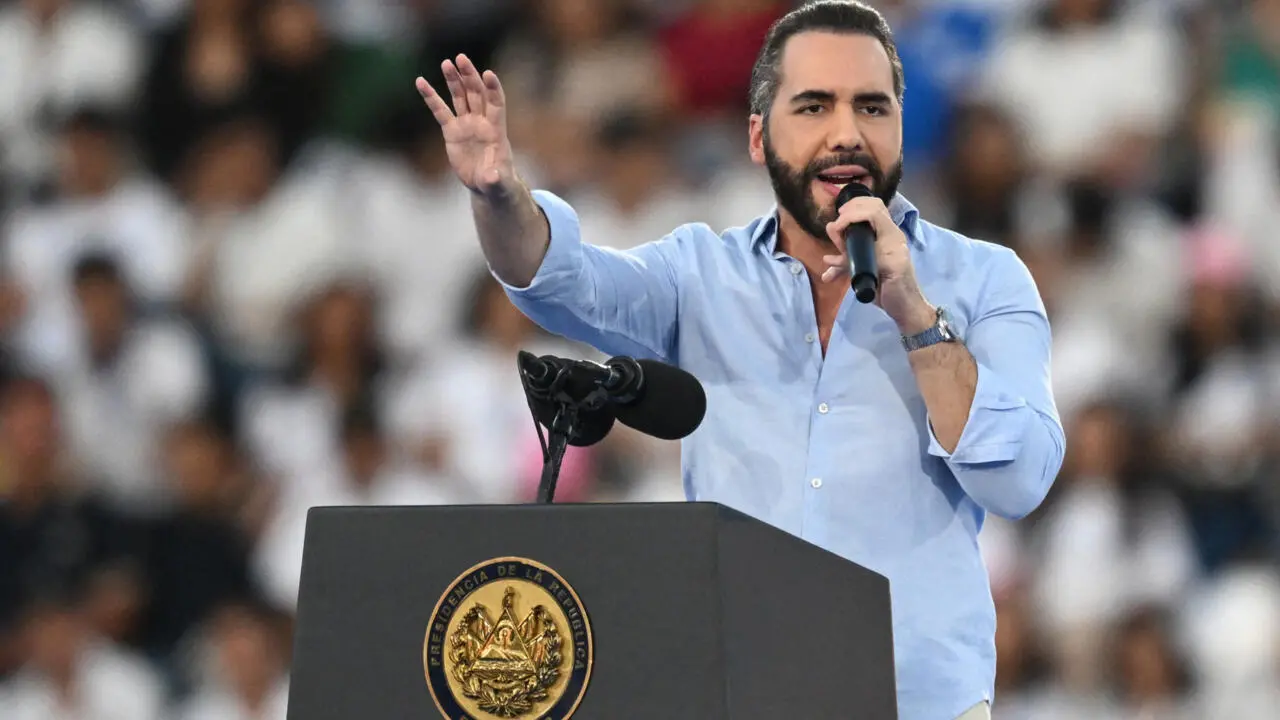
El Salvador President Nayib Bukele is preparing to seek a third presidential term in February 2027, a decision that would extend one of Latin America’s most closely watched political projects and reopen fundamental questions about constitutional limits, democratic competition and the price of security. The move places the country’s electoral calendar at the center of a wider struggle over how far Bukele’s movement can go in reshaping the Salvadoran state.
Bukele first took office in June 2019 after defeating the country’s traditional parties. He was re-elected in February 2024 by a wide margin, following a 2021 ruling by the Constitutional Chamber of the Supreme Court that allowed consecutive presidential terms. That ruling overturned decades of legal interpretation under a Constitution that had long been read as limiting presidents to a single five-year mandate. The new third-term bid is therefore not only an electoral event; it is a test of whether the court’s reinterpretation has become the country’s effective constitutional order.
Key facts
- Nayib Bukele has governed El Salvador since June 2019 and was re-elected in February 2024.
- The planned campaign would seek a third presidential term in February 2027.
- El Salvador’s Constitution was long interpreted to bar presidential re-election, but a 2021 Supreme Court ruling allowed consecutive terms.
- Bukele’s security policy, anchored in a long-running state of exception, has sharply reduced reported homicides while drawing human rights scrutiny.
- His economic agenda has combined Bitcoin promotion, tourism expansion, fiscal pressure and negotiations with international lenders.
- Nuevas Ideas controls the presidency and the Legislative Assembly, leaving a fragmented opposition with limited institutional leverage.
- The third-term bid is likely to intensify debate over term limits, judicial independence, press freedom and the concentration of power.
A political career built on anti-establishment appeal
Bukele was born in 1981 into a prominent Salvadoran business family with roots in the country’s commercial elite. He built his public profile as mayor of Nuevo Cuscatlán and later as mayor of San Salvador, where he combined infrastructure projects with aggressive communication and a carefully cultivated image as an outsider willing to confront the traditional parties. In 2019, he won the presidency as the candidate of Nuevas Ideas, a movement he founded after breaking with the left-wing FMLN. His victory ended a long period in which ARENA and the FMLN had alternated in power and promised a new style of government that mixed social spending, hardline security and a direct connection with voters through social media. Supporters saw him as a pragmatic reformer who understood public frustration with corruption and ineffective institutions. Critics saw a concentration of power in the presidency and a willingness to bypass checks and balances when they stood in his way.
The 2024 re-election and the legal controversy
El Salvador’s Constitution states that a president serves a five-year term and has traditionally been understood to prohibit re-election. In 2021, the Constitutional Chamber of the Supreme Court issued a ruling that allowed a president to serve two consecutive terms, arguing that the constitutional text did not clearly bar it. The decision opened the door for Bukele to run again in 2024. He did so and won overwhelmingly, with his party also securing a large majority in the Legislative Assembly. Supporters called the result a democratic endorsement of his record. Critics, including legal scholars and international observers, warned that the court had rewritten the rules to suit an incumbent and that the concentration of power in the executive and the legislature weakened institutional checks. The debate over the third term in February 2027 is a continuation of that dispute. It is not simply about whether Bukele remains popular; it is about whether the legal architecture of the country can constrain a president who has already tested its limits.
Security policy at the heart of the model
Bukele’s national security policy has become the defining feature of his government. In March 2022, after a surge in gang-related killings, his administration imposed a state of exception that has been repeatedly extended. The measure suspends some constitutional rights, allows arrests without warrants and has led to the detention of tens of thousands of people. The government says the policy has dismantled the country’s gangs and turned El Salvador from one of the world’s most violent countries into one of the safer in the region. Reported homicide rates have fallen sharply, and many residents say they can move through neighborhoods that were once controlled by criminal groups. The policy has also brought intense scrutiny. Human rights organizations have documented arbitrary detentions, mistreatment and deaths in custody, and they argue that innocent people have been swept up in mass arrests. The government rejects criticism and presents the crackdown as a necessary response to decades of gang violence. The construction of a large mega-prison, known as CECOT, has become a symbol of the
Source: France 24 News