

Key facts at a glance
- Ukrainian drone strikes hit two Yandex data centers in Russia on October 8 and October 9.
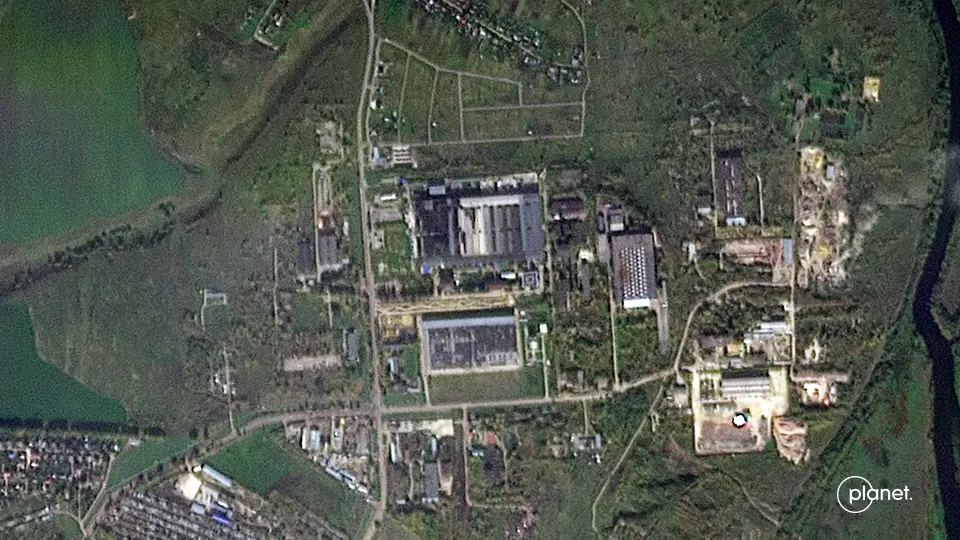
- The facilities were located in the Sasovo and Kaluga regions.
- The attacks knocked out two of Yandex’s five data centers and disrupted its AI chatbot and other online services.
- The Sasovo site housed two of the three supercomputers used to train YandexGPT, the company’s artificial intelligence model.
- The Kaluga facility is Yandex’s largest data center, and Ukrainian company Firepoint said its FP-1 one-way attack drones were involved in that strike.
- Yandex said no employees were injured, but Russian users reported problems with media sites, streaming, banking, travel, dating, real estate and other digital services.
- Ukrainian President Volodymyr Zelenskyy described the operation as a symmetrical response to Russian drone attacks on Ukrainian data centers.
- The strikes are part of a wider pattern in which data centers and digital infrastructure are becoming wartime targets.
Ukrainian drone strikes have damaged two of the five data centers operated by Yandex, the Russian technology company often described as the country’s equivalent of Google. The attacks, carried out on October 8 and October 9, struck facilities in the Sasovo and Kaluga regions and left the company scrambling to maintain its artificial intelligence chatbot and a range of online services. Yandex said no employees were hurt, but the disruption was visible across multiple consumer and business platforms used by millions of Russians every day.
The first strike targeted Yandex’s Sasovo data center, a facility that houses two of the company’s three supercomputers used to train YandexGPT, its flagship artificial intelligence model. The second strike hit the company’s Kaluga data center, which is Yandex’s largest such facility. According to Ukrainian company Firepoint, its FP-1 one-way attack drones were involved in the Kaluga operation. The combination of the two attacks removed a significant share of Yandex’s data-center capacity from service, at least temporarily, and raised questions about how well Russia’s digital infrastructure is protected against long-range drone strikes.
Ukrainian President Volodymyr Zelenskyy framed the operation as a direct and deliberate response to Russian attacks on Ukrainian data infrastructure. In a post on X, he said Ukraine would continue to respond to Russia’s attacks with high precision, adding that another data center had been hit as part of what he called a symmetrical response. The statement linked the Yandex strikes to a Russian drone campaign that has targeted Ukrainian data centers since late September and has disrupted mobile phone and internet services for thousands of Ukrainians.
The disruption inside Russia extended beyond Yandex’s own products. Russian users reported problems accessing media websites and popular applications, including the Ivi video streaming platform, the digital banking service T-Bank and the state-owned Russian Railways. Other affected services reportedly included a dating app, a real estate aggregator, a self-publishing book platform and the website of one of the most successful professional soccer clubs in the Russian Premier League. The breadth of the outages illustrated how deeply Yandex’s infrastructure is woven into Russia’s online economy and how many unrelated services depend on a small number of large data centers.
Yandex occupies a unique position in the Russian internet landscape. It operates the country’s most popular search engine, along with maps, email, cloud computing, advertising, ride-hailing, streaming and artificial intelligence products. Because those services are centralized around a limited number of major data centers, damage to even a few facilities can produce cascading effects. The loss of the Sasovo supercomputers is particularly sensitive because they are used for training YandexGPT, the company’s answer to widely used generative AI systems. Training advanced AI models requires enormous computing power, and replacing specialized supercomputing capacity is not a simple or quick process.
The Kaluga facility’s importance adds another layer to the impact. As Yandex’s largest data center, it likely supports a substantial volume of cloud, search, advertising and consumer applications. Striking the largest facility with one-way attack drones demonstrates the growing reach of Ukraine’s medium- and long-range drone campaign. The FP-1 system, described as a one-way attack drone, is designed to fly toward a designated target and explode on impact. Its use against a data center in Kaluga suggests that Ukrainian forces are not only targeting military sites and energy infrastructure but also the digital backbone of Russia’s economy.
The Yandex strikes did not occur in isolation. Since late September, Russian drone attacks have targeted Ukrainian data centers and disrupted communications for thousands of civilians. Ukraine has been grappling with a shortage of interceptor weapons capable of shooting down Russian missiles and jet-powered drones, which has made it harder to protect cities and critical infrastructure. In response, the Ukrainian military has gradually expanded its own drone strike campaign, focusing on Russian military bases, supply lines, shipping linked to Russia in the Sea of Azov and the Black Sea, and energy infrastructure such as oil refineries. The attack on Yandex’s data centers fits into that broader strategy of imposing costs on Russian economic and technological assets.
Data centers have become increasingly prominent wartime targets. In 2026, after the United States and Israel attacked Iran in February, Iranian drones knocked out multiple Amazon data centers in Bahrain and the United Arab Emirates. That episode showed how quickly commercial cloud infrastructure can become part of a military conflict, even when the facilities are owned by private technology companies and serve civilian customers. The Yandex strikes point to a similar dynamic: large data centers are critical economic assets, but they are also fixed, high-value targets that can be damaged or disrupted by relatively inexpensive drones.
Russia has regularly launched mass missile and drone attacks against Ukrainian cities since President Vladimir Putin ordered the full-scale invasion in February 2022. Those attacks have targeted power grid infrastructure, transportation hubs and residential apartment buildings. Ukraine’s recent drone strikes on Russian-linked shipping and energy infrastructure are part of an effort to retaliate and reduce Russia’s capacity to sustain its war effort. In the summer of 2026, Ukraine also targeted multiple warehouses belonging to Wildberries and Ozon, two Russian e-commerce companies often compared to Amazon. The Yandex data-center strikes extend that approach from retail logistics and energy into cloud computing and artificial intelligence.
The conflict’s reach is also expanding beyond national borders. Coordinated aerial and sea drone strikes sank two commercial ships in the Black Sea within the exclusive economic zones of NATO members Romania and Bulgaria on October 5 and October 6. Zelenskyy attributed those attacks to Russia. The incidents underscored the risks to commercial shipping and the potential for the war to spill into waters patrolled or monitored by NATO countries. They also highlighted how drones, whether launched from the air or the sea, are reshaping the threat environment in the Black Sea and beyond.
The strike on Yandex’s data centers is therefore more than a single corporate outage. It reflects a wider shift in modern warfare, in which search engines, cloud platforms, AI models and digital payment systems are treated as strategic infrastructure. The damage to Sasovo and Kaluga exposed the vulnerability of concentrated computing facilities and showed how quickly a drone attack can disrupt services used by millions of people. It also demonstrated that Ukraine is willing and able to reach high-value technology assets deep inside Russia, even as Moscow continues to target Ukraine’s own digital and energy infrastructure.
Source: Ars Technica News