

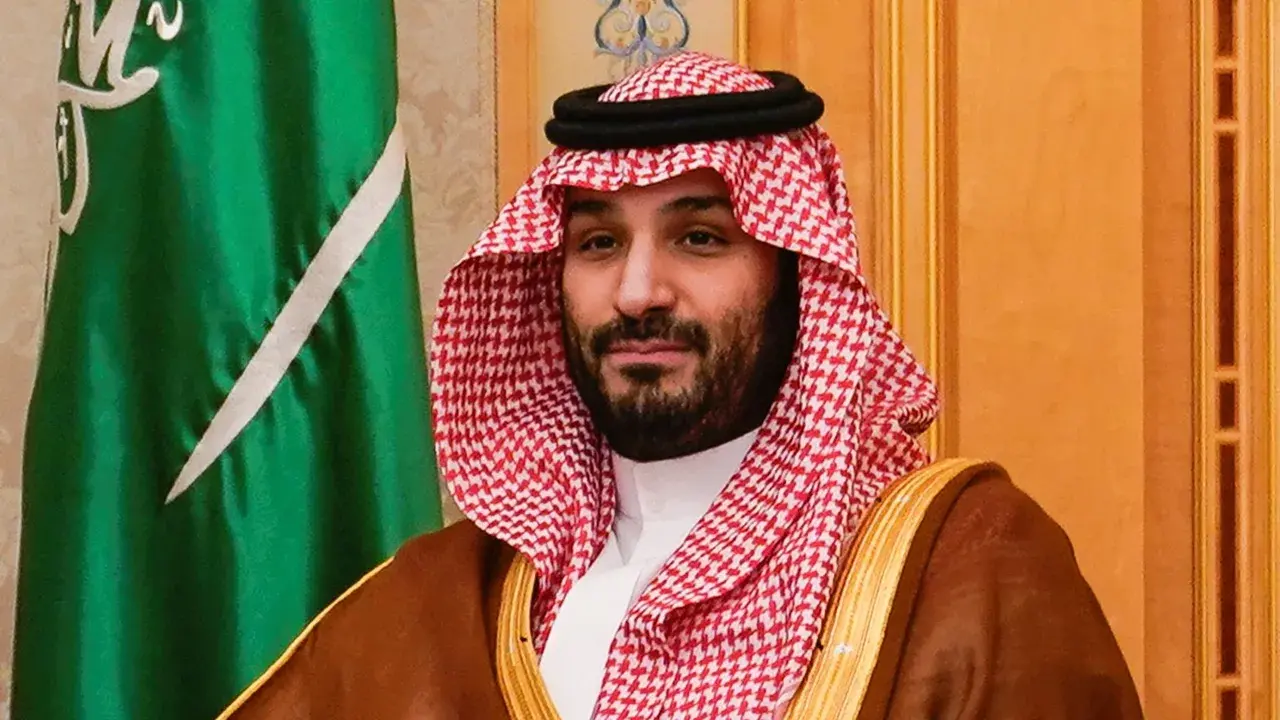
October 13, 2026 — Saudi Arabia’s de facto ruler, Crown Prince and Prime Minister Mohammed bin Salman Al Saud, has shifted to a highly restricted security routine, moving only between heavily guarded residences equipped with underground bunkers as Houthi missile and drone attacks intensify, according to reports on the kingdom’s security posture.
The change is not a routine adjustment. It reflects a threat environment that has deteriorated sharply in recent weeks, with the Houthi movement, also known as Ansar Allah, demonstrating both the intent and the capability to strike strategic targets inside Saudi Arabia. A specially selected elite security unit has reportedly been assigned to protect the crown prince, while public appearances have been reduced to the minimum. His last confirmed public appearance was on October 6, when he took part in a national blood donation campaign.
Key facts at a glance
- Restricted movement: Crown Prince Mohammed bin Salman is reportedly moving only between heavily guarded residences with underground bunkers, protected by a specially selected elite security unit.
- Last public appearance: October 6, during a national blood donation campaign.
- Escalation: Houthi missile and drone attacks have intensified since September 2026, targeting airports, oil infrastructure and strategic sites.
- Red Sea front: Houthi forces captured the port of Mocha, Perim Island in the Bab el-Mandeb Strait and the city of Dubab; Yemen’s internationally recognized government declared general mobilization on October 4.
- Saudi options: Riyadh is weighing direct military involvement, including targeted airstrikes around Bab el-Mandeb or a larger ground operation supporting more than 100,000 Yemeni troops with Saudi air power.
- Airspace warning: The Houthis declared Saudi airspace, excluding Mecca and Medina, a military operations zone, turning airports into open targets.
- Airport attacks: October 6 strikes hit Riyadh’s international hub, a state oil facility in Jeddah and a southern airport; the October 8 attack on King Khalid International Airport killed 3; the October 11 massive strike killed 12 and injured 309, with victims from Saudi Arabia, the United States, Egypt, Jordan, Syria, Palestine, Bangladesh and Sudan.
A sudden shift in the crown prince’s routine
For a leader who has often projected an image of visibility and control, the move to a bunker-based security posture is notable. Mohammed bin Salman has for years been the public face of Saudi Arabia’s domestic and foreign policy, from the economic reform agenda known as Vision 2030 to the kingdom’s military campaign in Yemen. His schedule has normally included public events, diplomatic meetings and tours of major projects. The decision to limit movement to heavily guarded compounds suggests that security officials now view his exposure as a direct and immediate risk.
The security arrangement described in reports involves more than additional guards at the gate. It points to a layered protection model: multiple residences, underground shelters, secure communications, and a dedicated unit trained for rapid response. The crown prince’s movements are reportedly kept to a narrow circle, with routes and locations tightly controlled. Such measures are common for heads of state in wartime, but they are unusual for a de facto ruler who has sought to present the kingdom as a stable and attractive destination for investment and tourism.
The timing is significant. The last confirmed public appearance on October 6 came as Saudi authorities were promoting a national blood donation campaign. That same day, strikes were reported against Riyadh’s international aviation hub, a state oil facility in Jeddah and an airport in the south. The contrast between a public health event and attacks on strategic infrastructure illustrates how quickly the security environment has changed.
The Red Sea front and the battle for Bab el-Mandeb
The crisis has been building around the Red Sea and the Bab el-Mandeb Strait, one of the world’s most important maritime chokepoints. The Houthis have launched an offensive on Yemen’s western coast, capturing the port of Mocha, Perim Island in the Bab el-Mandeb Strait and the city of Dubab. These gains give the movement greater leverage over shipping lanes and coastal approaches, and they have forced Yemen’s internationally recognized government to declare general mobilization and launch a counter-military operation on October 4.
For Saudi Arabia, the fall of these positions is not only a Yemeni internal matter. The kingdom has long viewed the Houthis as a security threat on its southern border and as part of a wider regional contest. Since 2015, Saudi Arabia has led a military coalition in Yemen aimed at restoring the internationally recognized government and reducing Houthi power. The war has been costly and inconclusive, with the Houthis retaining control over large parts of northern Yemen, including the capital Sanaa, and developing increasingly sophisticated missile and drone capabilities.
The current escalation has brought those capabilities into sharper focus. The Houthis have declared Saudi airspace, excluding Mecca and Medina, a military operations zone. That designation is a warning that airports and other civilian infrastructure may be treated as legitimate targets. It also places additional pressure on Saudi air defenses, which must protect a vast territory and multiple high-value sites at once.
Riyadh is now considering scenarios for direct involvement in military operations. One option would be targeted airstrikes around Bab el-Mandeb to disrupt Houthi positions and protect shipping. Another would be a larger-scale ground offensive supporting more than 100,000 Yemeni troops with Saudi aviation. Both options carry risks. Airstrikes may not eliminate mobile missile launch sites, while a ground campaign could draw Saudi forces deeper into a conflict that has already proven difficult to win.
Airport strikes and the human cost
The human cost of the escalation is already visible. On October 6, the international aviation hub in Riyadh, a state oil facility in Jeddah and an airport in the south of the country were targeted. On October 8, a repeat attack on King Khalid International Airport in the capital left 3 people dead and several injured. On October 11, a subsequent massive strike on the airport resulted in 12 deaths and 309 injuries. Among the victims were citizens of Saudi Arabia, the United States, Egypt, Jordan, Syria, Palestine, Bangladesh and Sudan.
The casualty figures are significant for several reasons. First, they show that attacks on airports are not merely symbolic; they can kill and injure civilians and foreign nationals. Second, they complicate Saudi Arabia’s efforts to present itself as a safe hub for business, tourism and international travel. Third, they increase pressure on the government to respond forcefully, even as officials weigh the risks of a wider war.
Airports are particularly sensitive targets. They are nodes in global supply chains, business travel and pilgrimage routes. King Khalid International Airport serves the capital and is a gateway for international visitors. Repeated strikes can disrupt flight schedules, insurance markets and investor confidence. They also test the credibility of Saudi air defenses, which have been repeatedly challenged by drones and missiles launched from Yemen.
Riyadh’s narrowing options
Regional analysts note that Mohammed bin Salman faces an extremely difficult decision. Any large-scale military retaliation will drag the kingdom deeper into a conflict in which the Houthis have already proven capable of inflicting severe and symbolic damage on strategic facilities. The movement has shown that it can adapt, disperse its launch sites and use relatively low-cost weapons to force expensive defensive responses. This is the classic asymmetric warfare trap: the stronger party can strike harder, but it cannot easily eliminate the threat or restore a sense of normalcy.
The kingdom’s economic agenda is also at stake. Regular shelling of major aviation hubs and oil infrastructure directly threatens Saudi Arabia’s global economic reforms and ambitious projects. Vision 2030 depends on foreign investment, tourism, logistics and a stable business environment. A prolonged security crisis could raise insurance costs, slow construction and deter visitors. It could also affect energy markets if oil facilities are damaged or if Red Sea shipping is disrupted.
The Houthi threat is not new, but its scale and visibility have changed. In 2019, drone and cruise missile strikes on Saudi oil facilities briefly knocked out a large portion of the kingdom’s crude output and rattled global markets. Since then, Saudi Arabia has invested in air defenses and diversified its security partnerships. Yet the latest attacks show that gaps remain. The Houthis have continued to improve their drones and missiles, and they have demonstrated an ability to coordinate attacks across multiple targets.
Diplomatic options are equally complicated. Saudi Arabia has sought to extricate itself from the Yemen war and has engaged in talks with the Houthis, but the current escalation has undermined those efforts. The kingdom must also balance its relationship with the United States and other partners, while avoiding a direct confrontation that could draw in regional rivals. The result is a strategic deadlock in which every option carries a cost.
Economic and regional stakes
The Red Sea is central to global trade, and any sustained disruption affects shipping companies, insurers and energy markets. The Bab el-Mandeb Strait connects the Red Sea to the Gulf of Aden and is a passage for a significant share of world trade. Houthi control of Perim Island and pressure on the western coast give the movement the ability to threaten vessels and coastal infrastructure. Even if attacks are intermittent, the perception of risk can be enough to raise costs and divert traffic.
For Saudi Arabia, the economic stakes are compounded by the kingdom’s ambitious construction and diversification plans. Mega-projects, tourism campaigns and financial hubs require confidence. A visible security emergency around the crown prince and repeated strikes on airports send the opposite message. The government may try to reassure investors by emphasizing that defenses are holding and that essential services continue. But the emergency measures around the leadership suggest that officials are preparing for a prolonged threat.
The security measures surrounding the Saudi leadership and the situation around the Red Sea indicate that the military confrontation could expand even further.
Source: Zamin.uz News