

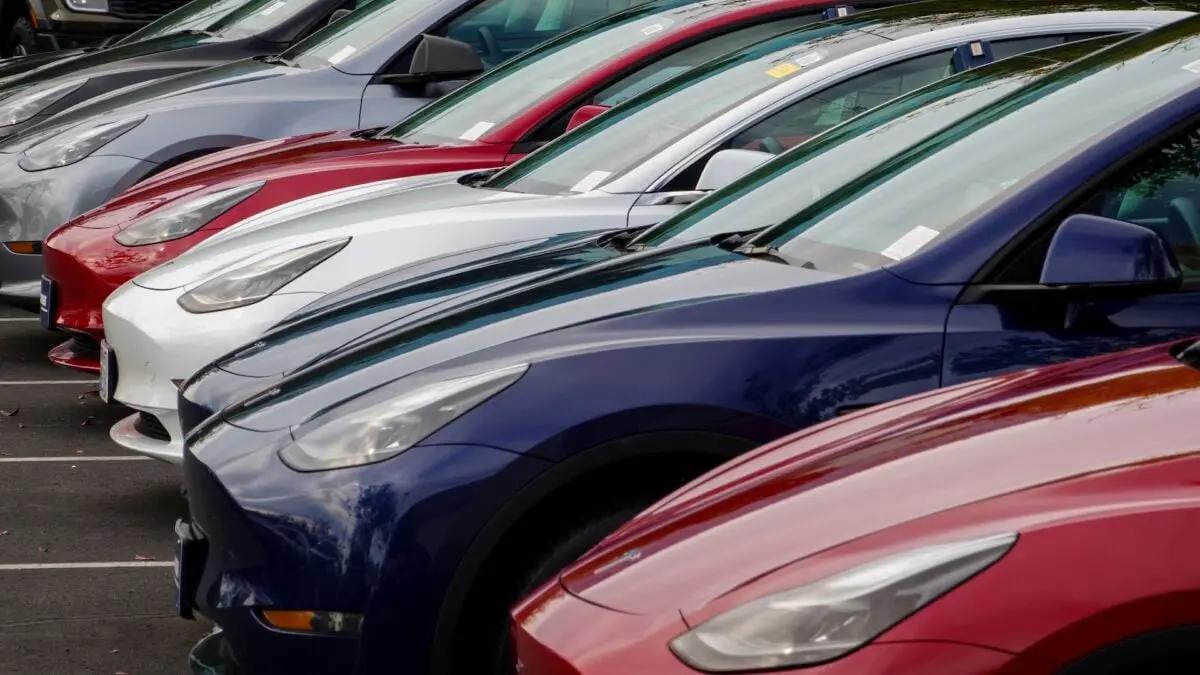
Tesla is staging a remarkable comeback in Europe after a difficult 2025, with registrations soaring 57 percent in the first five months of 2026 compared to the same period last year. The company announced Thursday it will hire 1,000 additional workers at its Gigafactory near Berlin and aims to increase production to 7,500 vehicles per week by October, according to Electrek.
This marks the second major hiring push at the German plant this year. Earlier in 2026, Tesla had already added 1,000 jobs and set a target of 6,000 vehicles per week by the end of June. If sustained, the new production rate would translate to roughly 390,000 electric vehicles annually, still short of the 500,000 capacity Tesla originally envisioned when the factory opened in 2022.
The rebound comes as a surprise to many analysts, given the deep political backlash against CEO Elon Musk in Europe. In 2025, Musk's vocal support for far-right movements—including Germany's AfD party—along with his close ties to President Donald Trump and involvement in the DOGE cryptocurrency, soured European consumer sentiment. Trump's threats to annex Greenland and imposition of tariffs on European goods further inflamed tensions. More recently, Musk faced accusations of inciting violence following posts related to anti-immigrant demonstrations in Belfast.
Drivers of the Recovery
Despite these headwinds, several factors are propelling Tesla's European sales upward. Rising fuel costs across the continent have made electric vehicles more attractive to cost-conscious consumers. Germany, Europe's largest auto market, introduced new government incentives for zero-emission vehicles in early 2026, including a purchase bonus and tax breaks for electric company cars. The German government also expanded charging infrastructure funding, addressing a key barrier to EV adoption.
Tesla's price cuts, implemented in late 2025 and early 2026, have also helped boost affordability. The Model Y, already Europe's best-selling vehicle in 2023, saw its starting price drop by nearly 15 percent in some markets. This aggressive pricing strategy has put pressure on European automakers like Volkswagen and Stellantis, which are still ramping up their own EV production.
“Tesla has demonstrated a remarkable ability to weather political storms through product appeal and pricing aggressiveness,” said automotive analyst Julia Reiner of the Berlin-based Institute for Mobility Research. “European consumers are ultimately pragmatic—they care more about total cost of ownership than about CEO politics.”
Europe's Tech Sovereignty Dilemma
The revival of Tesla sales strikes a particularly ironic note as European leaders intensify calls for technological independence from the United States. At the Munich Security Conference in February 2026, French President Emmanuel Macron urged Europe to become a “geopolitical power” and accelerate efforts to reduce dependency on American technology in defence, AI, and cloud computing.
France has already taken concrete steps: the government banned the use of Microsoft Teams and Zoom in official communications, switching to the French platform Visio. The French military signed a deal to use Mistral's AI models. In June 2026, the European Commission unveiled a “tech sovereignty package” aimed at strengthening the bloc's digital autonomy, focusing on semiconductors, AI, cloud computing, and open-source software. The Commission also preliminarily designated Amazon Web Services and Microsoft Azure as “gatekeepers” under the Digital Markets Act, subjecting them to stricter regulations.
Yet electric vehicles represent arguably the easiest front for Europe to reduce reliance on American Big Tech. Unlike cloud infrastructure or social media, Europe already boasts several homegrown automakers with competitive EV offerings: Volkswagen with its ID family, BMW with i4 and iX, Stellantis with Peugeot e-208 and Opel Corsa-e, and Renault with its Megane E-Tech. European consumers also have increasing access to Chinese brands like BYD, which has made significant strides in driving range and charging speed.
“If Europeans wanted to boycott American EVs in favor of local alternatives, they have plenty of options,” said Henrik Söderström, a trade policy expert at the European Centre for International Political Economy. “The fact that Tesla sales are rising despite this availability suggests that either consumers don't see EV purchases as a political statement, or that the quality and value proposition of Tesla vehicles outweigh any nationalistic sentiment.”
Historical Context: Tesla's European Journey
Tesla's relationship with Europe has been complex from the start. The company opened its first European showroom in London in 2009, then expanded into Germany, the Netherlands, and France. The Gigafactory Berlin-Brandenburg, inaugurated in March 2022 after a lengthy approval process, was hailed as a symbol of Tesla's commitment to the continent. The factory was designed to produce batteries and vehicles simultaneously, with an initial goal of 500,000 units per year.
However, production ramp-up was plagued by delays, supply chain issues, and local opposition over water usage and environmental concerns. By mid-2023, the factory was producing only about 5,000 vehicles per week. The political turmoil of 2025 further dampened sales, with European registrations falling by nearly 30 percent year-over-year at their lowest point.
The current rebound indicates that the company has managed to regain trust among European buyers, partly through improvements in service and local parts sourcing. Tesla has also expanded its Supercharger network across Europe, now covering all major highways and key urban centers, which remains a competitive advantage over many rivals.
Comparative Analysis: European vs. Chinese EV Makers
While Tesla's resurgence is notable, it faces increasing competition from both European and Chinese brands. Volkswagen's ID.4 and ID.5 have improved their software and build quality after initial issues. BMW's Neue Klasse platform, set to launch in 2027, promises breakthrough efficiency. Chinese automakers like BYD and MG are aggressively entering the European market, offering comparable specs at lower prices. BYD's Seal and Atto 3 have received strong reviews, and the company is building a factory in Hungary to circumvent EU tariffs.
However, Tesla retains several advantages: brand recognition, software over-the-air updates, and a direct-to-consumer sales model that bypasses traditional dealer networks. The company's Full Self-Driving (FSD) system, though still in beta in Europe, generates significant interest. Moreover, Tesla's Gigafactory Berlin allows it to avoid import tariffs and position itself as a local manufacturer, which may appeal to buyers who prefer European-produced vehicles.
“Europeans may be buying Teslas again, but the market is fragmenting rapidly,” noted Luca Ferraris, an industry professor at the Polytechnic University of Milan. “In 2026, consumers have more choices than ever. Tesla's challenge is to maintain its edge as rivals improve and localize production.”
Tesla did not immediately respond to a request for comment on its European production plans. The company's stock rose 2.3 percent on the day of the hiring announcement, reflecting investor confidence in its ability to navigate geopolitical headwinds.
As June 2026 draws to a close, European leaders continue to debate the merits of digital sovereignty while consumers vote with their wallets—and for now, those wallets are increasingly choosing Tesla.
Source: Gizmodo News