

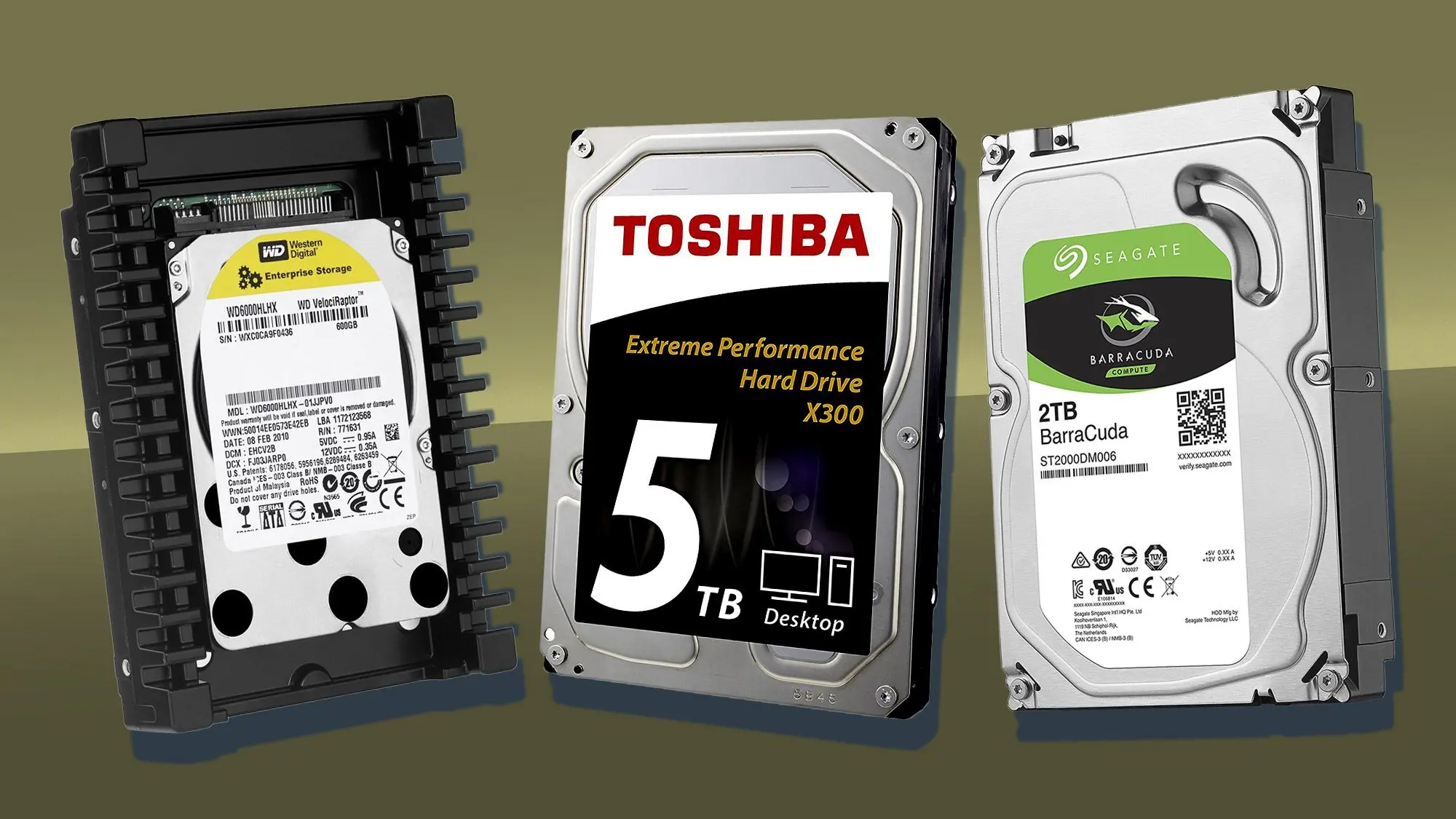
For more than a decade, the prevailing narrative in the technology industry was that hard disk drives (HDDs) were living on borrowed time. Solid-state drives (SSDs), with their lightning-fast speeds, lower power consumption, and shrinking prices, were poised to render the spinning platter obsolete. Analysts predicted a steady decline for HDDs, relegating them to niche archival roles. Yet today, that narrative has been turned on its head. The explosive demand for artificial intelligence (AI) is breathing new life into the hard drive market, pushing the biggest suppliers years ahead of their own forecasts and creating a supply crunch that few saw coming.
The Storage War: A Brief History
The battle between HDDs and SSDs has been raging since SSDs first entered the mainstream in the late 2000s. SSDs, which store data in flash memory chips with no moving parts, offered dramatic improvements in speed, durability, and energy efficiency. As production scaled up, their cost per gigabyte plummeted, making them the default choice for consumer laptops, smartphones, and high-performance servers. Hard drives, which rely on magnetic platters and mechanical read/write heads, seemed destined for the scrapheap of technology history.
By the mid-2010s, many industry observers were writing obituaries for the HDD. Sales of traditional hard drives were falling year over year, while SSD shipments soared. Major manufacturers like Seagate and Western Digital, the two dominant players in the HDD market, faced stagnant revenues and investor skepticism. They pivoted toward higher-capacity drives for data centers, but even there, the long-term trend seemed clear: flash was the future, and spinning disks were the past.
The AI Curveball
Then came the AI revolution. The rise of large language models (LLMs), generative AI, and massive data analytics has created an unprecedented demand for data storage. Training an AI model like GPT-4 requires ingesting terabytes—often petabytes—of text, images, and other data. Once trained, these models generate even more data through user interactions, logs, and fine-tuning. Meanwhile, enterprises are racing to build data lakes and warehouses to fuel their own AI initiatives, storing everything from customer records to sensor readings.
This data deluge has placed enormous strain on storage infrastructure. Data centers are expanding at a breakneck pace, and they need a mix of storage solutions: fast SSDs for hot data that must be accessed quickly, and cheap, high-capacity HDDs for cold or warm data that is accessed less frequently but still needs to be retained. For the latter, hard drives remain unbeatable on cost per terabyte.
According to industry analysts, the cost per terabyte of HDD storage is still roughly one-fifth to one-tenth that of SSD storage. For organizations storing petabytes of data, that difference translates into millions of dollars in savings. As AI workloads generate massive datasets that must be stored for compliance, training, or future analysis, the economics overwhelmingly favor hard drives for bulk storage.
Suppliers Caught Off Guard
The surge in demand has caught hard drive manufacturers by surprise. For years, they had been cautiously managing capacity, expecting a slow decline. Now, they are scrambling to keep up. Seagate, Western Digital, and Toshiba—the three remaining major HDD makers—have all reported soaring demand for their high-capacity nearline drives, which are used in data centers.
In recent earnings calls, executives from Seagate and Western Digital noted that their production is essentially sold out for the next several quarters, and in some cases, lead times have stretched to a year or more. "We are seeing demand that we haven't seen in a decade," said one industry insider. "The AI boom has created a perfect storm."
This has pushed the companies years ahead of their own roadmaps. Seagate, for instance, had planned to ramp up its next-generation HAMR (Heat-Assisted Magnetic Recording) technology gradually. HAMR allows for much higher storage densities by heating the disk surface during writes, enabling capacities of 30TB, 40TB, and beyond. With demand surging, Seagate has accelerated its HAMR rollout, aiming to ship drives with 30TB+ capacities much sooner than originally anticipated.
Western Digital, meanwhile, is pushing its own advanced technologies, including energy-assisted magnetic recording and multi-actuator designs that boost performance. The company has also signaled that its hard drive business is experiencing a renaissance, with revenue and profitability exceeding expectations.
Why SSDs Can't Fully Replace HDDs
While SSDs continue to improve, they face physical and economic limits. Flash memory is produced in highly complex fabrication plants that require billions of dollars in investment and years to build. Scaling capacity means shrinking transistors, which becomes increasingly difficult and expensive as we approach atomic scales. As a result, the cost per gigabyte of SSDs is not falling as rapidly as it once did.
Moreover, SSDs have a finite number of write cycles. For applications that involve constant writing and rewriting—such as AI training checkpoints or logging—HDDs can be more durable and cost-effective. In addition, HDDs can be manufactured in huge volumes with relatively mature technology, and their capacity per drive continues to grow. Seagate has already demonstrated HAMR drives with capacities exceeding 30TB, and the roadmap extends to 50TB and beyond in the coming years.
Data center operators are also optimizing their storage tiers. They use SSDs for performance-critical tasks, but for the vast majority of data that is written once and read occasionally, HDDs are the workhorse. As AI models grow larger and datasets expand, the ratio of cold to hot data is increasing, further driving demand for HDDs.
The Supply Chain Crunch
The sudden spike in demand has exposed vulnerabilities in the hard drive supply chain. The components that go into HDDs—such as precision motors, magnetic heads, and glass substrates—are produced by a limited number of specialized suppliers. Ramping up production takes time and capital. Manufacturers are investing in new capacity, but it will take years for those investments to bear fruit.
In the meantime, prices for high-capacity HDDs have stabilized or even risen, reversing years of declines. This is a welcome change for Seagate and Western Digital, which had been struggling with thin margins. Their stock prices have surged as investors recognize the new growth trajectory.
Cloud service providers like Amazon Web Services, Microsoft Azure, and Google Cloud are among the largest buyers of HDDs. They are building massive data centers to support AI services, and they are signing long-term contracts to secure supply. This has created a seller's market, giving HDD makers unprecedented pricing power.
Technological Leaps: HAMR and Beyond
The need for higher capacities is driving rapid innovation. HAMR is the most promising technology on the near horizon. By using a laser to heat a tiny spot on the disk to hundreds of degrees Celsius, HAMR allows data to be written in much smaller magnetic grains, dramatically increasing areal density. Seagate has been shipping HAMR drives in limited quantities and plans to scale up production aggressively.
Western Digital is pursuing a different path with its OptiNAND technology, which integrates flash memory into the hard drive to improve performance and capacity. The company is also working on ultra-high-capacity drives using shingled magnetic recording (SMR) and other techniques.
Toshiba, the third major player, is focusing on increasing capacity through conventional perpendicular magnetic recording (PMR) and is also exploring HAMR. All three companies are engaged in a technological arms race to see who can deliver the highest capacity at the lowest cost per terabyte.
The Road Ahead
What does the future hold for the storage war? The conventional wisdom that HDDs would fade away has been upended by AI. As long as AI continues to generate enormous datasets, hard drives will remain an essential part of the storage hierarchy. The demand is so strong that some analysts predict a shortage of high-capacity HDDs lasting for several years.
SSDs will continue to improve and capture more of the performance-sensitive market, but they are unlikely to displace HDDs entirely. Instead, the two technologies will coexist, with HDDs handling the bulk of cold storage and SSDs handling hot data. The balance may shift as new technologies emerge, such as DNA storage or holographic storage, but those are still decades away from commercial viability.
For now, the hard drive industry is enjoying an unexpected golden age. Seagate, Western Digital, and Toshiba are investing in new capacity, hiring workers, and accelerating their roadmaps. The AI boom has not only saved the hard drive from obsolescence but has propelled it into a new era of growth. The storage war is far from over—and the spinning disk is not going quietly.
Source: TechRadar News