

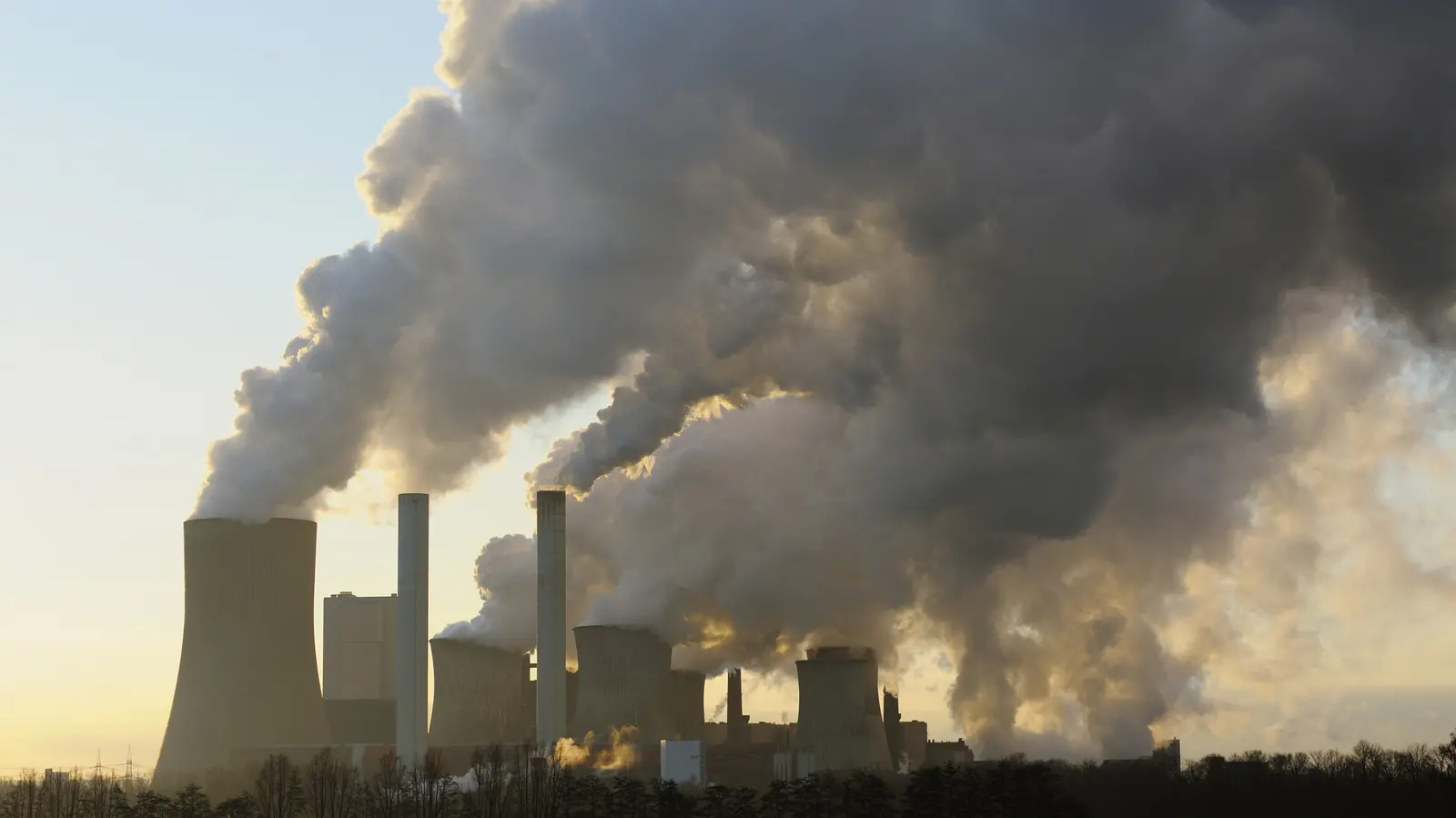
The world still runs on fossil fuels. Coal, oil, and natural gas power much of our electricity, transportation, industry, and heating. Despite the rapid growth of renewables and the urgent warnings of climate scientists, the energy system is nowhere near carbon-free. Yet fossil fuels are not infinite. The Energy Information Administration has estimated that, at current production levels, proven reserves of liquid hydrocarbons could be depleted around 2050. Coal and natural gas reserves will last longer, but eventually they too will be exhausted.
This means the transition to low-carbon energy is not a question of if but when. Solar and wind are expanding quickly, but they face intermittency and storage challenges. Nuclear power offers a steady, compact, and carbon-free source of baseload electricity. That leads to a useful thought experiment: how many nuclear power plants would be needed to replace all fossil fuels?
There is no single simple answer because energy demand is not fixed. It depends on how much of fossil fuel usage we are trying to replace, whether that is electricity only or all energy, and what assumptions we make about plant size and operating hours. Nevertheless, using publicly available data, we can produce a reasonable range. The numbers reveal both the promise and the difficulty of scaling nuclear power to meet global demand.
Key facts about the global energy mix
- Fossil fuels supply roughly 82% of primary global energy consumption.
- Renewable energy accounts for about 9% of primary energy, though its share of electricity is higher and growing.
- Nuclear power provides approximately 9% of primary energy and about 10% of global electricity.
- The world has around 440 operating nuclear reactors, with a combined capacity of about 390 to 400 gigawatts.
- A typical large nuclear plant has a capacity of one gigawatt or slightly less, but its annual output depends on its capacity factor, usually 85% to 95%.
Replacing all fossil fuel usage
Let us start with the most ambitious target: replacing every barrel of oil, ton of coal, and cubic foot of natural gas used across the entire global economy. This includes not only electricity generation but also gasoline for cars, jet fuel for planes, diesel for ships, natural gas for heating, and the many industrial processes that burn fossil fuels.
According to the Statistical Review of World Energy, global consumption of fossil fuels in 2023 stood at 505 exajoules. An exajoule is an enormous unit of energy, equal to roughly 278 terawatt-hours. Multiplying 505 by 278 gives us about 140,000 terawatt-hours. To put that number in context, the total electricity generated worldwide in 2023 was only about 30,000 terawatt-hours. In other words, fossil fuels provide nearly five times more energy than the entire global electricity system produces.
To compare this with nuclear plant output, we need to work in continuous power units. Dividing the annual fossil energy total by the number of hours in a year (8,760) yields about 16,000 gigawatts of average power.
If each nuclear plant could deliver one gigawatt of continuous power, that alone would point to roughly 16,000 reactors. But nuclear plants do not run at 100% output every minute of the year. The global nuclear fleet, as measured by the World Nuclear Association, consists of hundreds of reactors whose average capacity is just under 0.9 gigawatts. If we correct for that average plant size, the number climbs to about 18,000 nuclear plants.
That is a staggeringly large figure. The entire world currently operates fewer than 450 reactors. Building 18,000 would mean constructing roughly forty times the current global nuclear fleet. Even if a new plant came online every day, it would take nearly half a century.
Replacing only fossil-fuel electricity
The estimate above, while dramatic, overstates the challenge in one important way. It treats all fossil energy on a one-to-one basis, as though every unit of primary energy would need to be delivered as nuclear electricity. But modern electric motors are far more efficient than internal combustion engines, and electric heat pumps can deliver more useful heat per unit of electricity than a furnace can from gas or oil. For that reason, many energy analysts focus on the simpler question: what would it take to replace fossil fuels used specifically for electricity generation?
Electricity generation accounts for a large share of coal consumption and a growing share of natural gas use, but it is only about a third of total global energy consumption. According to Ember's Global Electricity Review, renewables generated roughly 10,730 terawatt-hours of electricity in 2025, equal to about 33.8% of world generation. The remaining generation, primarily from fossil fuels plus a smaller nuclear contribution, comes to about 21,000 terawatt-hours a year. If we exclude the existing nuclear power and assume we need to replace all the non-renewable generation, the number is around 21,460 terawatt-hours.
Converting that annual electricity figure into average power gives 21,460 terawatt-hours divided by 8,760 hours, or about 2,450 gigawatts. With modern nuclear reactors averaging roughly one gigawatt of output each, the result is about 2,450 nuclear plants. If we instead use the lower 0.9-gigawatt world average, the figure becomes closer to 2,700 plants.
That is still a large expansion from the roughly 440 operating reactors today. But it is not as absurd as the all-energy estimate. It also aligns with many long-term energy models that show global electricity demand rising sharply as heating and transport become electrified; some models forecast the world will need to quadruple or quintuple its nuclear capacity by the end of the century.
The practical challenges of building thousands of reactors
Replacing fossil fuels with nuclear power is not just a question of arithmetic. Even if policymakers decided to pursue an 18,000-reactor pathway, they would need to confront enormous logistical obstacles.
Only about 440 reactors have been built over the past six decades, and many of those took more than a decade to complete. The most common reactor type, the pressurized water reactor, typically needs at least five to six years of construction after licensing and site preparation are complete. Some recent flagship projects in Europe and North America have taken far longer and gone far over budget.
Supply chains would also be tested. Fabricating reactor pressure vessels, steam generators, and other heavy components requires specialized factories that exist only in a handful of countries. Training enough nuclear engineers and operators for thousands of new plants would take generations. The nuclear industry would need to move from bespoke, site-by-site construction to standardized designs and factory-based manufacturing to have any chance of scaling quickly.
Uranium resources, while abundant, are not the limiting factor. Known uranium reserves can fuel a massive expansion of conventional reactors for decades, and advanced reactors could extract energy from uranium far more efficiently. But the mining industry would still need to expand substantially, and new enrichment facilities would be required.
Nuclear waste disposal also becomes more politically and logistically important at larger scales. The volume of used fuel would rise far beyond what current repositories can handle. While many countries have developed robust interim storage methods, permanent geological repositories remain rare, and public opposition often delays progress.
Public acceptance is another major barrier. Polls in several countries show that people are increasingly open to nuclear power as a climate solution, but acceptance often drops sharply when a concrete site is proposed. A scenario that requires thousands of plants would place reactors in far more communities, many of which may not welcome them.
Safety must be assured at every step. The history of nuclear accidents has created a deep-rooted fear that no amount of technical reassurance has fully dispelled. High standards of regulation are essential, and regulators would need to expand considerably to oversee a fleet many times the size of today's.
There is also the economic reality. Nuclear plants require massive upfront investment, and the cost of capital is crucial. In many deregulated electricity markets, private companies are reluctant to take on the financial risk of building multi-billion-dollar reactors without firm government support. The cost of renewable energy has fallen so dramatically that, in many regions, solar and wind outcompete nuclear on price. This means nuclear expansion would require strong policy intervention, such as carbon pricing or direct subsidies, to become viable on the necessary scale.
Finally, the energy system is not static. Global electricity demand is expected to grow substantially in the coming decades as developing countries use more power, data centers multiply, and electric vehicles replace gasoline cars. Each new energy source will need to feed a much larger system. That could raise the required number of nuclear plants, but it also means every low-carbon technology can find a role. Nuclear alone is not the only answer, but for countries looking for a reliable backbone to complement variable wind and solar power, it remains a serious option.
The transition away from fossil fuels will not happen all at once. It will require a portfolio of solutions, including energy efficiency, renewable electricity, storage, grid modernization, and perhaps advanced nuclear technologies. Scaling nuclear power to thousands of reactors is theoretically possible, but it would demand a level of coordinated global effort rarely seen in peacetime. The math shows that nuclear can indeed replace fossil fuels, but only if the world treats the challenge with the urgency it deserves.
Source: SlashGear News