

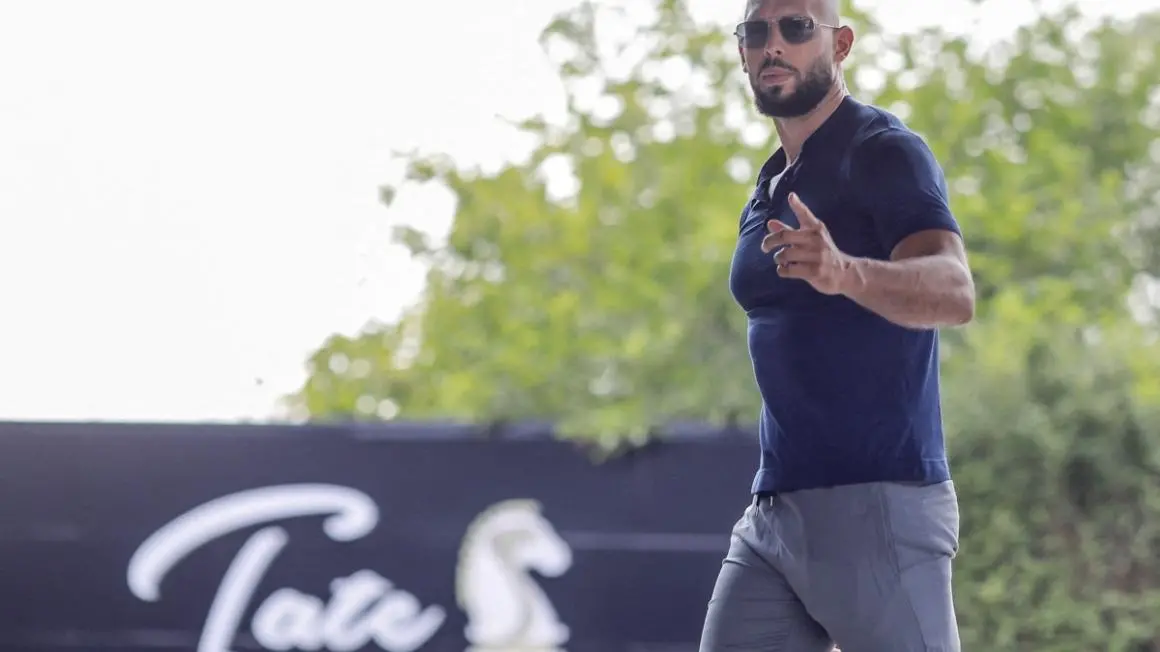
Andrew Tate, the self-proclaimed 'king of masculinity' and one of the most divisive online personalities of the digital age, has left Romania for the United States, marking a dramatic turn in a legal saga that has gripped social media and international justice systems. On February 27, 2025, the American-British influencer and his brother Tristan Tate boarded a private jet from Bucharest bound for Fort Lauderdale, Florida, according to Romanian aviation sources. The move comes despite ongoing charges of human trafficking, rape, and organized crime that have kept them under judicial supervision since their initial arrest in December 2022.
The Tates were first detained near Bucharest in late 2022 as part of a sweeping investigation by Romania's Directorate for Investigating Organized Crime and Terrorism (DIICOT). Authorities alleged that the brothers, along with two female accomplices, had formed a criminal network in early 2021 that exploited women. The indictment claimed they lured victims with false promises of romance and employment, then coerced them into producing pornography through physical violence and psychological manipulation. The case quickly became a flashpoint for debates about online misogyny, as Andrew Tate—a former kickboxing champion turned internet provocateur—had amassed tens of millions of followers across platforms like TikTok, Instagram, and X (formerly Twitter) by promoting hyper-masculine doctrines, anti-feminist rhetoric, and luxury lifestyles.
After their arrest, the Tates were held in preventive detention until March 2023, when a Romanian court released them and imposed house arrest. They were formally indicted on June 20, 2023, for 'formation of an organized criminal group, human trafficking, and rape.' The legal limbo persisted as Romanian authorities pursued multiple parallel investigations, including a separate probe in the United Kingdom where four women have filed complaints accusing Andrew Tate of sexual assault and rape. Despite being banned from Instagram and TikTok for misogynistic content, he retained a massive following on X—over 10 million users—where he continued to post defiant messages and conspiracy theories about his legal plight.
The sudden departure from Romania has raised eyebrows, particularly because the travel ban that prevented the brothers from leaving the country was lifted under circumstances that legal experts describe as unusual. Multiple sources indicate that the Trump administration played a direct role in securing the Tates' exit. In the weeks preceding the flight, Washington reportedly pressed Bucharest to return the brothers' passports and remove travel restrictions. Romania's Foreign Minister, Emil Hurezeanu, acknowledged discussions with Richard Grenell, a special envoy for Donald Trump, who expressed personal interest in the Tate case. Hurezeanu stated that he did not feel 'pressure,' but the sequence of events suggests high-level diplomatic engagement.
The timing aligns with broader geopolitical dynamics. The Trump administration has signaled a willingness to intervene in high-profile legal cases involving American citizens abroad, particularly when the individuals align with conservative or populist movements. Andrew Tate has openly endorsed Donald Trump and frequently amplified far-right talking points. Critics argue that this intervention undermines the rule of law in Romania and sets a dangerous precedent for selective extradition. The Romanian DIICOT issued a statement confirming that the brothers remain under judicial control despite the lifted travel ban, meaning they are still bound by certain legal restrictions and must report to authorities regularly. However, with the brothers now in the United States, the practical enforcement of those controls becomes highly uncertain.
The victims' legal team reacted with alarm. Matthew Jury, a lawyer representing the four British women who have filed rape complaints against Andrew Tate, released a scathing statement on X. 'The news that pressure by the Trump administration has led to Andrew Tate and his brother leaving Romania is deeply concerning for our clients,' Jury wrote. 'We call on the UK government to immediately seek their extradition and ensure they face justice for the serious crimes alleged.' The British women had previously expressed fears that the Tates would flee to a jurisdiction where they could evade accountability. Their call for extradition comes as UK Prime Minister Keir Starmer visited Washington on the same day, though the agenda reportedly focused on trade and Ukraine rather than the Tate case.
To understand the full context, one must trace the rise of Andrew Tate from obscurity to infamy. Born in Washington, D.C., to a British mother and an American father, Tate grew up in England. He won multiple kickboxing world titles before transitioning into online coaching and affiliate marketing. His early content was relatively standard fitness and self-improvement advice, but he soon pivoted to a radicalized form of 'male empowerment.' In videos that racked up billions of views, he told men to reject feminism, embrace wealth through 'hustle' culture, and view women as objects to be conquered. His rhetoric drew condemnation from human rights groups but resonated with millions of disaffected young men seeking simplistic answers to complex social frustrations.
The legal troubles in Romania forced a halt to his global touring, but his influence only grew. While under house arrest, he launched a membership platform called 'The Real World' (formerly Hustlers University) that generated millions in revenue. He also produced a steady stream of podcasts and social media posts, many of which doubled as fundraising appeals for his legal defense. The case became a rallying cry for online communities that view the justice system as a tool to silence free speech. On the day of the flight, Tate posted a cryptic video to X showing him smiling on a plane, captioned with the word 'Victory.' The post quickly garnered millions of views, with supporters celebrating his release as a triumph over 'deep state' persecution.
Yet the legal entanglements are far from over. The Romanian case is currently stalled over procedural irregularities—a judge found errors in the indictment and sent the case back to prosecutors for correction. The DIICOT has indicated that the Tates are still required to appear in Romanian courts when summoned, and the charges have not been dropped. Additionally, the UK complaints could lead to an extradition request if Britain invokes its bilateral treaty with the United States. The outcome of such a request would depend on political will and legal arguments about the severity of the allegations. In the US, the brothers are not facing any immediate charges, though the FBI could open an investigation if victims come forward on American soil.
The implications of the Tates' move extend beyond one case. It highlights the growing power of online influencers to navigate international legal systems through wealth, media savvy, and political connections. Andrew Tate has repeatedly claimed that the charges against him are orchestrated by a 'globalist conspiracy' aiming to silence conservative voices, a narrative that resonates with his followers. Meanwhile, human rights organizations and women's groups see the departure as a betrayal of justice, particularly for the alleged victims who now face an arduous, cross-border legal fight.
In the coming weeks, attention will shift to the UK government's response. Prime Minister Starmer, a former human rights lawyer, has declined to comment on the extradition question directly, but Treasury officials have indicated they are monitoring the situation. The US Justice Department has not issued any statement regarding the Tates' arrival. For ordinary Romanians, the episode adds to a narrative of institutional weakness and foreign interference, as a country still grappling with corruption scandals watches two foreign nationals accused of serious crimes walk free from its jurisdiction.
As Andrew Tate settles into his Florida residence, likely a waterfront property in Fort Lauderdale, he continues to command a global audience. His escape from Romania—whether through diplomatic channels, legal maneuvering, or a combination of both—has made him a symbol of defiance to his followers and a figure of frustration to his detractors. The ultimate test of whether the justice systems involved can hold him accountable will unfold over months, if not years. For now, the man who once boasted about 'escaping the matrix' has indeed escaped one courtroom, but the larger trial of public opinion and international law has only just begun.
In parallel, the Tate case has reignited debates about the treatment of men's rights activists in Western democracies. While most feminist groups condemn Tate's ideology outright, some libertarian commentators caution against conflating offensive speech with criminal conduct. The distinction is central to the legal proceedings: the Romanian charges focus on concrete acts of coercion and violence, not simply hateful remarks. Yet the public discourse often blurs the line, making it easier for Tate to frame himself as a victim of censorship. His departure allows him to continue that narrative unhindered from one of the world's most permissive free-speech environments—the United States—where his content can be monetized and disseminated without the same governmental barriers.
From a journalistic perspective, the coverage of the Tates has been fraught with ethical challenges. News outlets must balance the public's right to know with the risk of amplifying dangerous ideologies. Andrew Tate's media presence is so vast that any major report about him effectively promotes his brand. Editors often choose to include trigger warnings or direct readers to resources for victims of sexual violence. This balance is particularly delicate when dealing with active legal cases, where pretrial publicity can influence juries or witnesses. The departure to the US may shift the reporting jurisdiction, bringing American media ethics into play.
Finally, it is worth examining the role of government pressure in extraordinary rendition-like circumstances. While the Trump administration has not formally confirmed its involvement, multiple high-ranking officials have hinted at it. This proactive stance aligns with Trump's populist foreign policy approach, which prioritizes the interests of American citizens over international judicial norms. Critics argue that such behavior risks creating safe havens for wealthy fugitives, while supporters claim it protects citizens from unfair foreign prosecutions. The long-term impact on US-Romania relations remains to be seen, but Romanian prosecutors have publicly stated that they will continue their work irrespective of political considerations.
In the broader context of 2025, the Andrew Tate saga represents a unique intersection of technology, criminal law, and global politics. It raises questions that will define the next decade: Can a person be everywhere online yet nowhere legally accountable? How do nation-states cooperate when their justice systems are weaponized by populist movements? And what happens when a charismatic figure openly flouts legal norms while commanding the loyalty of millions? The answers may not emerge until the Tates face a jury, wherever that may be.
Source: CNEWS News