

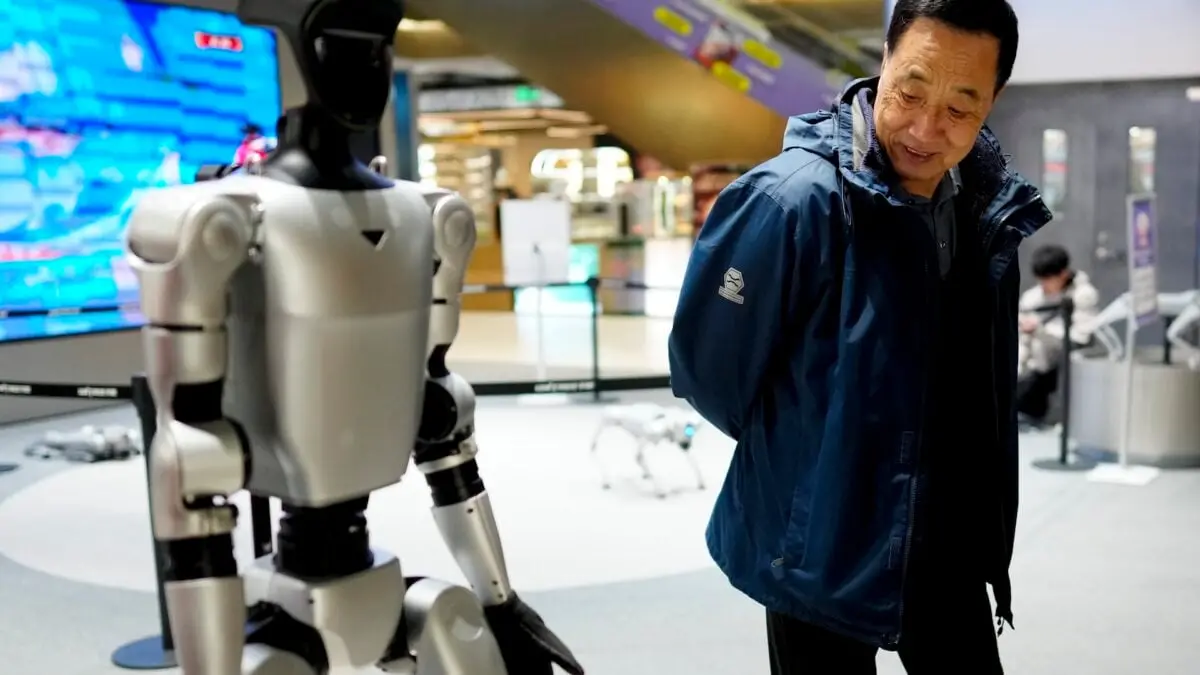
The U.S. Federal Communications Commission has issued a sweeping ban on advanced foreign-made robots, including humanoid and quadruped models, in a bid to protect national security and counter China's growing influence in robotics and artificial intelligence. The announcement, made Tuesday, July 28, 2026, targets robots that the FCC says could create supply chain vulnerabilities and pose cybersecurity risks to American consumers and infrastructure.
The ban specifically covers mobile two-legged humanoid robots and four-legged quadruped robots, a category that includes popular robotic dogs and emerging humanoid machines from Chinese manufacturers. In a press release, the FCC said these robots "pose unacceptable risks to the national security of the United States or the safety and security of United States persons." A government study cited by the FCC concluded that national security agencies had determined the robots could be used for surveillance, data collection, or other malicious purposes.
Why the FCC Is Acting
The FCC's role in regulating radio frequency equipment gives it authority over devices that communicate wirelessly. Many advanced robots rely on wireless connections for remote control, software updates, and data transmission. That connectivity, according to the FCC, creates a potential entry point for foreign adversaries to exploit.
The reasoning echoes previous U.S. actions against Chinese technology. Similar concerns were raised before TikTok was forced to sell a majority stake to U.S. interests, a requirement that President Donald Trump originally supported. Trump later changed his position after wealthy U.S. and Middle East investors expressed interest in buying the platform. The new robotics ban appears to follow a similar pattern, with national security arguments being used to justify restrictions on foreign technology.
Power Inverters and Exemptions
In addition to robots, the ban includes power inverters made by foreign companies. Power inverters convert direct current to alternating current and are used in everything from solar panels to electric vehicles. The FCC has included them in the ban because they can contain wireless communication modules that might be vulnerable to hacking. However, the agency has introduced exemptions for certain products and countries. The Department of Defense and the Department of Homeland Security have already granted exemptions for some power inverters, and companies are encouraged to apply for conditional approval exemptions.
The FCC's equipment authorization process is the mechanism through which all wireless devices are approved for sale in the United States. By conditioning approval on national security reviews, the FCC can effectively block entire categories of foreign-made devices. The new ban is one of the most aggressive uses of this authority in the commission's history.
What the Ban Doesn't Do
The ban does not apply to robots that have already been purchased. This is important for consumers and businesses that already own Chinese-made robotic products. The ban also does not prevent retailers from continuing to sell robots that have been previously approved through the FCC's equipment authorization process. That means some existing inventory can still be sold. In addition, the U.S. government is allowed to buy whatever overseas robots it likes, according to the FCC's release. This exemption allows federal agencies to continue using foreign robots for research, military, or other purposes.
The narrow scope of the ban suggests that the FCC is trying to limit the economic impact while still sending a strong signal to foreign manufacturers. By grandfathering existing products and allowing government purchases, the agency avoids disrupting current operations and provides a path for domestic agencies to acquire needed technology.
Unitree and China's Robotics Boom
China's Unitree is likely a major target of the new ban. The company, known for its humanoid robots and robotic dogs, already sells products in the United States. Social media videos of Unitree robots walking, running, and performing tricks have made the brand familiar to American tech enthusiasts. The company's Gundam-style humanoid robot, in particular, has captured attention online. Under the new rules, Americans will not be able to buy the Unitree Gundam in the near future, except through previously approved models or if the company obtains an exemption.
Unitree is just one example of China's rapid progress in robotics. Chinese companies have benefited from large government investments, a strong manufacturing ecosystem, and a massive domestic market. In recent years, Chinese humanoid robots have demonstrated capabilities that rival those made by American companies like Boston Dynamics and Tesla. Tesla's Optimus robot, which remains unreleased, will not have to compete with Chinese robots in the U.S. market under the new ban.
A Wider Tech Cold War
The robotics ban is the latest escalation in a broader technological rivalry between the United States and China. Washington has already restricted Chinese telecommunications equipment, including Huawei and ZTE, and has limited exports of advanced semiconductors to China. The FCC's move extends this crackdown into the robotics sector, signaling that humanoid robots and other advanced machines are now viewed as critical national security infrastructure.
Humanoid robots are expected to play a major role in the future of manufacturing, logistics, healthcare, and even military operations. By limiting the availability of foreign-made robots, the U.S. government hopes to encourage domestic development and protect American jobs. But critics argue the ban could raise prices, reduce consumer choice, and slow the adoption of useful technologies.
The ban also raises questions about how far the government can go in regulating consumer robotics. Unlike smartphones or drones, humanoid robots are still a relatively new category. The FCC's broad definition of "advanced robots" could create uncertainty for manufacturers and importers. Companies that want to sell robots in the U.S. will need to navigate the FCC's equipment authorization process, which now includes a national security review.
Impact on Consumers and Industry
The ban is likely to have immediate effects on the robotics market in the United States. Consumers who were considering a Chinese-made robot for home use or research will now have fewer options. Prices for domestic robots could rise as competition decreases, at least in the short term. Manufacturers may also need to redesign their products to avoid using components from banned countries.
Retailers and importers are also affected. They must ensure that any robots they bring into the U.S. have gone through the FCC's equipment authorization process. The new national security review adds another layer of complexity and potential delay. Some companies may decide that the U.S. market is no longer worth the hassle, further reducing availability.
FCC Chairman Celebrates the Move
FCC Chairman Brendan Carr praised the decision in a statement posted online. He specifically credited President Trump, as he and other administration officials regularly do. "Following President Trump's leadership, the FCC will continue to do our part to secure America's critical supply chains and, with today's action, the FCC is acting in lock step with our national security agencies to do just that," Carr said.
The statement reflects the administration's broader approach to technology policy, which combines economic nationalism with national security concerns. The FCC's decision is likely to be welcomed by domestic robot manufacturers, who could benefit from reduced competition. However, it could also complicate trade relations with China and other allies that produce advanced robotics.
For now, the practical effect of the ban is clear: American consumers who want a Chinese-made humanoid robot will have to look elsewhere. The Unitree Gundam, once a tantalizing possibility, is no longer an option—unless the company finds a way through the FCC's exemption process. As the U.S. and China continue to compete for dominance in artificial intelligence and robotics, this ban may be just the beginning of a much larger technological divide.
Source: Gizmodo News